Industrial PhD candidate Anna Rex Elmgreen is working to change that. Hosted by Upstream Partners and in partnership with construction giant NCC and supervised by Professor Carsten Rahbek, her research aims to map exactly where the highest impact building materials come from, measure the biodiversity (and vulnerability) of those locations, and propose an LCA-compatible methodology for industry-wide application while meeting the urgent need for greater transparency and providing tools to simplify and prioritise actions to reduce the sector’s critical impact on biodiversity.
The project is part of Upstream’s broader mission to reconnect the built environment with the living world it depends on. PRF sat down with Anna to hear her personal hopes and motivations for the industrial PhD.
Recap: Biodiversity is the Blind Spot of the Built Environment
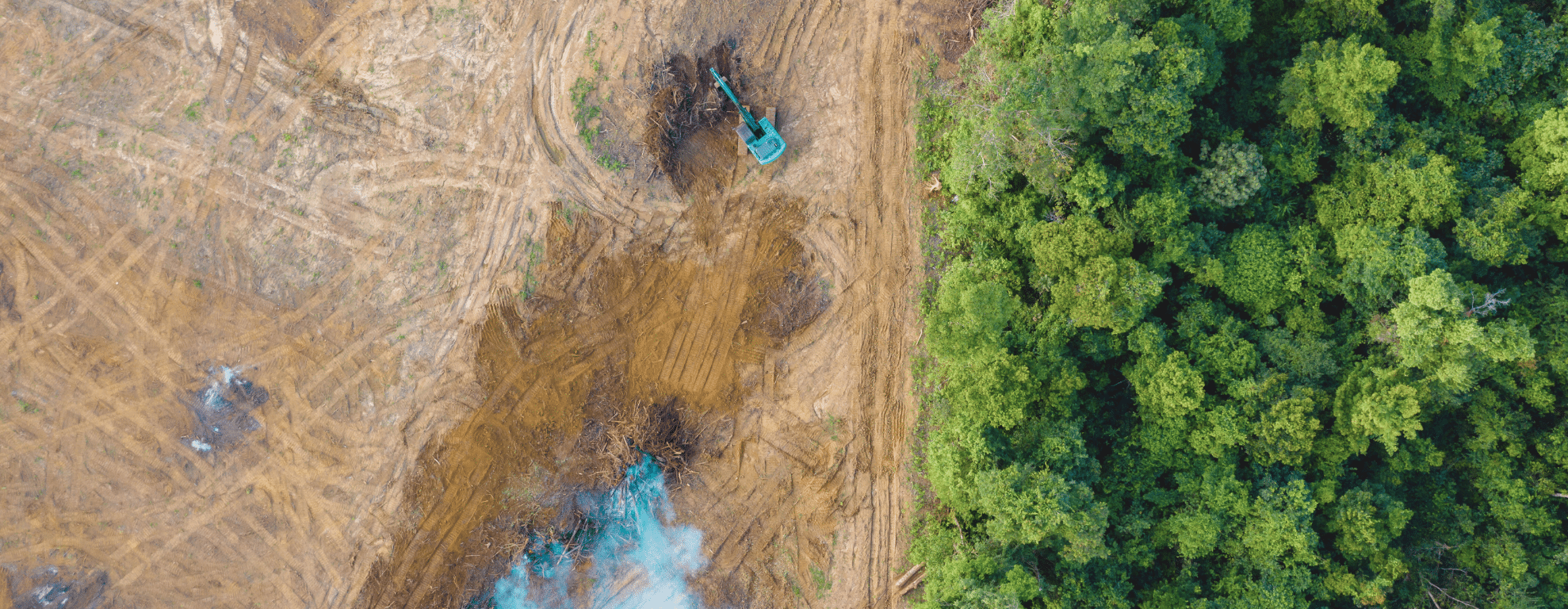
From sand and gravel to timber and steel, building materials account for most of the construction sector’s biodiversity impact, as extraction practices such as mining and logging are known to drive the majority of this damage. Much of it happens in the world’s most biodiverse hotspots, where the removal and conversion of untouched nature continues at an alarming rate, largely driven by demand from the construction sector.
“We know the sector drives land use change, overexploitation and pollution. But we can’t link that biodiversity impact to individual building materials, because data on origin is lost along the value chain.
And without that link decision-makers can’t distinguish high-impact materials from low-impact ones.”
Elmgreen’s research addresses this blind spot. Her focus is on the point of extraction: where raw materials are taken from land or sea. Without this site-specific view, biodiversity risks remain unregulated, and businesses are left unprepared for reporting requirements under the EU Corporate Sustainability Reporting Directive (CSRD).
The Industrial PhD: Mapping, Measuring, Mobilising
Elmgreen’s research is structured in three phases:
- Trace the origin
Using procurement data from NCC as a starting point, Elmgreen is tracing building materials back to their geographical origins. For example, which mine produced the iron in a building’s steel frame, or what forest the timber came from. She’s expecting to make use of a variety of sources to complete the mapping, for example invoice data, EPDs, trade flow databases and remote sensing tools. - Assess biodiversity risks
Once mapped, each site is analysed for its biodiversity value and risk. Is it in a species-rich area? Are ecosystems threatened by these activities? This stage uses global biodiversity databases and indicators developed by CMEC at the University of Copenhagen. - Compare impact methods
The final step is a side-by-side comparison. What do current LCA-based impact assessments say about biodiversity? And how does that compare to a site-specific analysis? Elmgreen expects to uncover major gaps.
“LCAs use global averages. But biodiversity is local. If we don’t trace back to the origin, we ignore the real impact and the chance to reduce it.”
Barriers and Breakthroughs
The biggest challenge so far? Supply chain opacity.
Even for a company like NCC, a market leader with high transparency standards, tracing materials back to the extraction site is complex. Documentation is incomplete. Contractors don’t always know what they’re buying, or where it comes from. And suppliers may be reluctant to share data.
“There’s no shared system for documenting sourcing sites. If we want biodiversity impact assessments to work, that has to change.”
Another barrier is the structure of the industry itself. Procurement is optimised for price and speed, not ecological due diligence. But with biodiversity disclosures gaining popularity, driven not only by regulatory and investor pressure but also by a growing understanding that the industry depends on nature’s health and that ecosystem collapse poses a major business risk, Elmgreen believes pressure will continue to rise.
Towards Actionable Standards
The end goal isn’t just more data, but better decisions. Elmgreen’s research will result in:
- A new biodiversity exposure map for ecological impact risks associated with construction materials
- A set of risk-based procurement guidelines for developers and contractors
- A policy brief outlining recommendations for mandatory due diligence frameworks
She’s also engaging with other researchers and initiatives-including Upstream’s work on biodiversity impact standards-to ensure alignment and knowledge sharing.
“I hope this research will give the industry the tools to act. Not just to report, but to choose better, lower-impact materials.”
Biodiversity is often seen as a science problem. But in construction, it’s also a data and decision-making problem. Elmgreen’s PhD aims to bridge that gap by bringing ecological precision into the centre of how we build.
Project Partners: Employer and host Upstream Partners, NCC, University of Southern Denmark.

Biodiversity & the Construction Value Chain Series
This article series explores the negative impact on biodiversity from the construction value chain and explores solutions from changemakers. Learn how the built environment is impacting our natural world and get inspired to address the biodiversity crisis.