
Why Biodiversity, and Why Now?
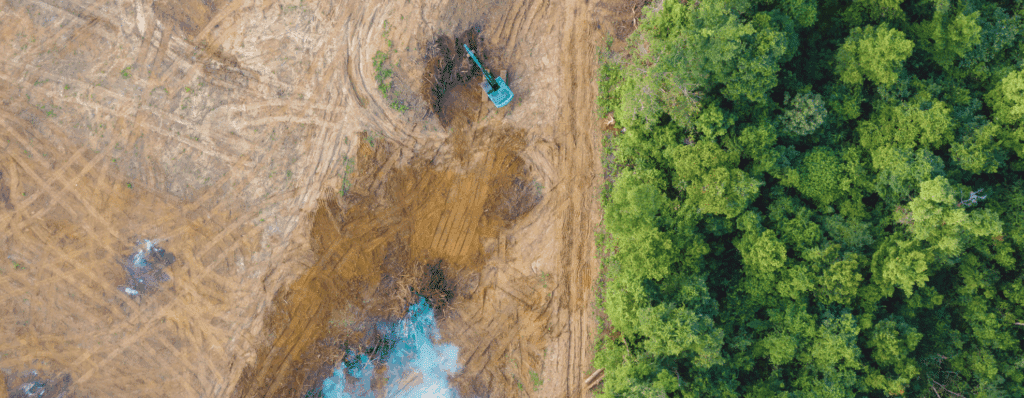
The current system focuses on what we can see – “on-site” damage like habitat loss or soil disruption on the construction site itself. But 90% of biodiversity impacts may actually occur off-site, hidden in supply chains and extraction processes that lie far upstream of the building site.
“The problem in the building industry has been that there isn’t a lot of focus on the off-site impacts—even though that’s where the majority of the damage to nature and biodiversity actually happens,” says Holm. “We want to bring visibility and tools to that hidden part of the process.”
The Kunming-Montreal Global Biodiversity Framework, CSRD, and the EU Green Deal all point to one direction: full-spectrum accountability. And in an industry responsible for vast material flows, the need for a common method is urgent.
A Sector-Driven, Science-Grounded Approach
Step one? The project team developed a “Standard” for measuring biodiversity impacts in the built environment. The standard is built on three pillars:
Reference values – extracted from global databases like Impact World+ and the Global Life Cycle Impact Assessment Method (GLAM)
Address data gaps – using scenario-based assumptions to estimate impacts
Test – the method’s applicability against a portfolio of 40 commercial building projects across Denmark
While some metrics were modelled using global averages and estimations, the ambition is to include increasingly precise, country and producer-specific data over time.
The approach borrows from established and industry-accepted lifecycle assessments (LCA), Environmental Product Declarations (EPD), and is an extension of LCAbyg – a tool used to calculate a building’s environmental profile and resource consumption.
The Method Behind the Metric
The development roadmap is structured across four work packages:
Baseline: the project uses the above mentioned Standard to calculate the off-site biodiversity impact of 40 buildings to establish a baseline.
Contextualisation: baseline method is then placed in global context (Planetary Boundaries, EU policy) and both on-site and off-site impacts are calculated.
Testing/Validating: findings are translated into an actionable industry standard, aligned with the CSRD and other disclosure regimes.
Collaborating: ensures stakeholder co-creation, communication, and transparency throughout.
Outputs will include two core reports: a Biodiversity Baseline and a practical Implementation Guide for developers, investors and municipalities.
Investor-Led, Market-Relevant
Unlike many research initiatives, this project was sparked by demand from major investors like PensionDanmark and AP Pension. Why?
To discharge accountability towards the biodiversity agenda
To achieve market leadership
Expectation that future regulation will mandate such disclosures
To shape the criteria architects and suppliers must meet.
“These investors are ambitious in driving the sustainability agenda,” says Holm. “They’re stepping up—not just to meet future regulation, but to set themselves apart from the competition.”
Municipalities, often the largest builders in the country, are similarly motivated. Not by profit, but by public trust and policy alignment.
Who Will Use It—and When?
The method is designed for early-phase decision-making. Architects, advisors, and developers will be able to assess biodiversity impacts as part of LCA work, ideally before finalizing designs. Eventually, procurement briefs and tenders could include biodiversity criteria.
Key to adoption will be integration into existing workflows. That’s why the standard is designed to be compatible with LCAbyg, and includes clear guidance on how to interpret results.
From Pilot to Practice
This is not yet a certification. It’s a step toward one.
By offering a transparent, evolving method, the standard invites others—industry associations, researchers, policymakers—to build on it. And by measuring what’s long been hidden, it creates space for new behaviors:
Choosing biogenic or reused materials
Prioritizing renovation over new builds
Sourcing from suppliers with lower ecological footprints
A Call to Material Producers
Data is the currency of change. Material producers are encouraged to trace and disclose the ecological footprint of their products. This isn’t just about compliance—it’s about credibility.
“I would wish that more producers would be transparent about where their materials come from and how they’re produced,” Holm says. “That’s the kind of data that makes change possible.”
The journey to nature-positive construction will take time. But the reports and the accompanying standard – with an expected release date in August 2025 – offers a shared compass and a metric that makes the invisible visible.
In the meantime, contact PRF to discuss how to factor biodiversity into your business decisions today.