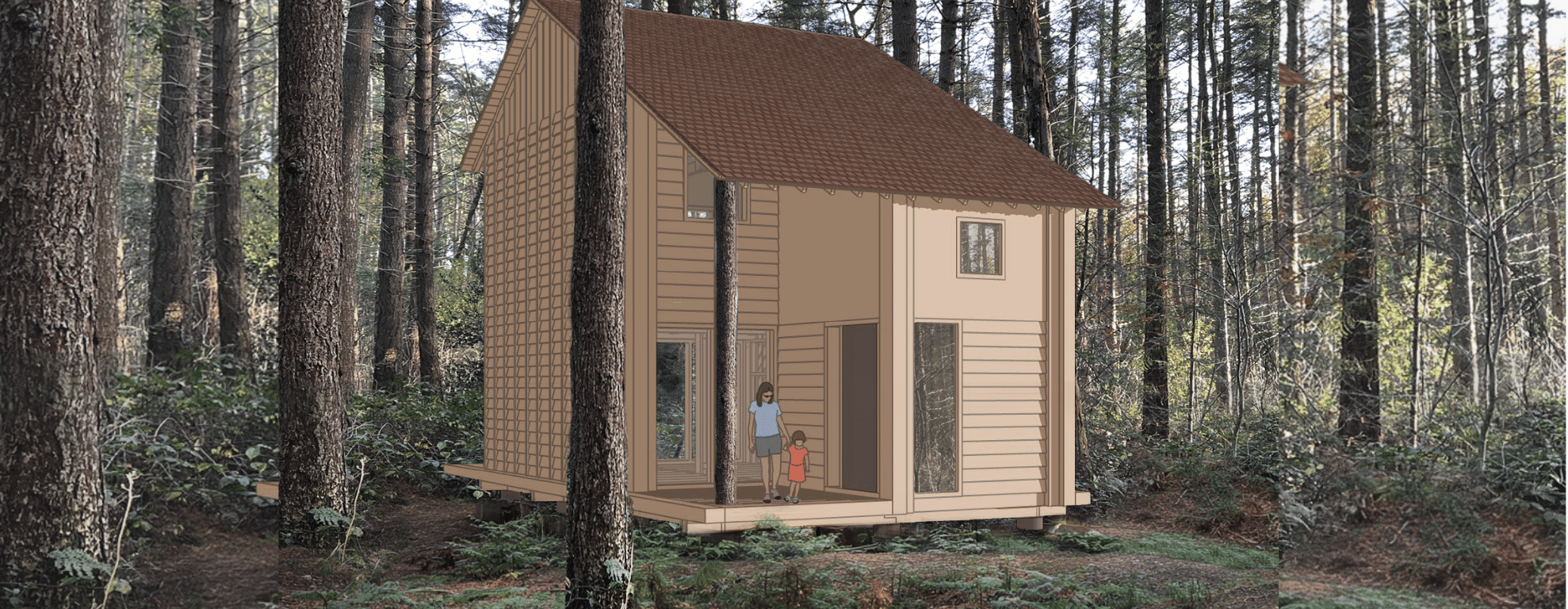
A Project and PhD Rooted in Landscape
The inspiration came from indigenous forestry practices in Indonesia, where Smit studied traditional timber systems of the Sundanese community in West Java.
“They don’t just build homes. They build with nature. It’s modular, adaptive, and deeply respectful of the ecosystem.”
Returning to the Netherlands, she realised similar principles once existed there too: cooperative governance, local forest management, community-scale timber harvesting, adaptive structures. The name of the foundation she established to reintroduce and reinvent these principles, Bouwtuin (“building garden”), reflects this ethos of care, cultivation, and place.
From Forest to Foundation
The project is based in the Gooi- & Vechtstreek, a forested sub-region near Amsterdam. Land is managed by the Goois Natuurreservaat, a nature conservation organisation with roots in collective governance.
Parts of the reserve were historically planted as production forest for the flooring and mining industries. Today, these areas have become vulnerable monocultures, with trees of uniform age, making them highly susceptible to various diseases. The current mission is to steward the land for biodiversity while developing a regenerative system that allows for the sustainable harvesting of timber in perpetuity.
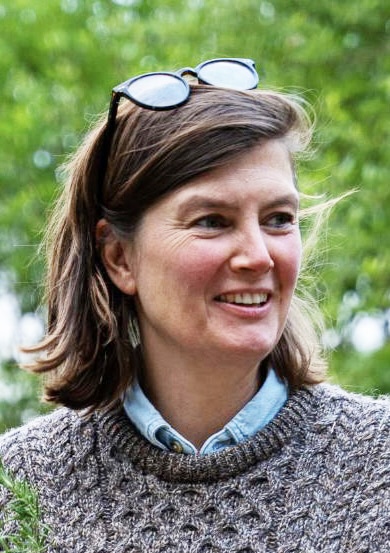
“It’s about re-developing nature, not just preserving it,” says Smit.
To achieve this, the project team is building a demonstration home (Streekhuis) from regionally harvested timber and other local natural materials. The house will be demountable and serve as a testbed for new timber construction methods. It is the first step toward a planned housing cluster of 20-30 homes built from the same local supply chain.
The model follows three phases:
- Understand the landscape: Look first at the soil and ecology.
- Build the value chain: Harvest, process, and grade local timber.
- Design the home: Ensure it relates to the local landscape, following modular and open building principles.
Challenges: Certification, Risk, and Logistics
The project exposes systemic challenges. Chief among them: timber certification and evaluation. When working with local wood from small-scale forestry, who guarantees its quality? Who takes the risk? Smit asks.
“Right now, using certified timber from non-local forests is the norm. But what if the local forest is better managed than those certified plots? Sourcing locally is the smartest and most sustainable way of operating in the context of housing, financial and climate crises.”
Bouwtuin and its partners are exploring ways to grade timber locally, using visual strength grading methods, which assess characteristics such as knot size, grain direction and cracks. This approach allows small-scale forestry to responsibly use structural timber without relying on industrial grading. But time, cost, and risk are all barriers. The team is also considering a cooperative insurance model to share liability across the value chain.
Another challenge is logistics. A bio-regional model requires coordination at every step: harvesting, transport, milling, assembly. Every stakeholder must be compensated fairly.
Ownership raises further questions. Should the timber – and even the home – belong to the individual, or to the region? If the timber and the house are part of the landscape, perhaps its value should remain rooted there.
Opportunities: Local Industry, Real Work
Despite the challenges, the project is already sparking local interest. A small-scale saw mill (Altijd Werkplaats) and contractor (Intersell) have joined the initiative as regional value chain members. Two young carpenters from a vocational timber school (Bouwmensen) are participating. There is talk of local window-frame production using regional wood.
“It’s proof that people want to build differently. This is a model based on real work. Not speculation.” Smit notes.
This transparency stands in contrast to today’s construction economy, where pricing and sourcing are often opaque. Bouwtuin offers a different path: one where a home is a story, not just a structure.
Just like organic food – which transitioned from a niche market to the mainstream – Smit believes a similar transformation is possible for the use of timber and other biobased construction materials. But first we first have to prove that it works by building the example home, gradually advancing towards a viable regenerative value model.
“We can achieve big impacts through small-scale projects. Our systems have become so huge and globalised, they’re unsustainable. This is a way out.”
You can follow the project and its progress at www.bouwtuin.nl and on LinkedIn.
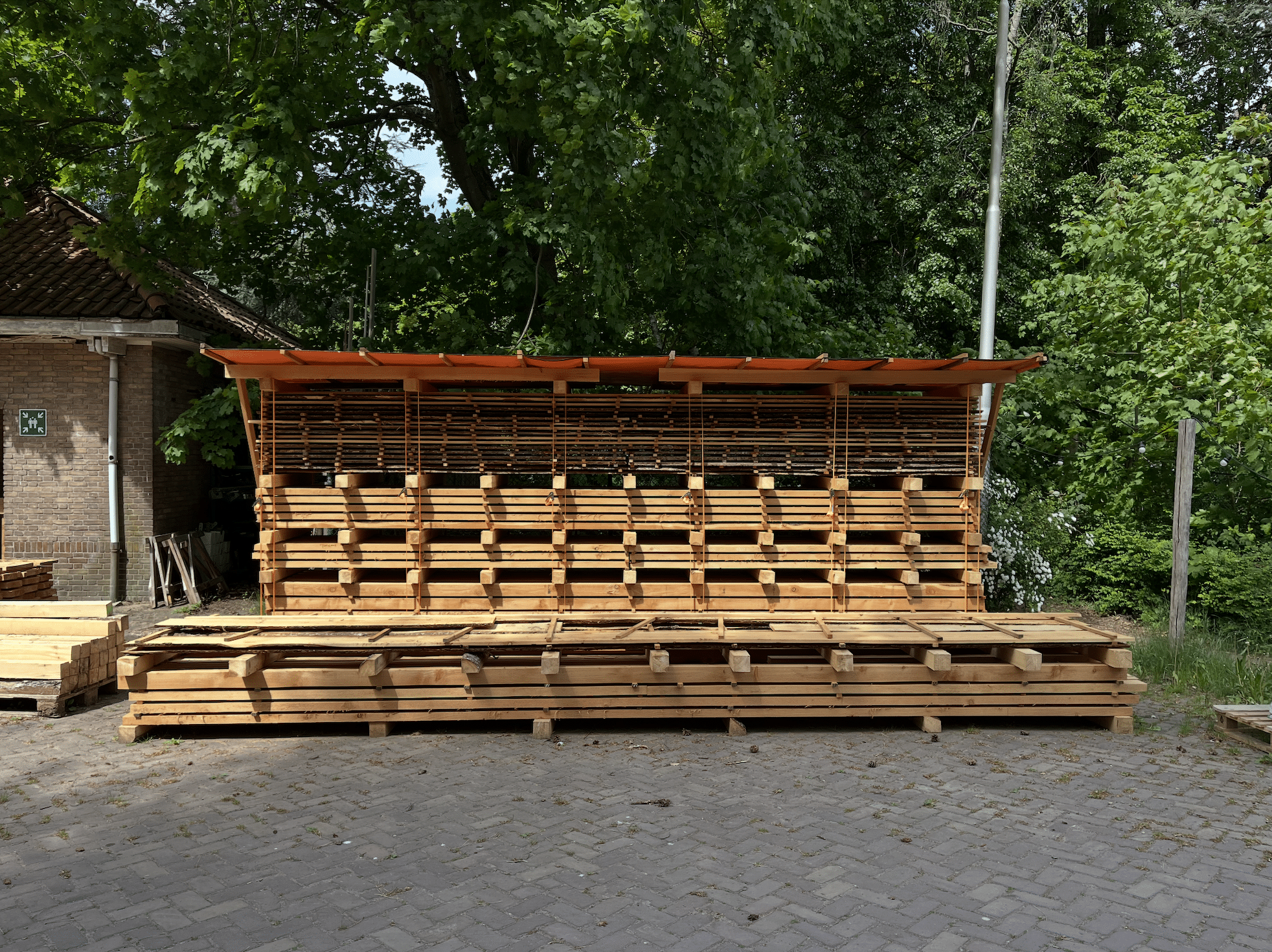
Illustration: The Douglas timber drying.
About Built By Nature
Built by Nature is a not-for-profit organisation with a mission to transform the built environment by promoting the responsible use of timber and biobased materials. Read more here.
Biodiversity & the Construction Value Chain Series
This article series explores the negative impact on biodiversity from the construction value chain and explores solutions from changemakers. Learn how the built environment is impacting our natural world and get inspired to address the biodiversity crisis.