
Measuring Development against the Doughnut Economics Model
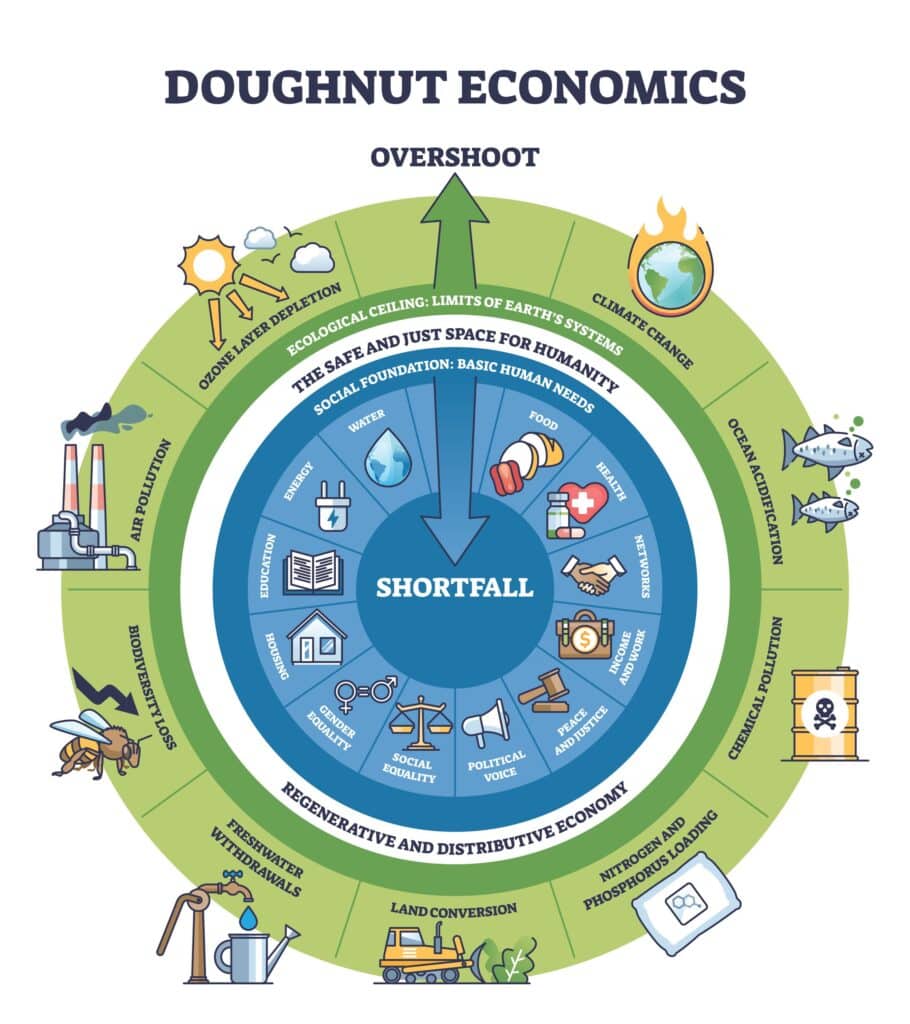
The goal of the project is to create a real-world example of regenerative development using the Doughnut Economics model as a guide. The model overlays all nine planetary boundaries with essential social needs like health, education, and community life. Meeting both environmental and societal goals at once is a major challenge, but Sweco is well-prepared, leveraging decades of experience across energy, mobility, building, and landscape design.
The project also offers Sweco a unique opportunity to explore the idea of a new, “planetary” local plan. By drafting a conventional plan alongside a nature-first alternative, Sweco and the Planetary Project are pursuing an important side-by-side comparison. The main focus is on Skive, however the ambition is to develop a template to help other towns rethink how local plans support the green transition across Denmark.
“Most cities today want to be more sustainable, but lack clear tools for working within planetary limits,” says Frederiksen. The Skive project aims to bridge that gap by developing an open-source planetary local plan, proven through real-world application.
Building the Future Onsite
The project’s physical site brings both challenges and opportunities. Environmental issues relating to the site’s former industrial purposes must be managed, but it also offers space to test new ways of building and living.
One focus is materials. Biogenic materials – renewable, nature-based resources like wood and straw – are being investigated as a way to support both biodiversity and operate within planetary boundaries. Frederiksen shares the hope that this exploration will “also uncover and stimulate growth opportunities for Skive’s green industry”.
The team is also working on waste-to-X strategies, finding ways to “harvest” and reuse materials from demolition sites within a 110 km radius.
“Harvesting of the adjacent building has already begun”, says Frederiksen, thanks to Sweco’s experience in material reuse and the accessibility of purchasable data in Denmark.
However, the reuse industry in Denmark is still in its early stages. Frederiksen revealed that, in Denmark, “only around 4% of construction materials are currently recycled. There is definitely a gap in the market waiting to be filled with purpose-built digital infrastructure to track and manage materials.”
A New Way to Build Community
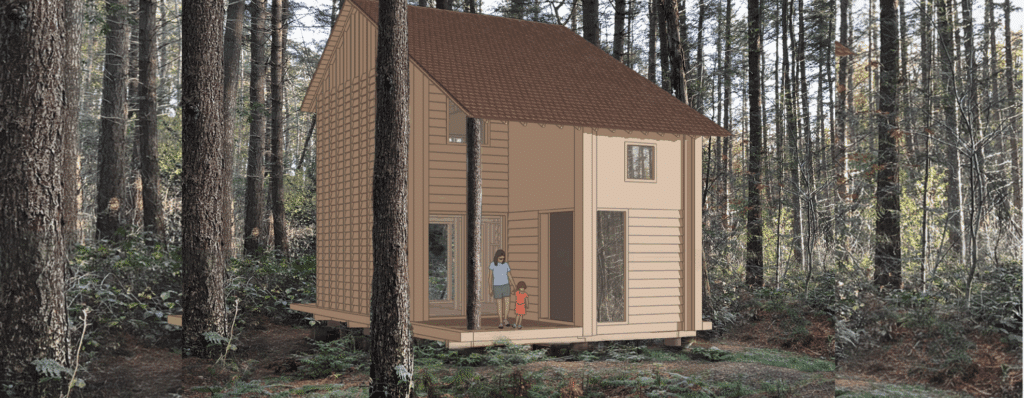
The building itself will comprise a new type of community space designed for learning, collaboration, and green innovation. It will include 40 micro-homes and a large shared Community Centre area where businesses, students, and citizens can meet and work together.
The landscape around the building will also tell a story. Different zones will showcase future land typologies, providing a tangible visualisation of how farmland might be restored, how wetlands could return, and how cities might adapt. These examples will help visitors see what a climate-adapted Denmark could look like.
Education is a major part of the project’s mission. Through school visits and community events, the team hopes to support a “planetary upbringing”, giving the next generation a stronger understanding of how human actions connect to the health of the planet.
Beyond the Site: Offsite Goals
The project doesn’t stop at the site boundary. Foreningen Spottet and its partners are also investigating how land use across the wider region could evolve. This includes looking at opportunities for new types of productive landscapes, nature restoration, and greener industry.
Sweco, PRF and Upstream Partners are also exploring economic models for supporting off-site biodiversity – an area where new ideas are urgently needed. The goal is to show how landowners, businesses, and communities can work together to restore nature while creating local value.
Local Actions with Wider Impact
For Foreningen Spottet, the project is first and foremost about creating a living, regenerative site that serves the local community, economy, and environment.
“The building comes before the pen”, explains Frederiksen.
For Sweco and the Planetary Project, it’s also an opportunity to explore how future local plans could be shaped, blending planetary science and community needs with everyday development. Together, they are showing that real change doesn’t have to start with national policies. It can start with one site, one project, and a group of people willing to ask different questions.
And from Skive, new answers might just grow.