Lise Lyngfelt Molander, Business Manager for sustainability at the Technological Institute in Denmark, sighs, before stating: “There is no such thing as sustainability in construction. The concept has ended up as a climate requirement in our legislation, but that doesn’t make it sustainable.”
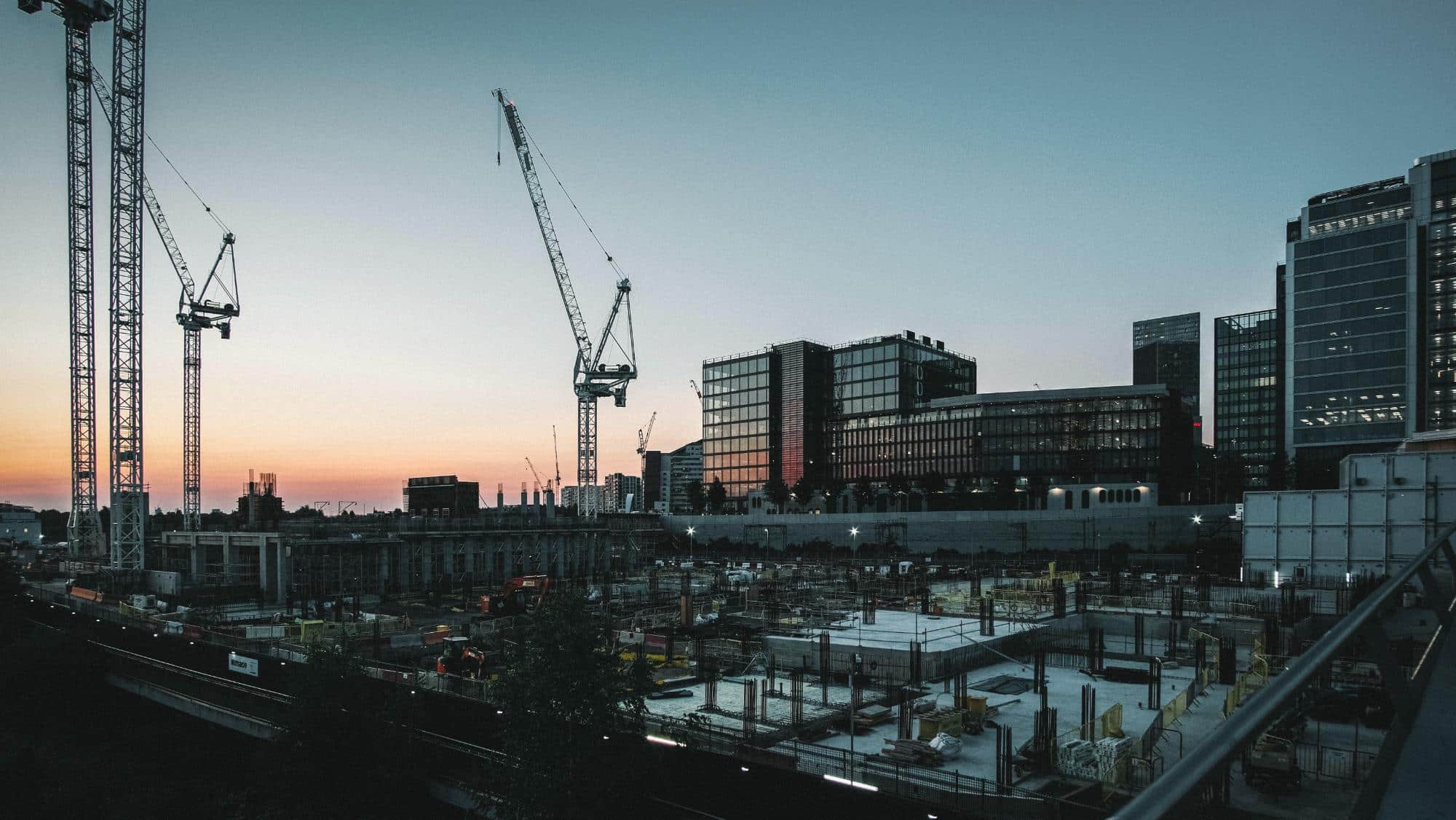
This serves as a riveting opening statement in an interview about the impact of construction sites on the overall climate balance in the construction industry. So, if you seek optimism, perhaps you should not start with Lise Lyngfelt Molander.
“A developer today cannot claim that a finished project is sustainable or without a carbon footprint – simply because they would not know. We need recorded data on EVERYTHING, from the drawing board, transportation, waste, material selection and production, indoor climate, and recycling and end of life – the entire life cycle. And in that calculation, there is an unknown factor that we have chosen to ignore for decades: The construction site.
In 2022, the Danish Technological Institute released the report “Sustainable Building Materials – Input for the Voluntary Sustainability Class.” The Voluntary Sustainability Class was implemented in Denmark in May 2020 for the construction industry to voluntarily test some of the requirements for sustainable construction expected to be encountered in the future. The trial ended in November 2023. The next step is to make the voluntary requirements mandatory in future Building Regulations.
Chapter 4 of the report on “The Sustainable Construction Site” emphasizes the challenge of lacking data and knowledge:
“Currently, there are no publicly available data on how much the construction site contributes to the climate impact of the overall construction, as there is generally a lack of data on construction sites’ consumption of materials, electricity, and fuel, which is not necessarily routinely collected by contractors.
This data can and should feed into the overall life cycle assessment of construction, where the total climate impact of construction, in terms of CO2 equivalents, is calculated. This means that optimizing resource consumption on the construction site positively contributes to reducing the overall CO2 impact of construction, even if it is not initially included in the climate requirement.”
Currently, there are no legal or voluntary requirements for comprehensive construction site data, covering water consumption, material transportation to and from the construction site, fuel consumption, on-site energy consumption and material waste. However, these requirements will be introduced through European legislation and as a demand from industrial companies accustomed to setting such standards for all suppliers.
30 YEARS BEHIND
Major international and Danish industrial manufacturing companies like Novo Nordisk, Grundfos or Vestas have long commenced efforts to monitor, measure and take action to reduce their CO2 emissions and mitigate other environmental impacts.
This commitment extends throughout their value chains, encompassing even their subcontractors. For instance, Novo Nordisk requires its 60,000 suppliers to ensure that their deliveries rely on 100 percent renewable power by 2030 (source). The construction industry also plays a pivotal role as a supplier, contributing to both new construction and renovation projects.
“For the manufacturing industry, minimizing the climate and environmental footprint is a natural requirement that they have been working on for 30 years in order to meet demands from shareholders, customers, and future generations of employees. But it seems that this has not quite permeated to the construction industry, especially not down to the construction site level,” says Lise Lyngfelt Molander.
Her predicament is that the construction industry has around five years to achieve something that the industry has been working on for decades. Lowering emissions throughout the supply chain and reducing the overall climate footprint is becoming a competitive imperative.
“There are both large and some smaller companies in the construction industry that are working to achieve this. But in general, most of them are sitting around doing close to nothing until they are faced with legal requirements. It is an industry with no tradition of consumption registration. It is unfortunate that the entire construction industry is not up to speed at this point, because sooner or later they will not have a license to operate if they cannot deliver data and information throughout the value chain. Ultimately, this will mean that some of the SME construction companies will be excluded from the construction site because the client and the major contractors cannot use them if there is not 100 percent documentation of consumption and climate footprint on the construction site,” says Lise Lyngfelt Molander.

MONSTER, BONUSES AND KNOWLEDGE SHARING
These are new times, and efforts to diminish the constructio industry’s significant climate impact are moving fast. The Danish Technological Institute and Lise Lyngfelt Molander are aware of and actively addressing this issue.
“I completely understand that many companies in the construction industry perceive the challenges of registration and documentation as a big monster that will mean new and costly procedures. This is due to the fact, that there is plenty to do for the many craftsmen on construction sites and often, they have no idea where to start or finish with the data collection,” says Lise Lyngfelt Molander
She points to several work processes on a construction site where additional documentation is necessary if consumption and climate footprint are not to end up as a huge and increasing cost for the developer or owner of a project.
“Very few measure fuel consumption on the machinery on each construction site, gypsum boards are thrown away because they got wet, and residual wood often ends up in a mixed container without anyone knowing the total weight but just paying the price for waste handling. The developer and suppliers could start the construction with an overall overview of budgeted material and operational consumption. And everything that could be saved, both in terms of money and climate impact, through careful ongoing documentation, could be shared as a bonus,” suggests the Business Manager for sustainability at the Danish Technological Institute.
Unfortunately, according to Lise Lyngfelt Molander, voluntary efforts fall short. She anticipates that forthcoming EU requirements, such as CSRD, will necessitate the recording of consumption on construction sites, including electricity, energy and water. She hopes that most construction companies will incorporate data on waste, material consumption and transportation.
“It seems that for many years, the EU has focused too one-sidedly on climate and environmental requirements for the traditional manufacturing industries, while the construction sector, especially construction sites, is only now beginning to face stricter regulations. But we don’t need to wait for EU legislation. If the construction sector starts learning from the manufacturing sector, better solutions will soon emerge and automatically move forward.”
And there are obvious solutions that can reduce the climate footprint.
“Knowledge sharing and open source can take us far. The major contractors also depend on the smaller contractors and craftsmen if they are to deliver. So, it is important that the big ones help the smaller ones by sharing and aligning simple digital tools for registration. Finally, we can take big steps forward if the manufacturing industry, which has been working to reduce the climate footprint for many years, makes their solutions available to the construction sector in adapted versions. It is in everyone’s interest, not least our climate’s.”
Planetary Responsibility Insights are based on interviews with experts, scientists, business leaders and others with the purpose of sharing knowledge and opinions about sustainability and nature-based solutions in the built environment.

ABOUT PRF
PRF is a private, commercial foundation, established in 2022. Our purpose is to help restore and protect the planet’s nature and biodiversity and promote sustainable development. We do this through a holistic mindset, mission-driven investments and projects. A key element of our strategy is about doing business differently and in better balance with nature. Therefore, we invest in and support sustainable solutions and knowledge sharing on how to build and live more sustainably.
Did you find this article interesting?
Follow us on LinkedIn and be updated on new articles.
For more information, please visit www.prf.dk