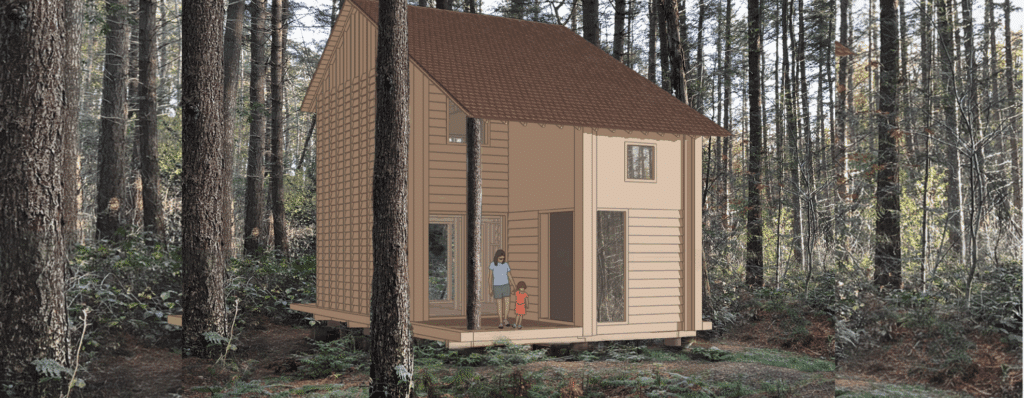
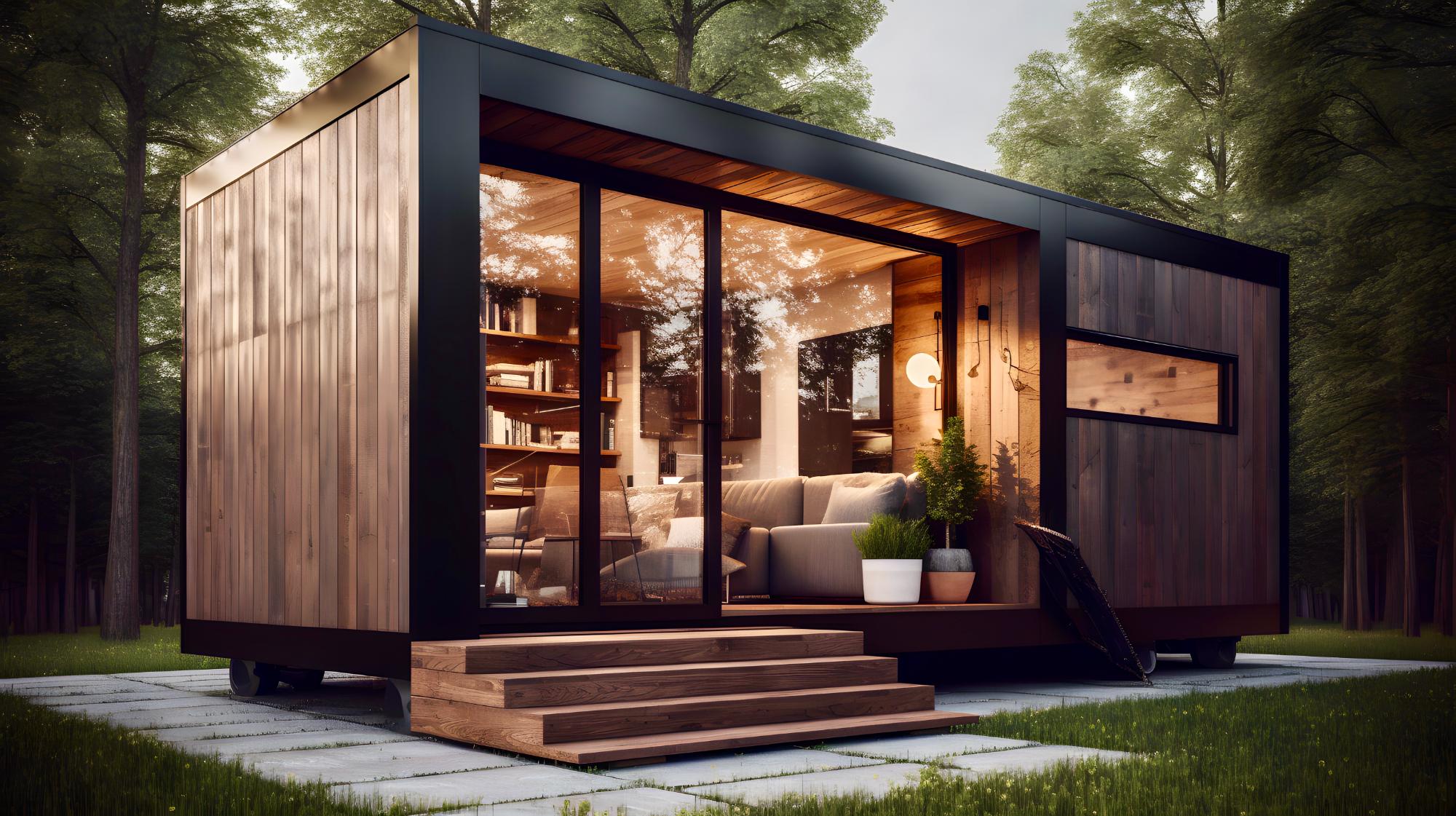
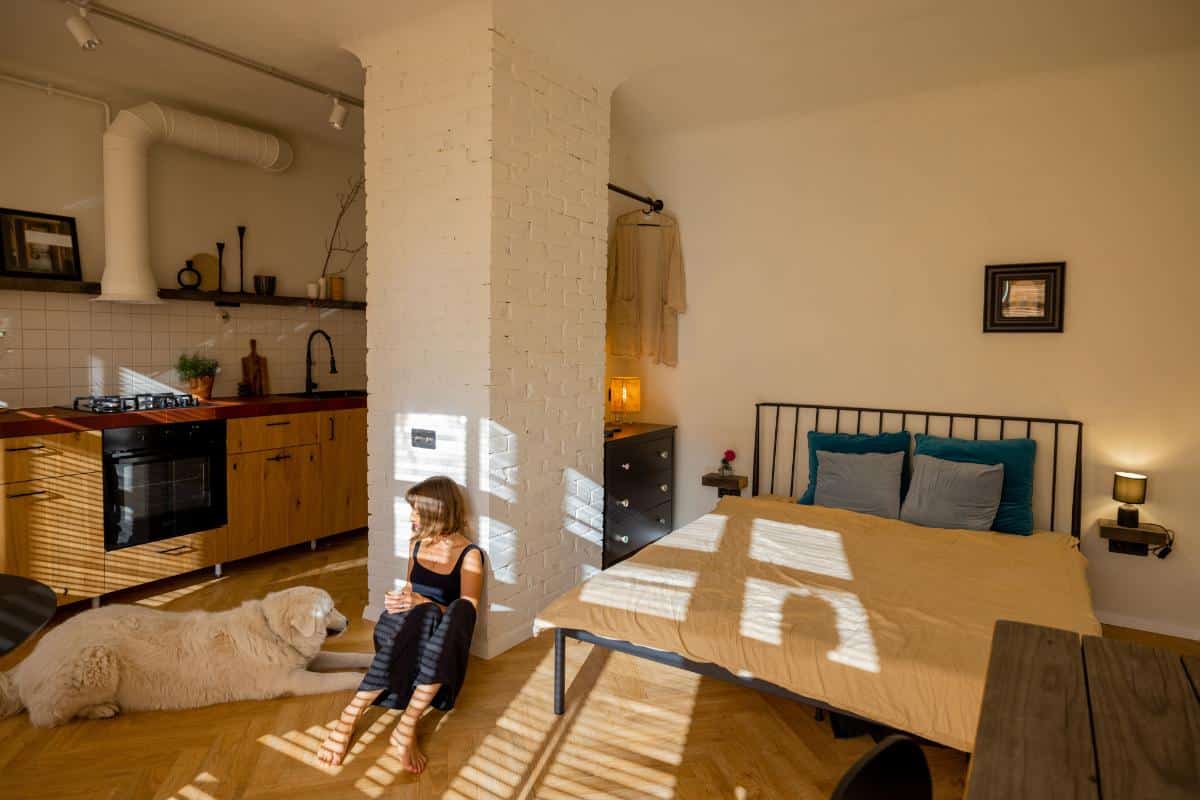
We are well aware of it. We continue to build and live in homes that are far too big. But no one should dictate that it’s wrong because, for many, our homes are still a social marker, where bigger is equated with a higher quality of life. So, what can we do to promote sustainable development where smaller is better? That is what Senior Researcher Mette Mechlenborg from Build – Institute for Building, City, and Environment at Aalborg University and a team of researchers are trying to explain, or perhaps, narrate, under the research project ‘Micro Homes in Denmark’. “Right now, two megatrends from the USA are beginning to make their mark in Denmark. One is due to ongoing urbanization, which requires compact living in the cities where construction is expensive. Therefore, we must accept a reduction in square meters in return of an increase in smarter interior solutions.
The other trend is leading some people out of the cities because they want to realize the dream of living closer to nature in a newly built tiny house. Both forms of living are space optimized and more sustainable but come with inherent challenges,” says Mette Mechlenborg. Firstly, the Danish housing market is not oriented towards compact living. For decades, legal requirements, architecture, and financing have favored larger homes. Secondly, only a small group of the cultural elite is living the dream of downsizing to their fancy designed tiny house or high end. “The housing market today is where ecology was 20 years ago. Most recognize that real estate development must be more sustainable, but for a significant shift to occur, everyone must be involved. The idea of the value of smaller and sustainable construction must filter down to the wider population, especially the upcoming generation, the Greta Thunberg generation, which must understand that downsizing is more than just a personal project,” Mette Mechlenborg explains.
DEVELOPMENT IS HEADING IN THE OPPOSITE DIRECTION
While Mette Mechlenborg and her colleagues are trying to establish a database and a corresponding narrative that advocates “small is good,” the trend is moving in a different direction. According to Statistics Denmark, in 1981, each Dane lived in an average of 43 square meters. Today, that figure has grown to nearly 54 square meters. On the other hand, there are fewer people per household. In 1981, the average was 2.5 people per household. Now, it is down to 2.1. Part of the explanation lies in the large suburban areas where children have moved out, leaving their parents behind living in large houses.
“Data collection and interviews in our project show that there is both a demand and a construction of more micro-home projects in the cities. But when it comes to, for example, tiny houses in the provinces, the data is less transparent and challenging to find. For instance, what is a tiny house?
Is it a summer house, an annex, or a mobile building? We still lack knowledge and insight. However, we do know that houses are build and that people live – and promote – this kind of tiny living from social media platforms. Here, it is also essential that regulations are still not geared toward the construction of smaller units, such as mobile homes or those with layouts that cannot meet current requirements for example insulation, laundry placement, and many other rules that were created for the market of larger homes.”
KNOWLEDGE AND CONFIDENCE MUST DRIVE DEVELOPMENT
Mette Mechlenborg and her team hope to close some of the gaps between what we acknowledge to be a sustainable future compared how we still act and build; Too Big! That is why we need a new and more faceted story. We all know that we need to contribute to the green transition, even in our homes. But the story must be expanded so that it is not just about sustainability. We should also be able to see the quality of living in smaller and more affordable homes and how it can offer new possibilities for the way we organize our lives. Part of the story also includes external events that we have no control over. With the covid-19 pandemic and a lot of time spent at home, we became aware of significant life choices, such as housing, jobs, and personal life. But the tipping point was the war in Ukraine and the resulting energy crisis. Here, we lost control over our own lives, and no one wants to experience that again. It can also be a decisive factor for future security if we need to tear something down and build something new, smaller, and more sustainable. Research from Build at Aalborg University will result in a report in which will provide builders, architectural firms, and contractors with a better basis for decision-making.
DESIGN OF THE RESEARCH PROJECT
The project ‘Micro Homes in Denmark’, that will be published in spring of 2024, is structured around the following main activities:
1. Mapping and Concept Clarification
- Mapping of planned and realized micro-housing projects in Denmark, including the number, size of housing units, geographical locations, target resident groups, rent/price levels, layout, common facilities, and ownership structures. This will be conducted through a combination of registry-based research (small housing units constructed in the last 5 years, location, residents, etc.) and a desktop study involving a review of construction project websites, municipal housing strategies, etc.
- Various concepts used in the Danish market.
- Literature review of international research on micro-housing, describing different concepts and experiences with them.
2. Case Studies of Selected Micro-Housing Development This main activity aims to investigate housing programs, housing quality, and housing environments, including residents’ perceptions of living comfort and community.
- Interviews will be conducted with residents to understand their motivations for living in micro-housing, as well as their experiences with life, housing quality, and community in a micro-housing neighborhood.
- Interviews will be conducted with municipalities that have established micro-housing to understand their experiences and considerations, both pros and cons.
- Interviews will be conducted with developers, architects, and investors to gain insights into their experiences and goals with micro-housing, as well as the demand from different target groups.
3. Evaluation of the Environmental Sustainability of Micro-Housing: Based on the mapping and categorization of micro-housing, an environmental sustainability assessment of three selected micro-housing concepts will be conducted, specifically including a Life Cycle Assessment (LCA) analysis that calculates the carbon footprint of housing units compared to traditional homes.
4. Summative Analysis and Recommendations. The qualitative and quantitative knowledge will be analyzed, and an analysis as well as recommendations for future micro-housing developments will be developed, taking into account social, environmental, and economic sustainability factors.
For more information, please visit AAU BUILD.
Planetary Responsibility Insights are based on interviews with experts, scientists, business leaders and others with the purpose of sharing knowledge and opinions on sustainability and nature-based solutions in the built environment.
ABOUT PRF
PRF is a private, commercial foundation, established in 2022. Our purpose is to help restore and protect the planet’s nature and biodiversity and promote sustainable development. We do this through a holistic mindset, mission-driven investments and projects. A key element of our strategy is about doing business differently and in better balance with nature. Therefore, we invest in and support sustainable solutions and knowledge sharing on how to build and live more sustainably.
Did you find this article interesting?
Follow us on LinkedIn and be updated on new articles.
For more information, please visit www.prf.dk