CAN TIMBER IN CONSTRUCTION HELP FIGHT CLIMATE CHANGE?
The construction industry has a colossal impact on the climate, by being one of the largest producers of the greenhouse gases that cause climate change. Cement and concrete production account for 8% of global greenhouse gas emissions (source) and the global iron and steel industry account for another 5%. With these emissions still rising rather than falling (source), it is critical that more sustainable production practices and alternative building materials are found.
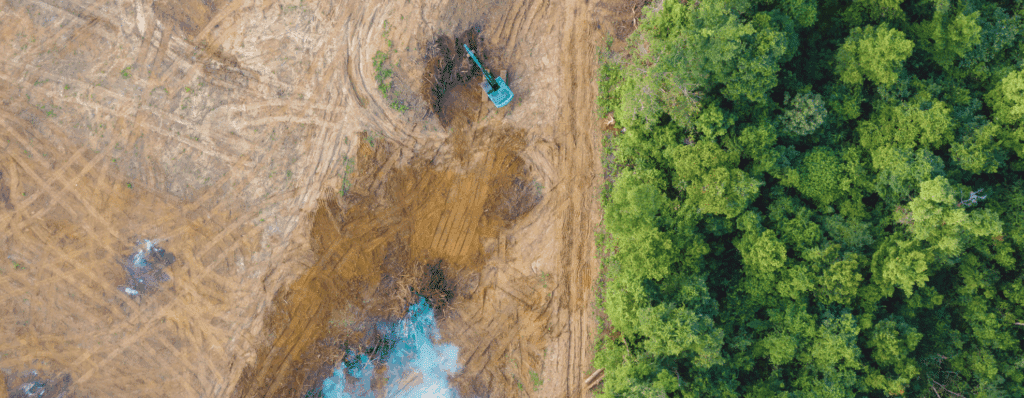
Timber is often suggested as a more sustainable building material due to lower emissions associated with its production (source), but with tough international targets to reduce deforestation, would the construction industry be contributing to deforestation pressure if timber demand increased? Although we usually associate felling forests with increasing carbon in the atmosphere, using timber in construction can create long-term carbon stores. When trees absorb carbon dioxide some of the carbon gets stored deep in their wood (source), and as long as the timber produced is not burned and does not rot, the carbon remains locked permanently inside. The use of timber reduces the carbon footprint, and it acts as a carbon sink because it preserves the carbon that is stored in the wood, preventing its release back into the atmosphere as carbon dioxide. It is a prerequisite of sustainable timber production that forests are replanted, and the sustainability credentials of timber can be further enhanced by selective harvesting rather than clear felling.
CAN REFORESTATION KEEP UP WITH DEMAND FOR CONSTRUCTION TIMBER?
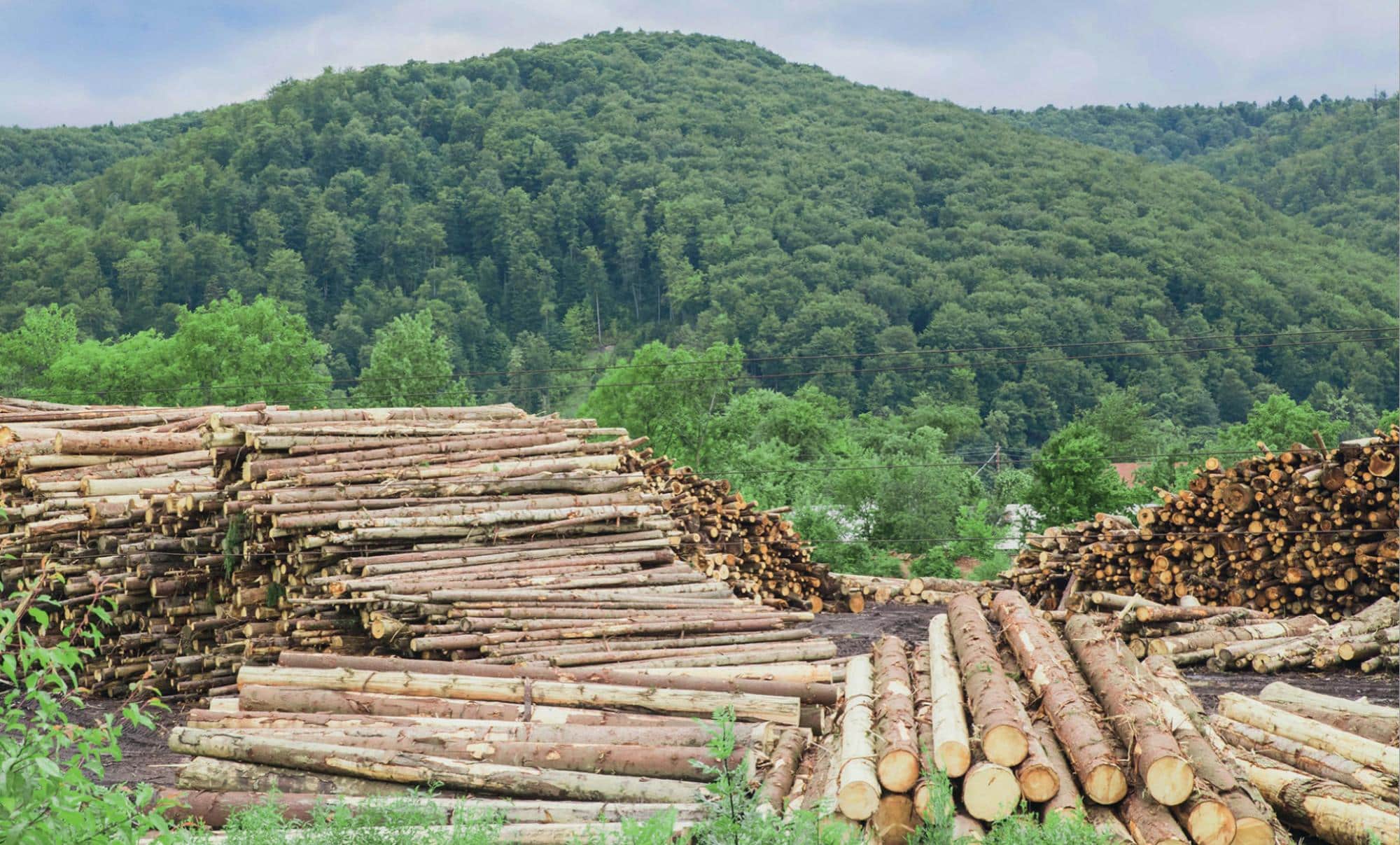
Theoretically sustainable forestry practices are designed to ensure that any timber used in construction has already been replaced by new growing trees. However, there is obviously at least a 30 year delay on the new trees reaching the same age as the extracted timber, so this requires great foresight in forestry planting. We would need to be planting more trees now to account for increased timber demand in 30 – 50 years time, and the evidence suggests that this is not happening (source).
In fact, deforestation has increased (source) rather than decreased since the pledges of COP26 to halt deforestation. With the World Bank predicting that the demand for timber will quadruple by 2050 (source), the timber sector is already expressing deep concern about the pipeline of available wood for the next 30 years.
A significant increase in demand due to a switch to using timber in construction would exacerbate this by an order of magnitude, and recent research (source) highlights that we do not have the capacity to sustain it unless other land uses change dramatically. To provide 50% of new construction with timber would require a doubling of the wood harvest according to the same report.
Without reducing the spatial footprint of agriculture by cutting meat and dairy consumption, it will be problematic to find the land to provide this much timber, particularly in the fast-growing tropical plantations (source) that are more effective from a climate change mitigation perspective.
Many recent studies highlight that timber can only be an effective carbon storage solution with improvements in timber processing to reduce emissions, and a reduction in the land footprint of agriculture to create space for more forest.


WHAT ARE THE BENEFITS OF USING TIMBER AND MASS TIMBER?
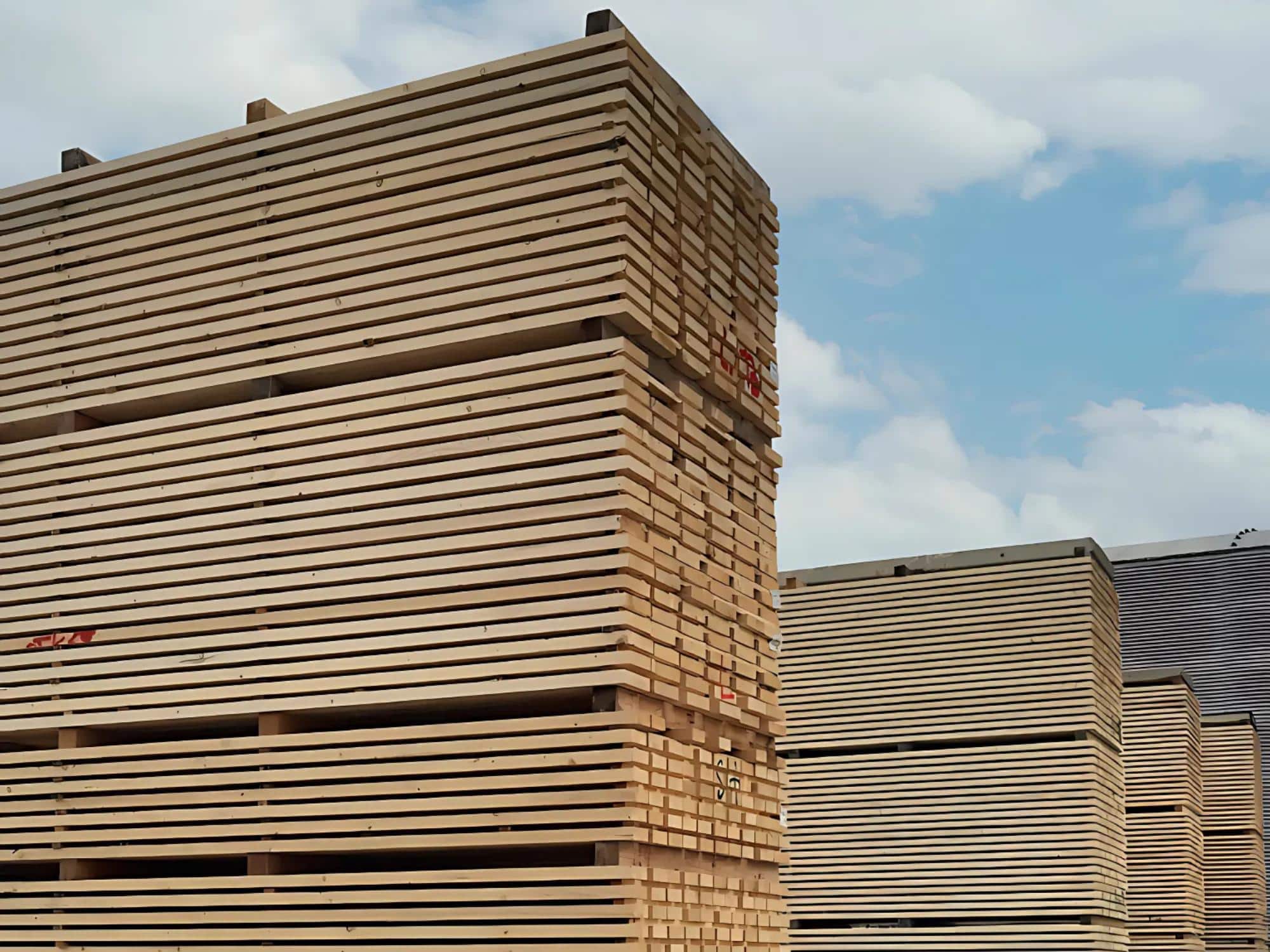
Traditionally only trees of a certain quality and circumference were suitable for producing timber planks, requiring more mature trees to be felled. In the late 1990s an innovative technique began to become popular, whereby multiple layers of timber are glued together to create incredibly strong wooden material. This timber is known collectively as mass timber and includes glulam and cross-laminated timber (CLT), which can be formed as panels or structural beams.
Mass timber can use younger growth trees with diameters as small as 11.5cm (source), which means that you can use thinnings and that older trees can be left standing. This provides significant advantages over traditional forest plantation timber, maintaining forest integrity and increasing biodiversity. Each cubic metre of CLT is estimated to contain 1 tonne of sequestered CO2 (source), which translates into a 26.5% reduction in global warming potential of a CLT hybrid building (source) compared to a concrete building.
“Each cubic metre of CLT is estimated to contain 1 tonne of sequestered CO2 26.5% reduction in global warming potential of a CLT hybrid building compared to a concrete building.”
Using mass timber in construction also allows buildings to be completed 30% (source) more quickly as panels are custom manufactured, resulting in reduced traffic, minimised waste, and lower labour costs. There are also health and wellbeing benefits associated with wooden buildings as they lower heart rate and blood pressure and improve air quality inside (source).
IS TIMBER IN CONSTRUCTION JUST AS SAFE AS STEEL AND CONCRETE?
Contrary to what might be expected, mass timber performs well in fire and indeed in some construction projects steel frames are given a mass timber cladding to protect them in the case of fire (source). Mass timber beams char on the outside when tested for fire resistance and that charring protects the wood beneath. Mass timber structures also have good resilience to earthquakes and can outperform concrete in seismic testing (source). They can be repaired afterwards, unlike concrete which cracks and needs to be replaced.
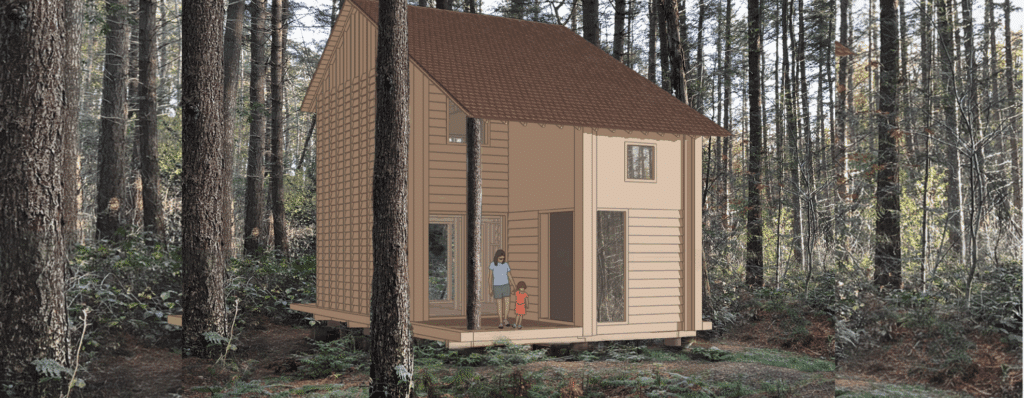
Mass timber has also been tested for wind resistance and it was found that the shape and design of the structure are crucial (source) to ensuring good results in wind testing. Mass timber panels and beams are also lightweight compared to steel and concrete, allowing larger structures such as Dalston Works (source) to be built with more shallow foundations on sites where there is infrastructure such as tunnels below. Mass timber therefore provides a safe, lightweight, and versatile alternative to steel and concrete.
HOW TO ELIMINATE OR REFOREST THE USE OF TROPICAL HARD WOOD IN CONSTRUCTION?
Sustainable forest management is critical to all aspects of mass timber usage, for maximizing stored carbon and reducing production emissions, for reducing the impact of tree harvesting, and for ensuring the most effective use of forest resources. Tropical plantations are the fastest growing and the most efficient in terms of producing carbon stores (source) without generating excess emissions, but also the most at risk of deforestation. The main method for ensuring that tropical forest resources are protected and used sustainably is through rigorous certification (source) and traceability through the supply chain.
Currently 90% of the CLT production is in Europe (source), and minimizing transport miles is critical for keeping the emissions associated with production down and maximizing the carbon storage benefits. Mass timber can also be manufactured using recycled wood products (source), giving a fantastic option for reducing timber extraction and further improving the sustainability of mass timber products.
ARE THERE ANY ALTERNATIVES?
Mass timber represents the most available and scalable option for reducing the planetary impact of the construction industry.
Although there are concerns that its production isn’t carbon neutral (source) under most circumstances, with the carbon benefits taking decades to materialize, It could become a significant store of carbon. Sustainable forestry practices are the key to maximizing its potential as a solution in our climate change arsenal. Low carbon concrete (source) is another alternative to increasing use of mass timber, but currently the technology is still relatively new (source), making it expensive and not scalable to the extent that the construction industry requires.
Reducing the emissions of steel production is more of an industry wide change in practices, and will require the rapid development and adoption of new technologies to capture carbon (source). Again, there is an unprecedented challenge in the form of scaling these technologies fast enough to achieve the 93% reduction in emissions by 2050 that is required of the steel industry to align with the Paris targets.
Most studies of the potential of mass timber as a saviour in the fight against climate change acknowledge the complexity of using timber as a carbon storage solution. The use of mass timber requires careful consideration of the sustainability of forestry operations and the processes involved in its production. It is a beautiful, strong, resilient building material, which has the potential to store carbon for hundreds of years. Managing timber demand is going to be a significant challenge and can only be successfully achieved by employing a holistic approach looking at the demands on land use globally.
For more information, please visit Creating Tommorow’s Forests
Planetary Responsibility Insights are based on interviews with experts, scientists, business leaders and others with the purpose of sharing knowledge and opinions on sustainability and nature-based solutions in the built environment.
ABOUT PRF
PRF is a private, commercial foundation, established in 2022. Our purpose is to help restore and protect the planet’s nature and biodiversity and promote sustainable development. We do this through a holistic mindset, mission-driven investments and projects. A key element of our strategy is about doing business differently and in better balance with nature. Therefore, we invest in and support sustainable solutions and knowledge sharing on how to build and live more sustainably.
Did you find this article interesting?
Follow us on LinkedIn and be updated on new articles.
For more information, please visit www.prf.dk