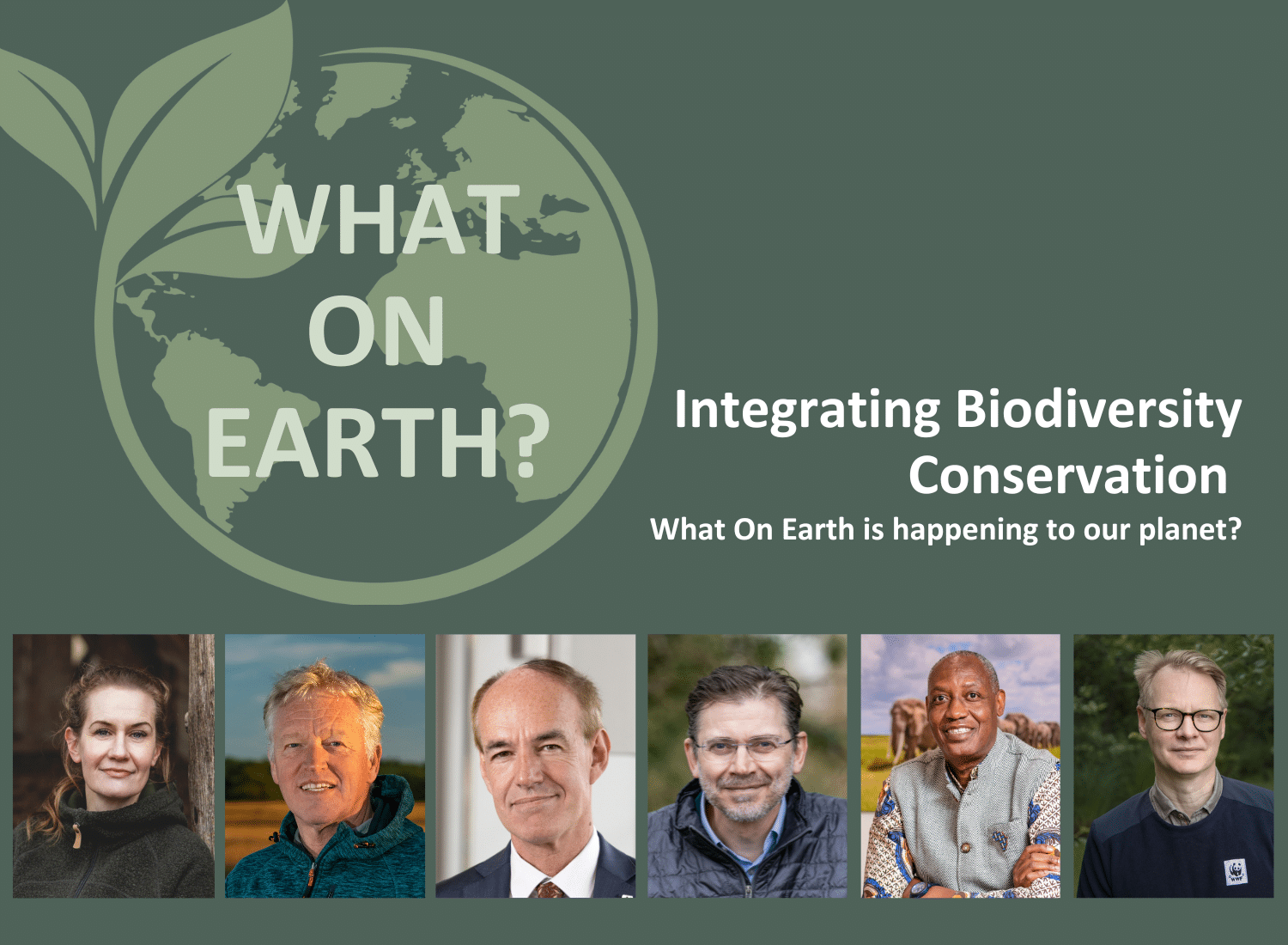
1. MARTIN HARPER, CEO, BIRDLIFE INTERNATIONAL
We provide businesses with the accurate and very up-to-date scientific data on threats to birds and their habitats which helps them tailor their activities to minimise disruption and destruction of nature, and we provide them tools to help them evaluate their plans and activities relative to the siting of their work and the likely impacts, along with recommendations on how to mitigate negative outcomes.
We also have deep partnerships with some businesses with whom we work to help them become nature positive and net zero. One example is our partnership with Heidelberg Materials, one of the world’s largest building manufacturers. Their cement, asphalt, and ready-mixed concrete are the pillars of houses, infrastructure, and industrial facilities. But to deliver their product a significant land size is needed to extract gravel and limestone.
They own over 600 active quarries across 50 countries, ranging in size from a few hectares up to 1000 hectares. Quarries can be massive but also hold a massive opportunity for wildlife. Over the last decade, BirdLife has supported Heidelberg Materials’ plans to restore nature within its quarries by conducting proximity studies and advising on how to create wildlife-friendly spaces.
Another partnership is our Atlantic Forest project supported by the Hempel Foundation and Aage V. Jensen Charity Foundation. The Atlantic Forest stretches along the coast of Brazil into Argentina and Paraguay and is one of the most biodiverse biomes on the planet, with many endemic and globally threatened species. This vast area encompasses major cities like Rio de Janeiro and São Paulo, home to around 150 million people. Due to various anthropogenic pressures, the Atlantic Forest is under severe threat, with over 85% of the region already deforested. This vital ecosystem provides local communities and indigenous peoples with essential goods and services they depend on for their livelihoods and well-being. Protecting this treasure, therefore, is synonymous with building a fairer and more sustainable future.
2. MARIA REUMERT GJERDING, PRESIDENT, DANISH SOCIETY FOR NATURE CONSERVATION
Everybody wants to be friends with green tech, whether it be solar, wind, electric vehicles etc. We do too! This gives green tech a particularly high responsibility to take other things than climate into consideration. The coming years will see huge investments here and we cannot allow for biodiversity to go down the drain because of the appetite for renewables. We fully support the transition to renewable energy, but as already mentioned, we can’t solve the climate crisis by exacerbating the biodiversity crisis. Take biodiversity just as seriously as climate considerations. This will become an essential commodity within a few years. And specifically, that we can’t solve one crisis at the cost of another.
3. KADDU KIWE SEBUNYA, CEO, AFRICAN WILDLIFE FOUNDATION
If I could wish for one specific private partnership, it would be a collaboration with organizations in the health sector aimed at drawing global awareness towards the interconnectedness between health and wildlife conservation. This partnership would seek to explore and address the intricate relationships between human health, environmental health, and biodiversity conservation.
One pivotal aspect of this collaboration would involve jointly developing and implementing initiatives highlighting nature’s health benefits and the importance of biodiversity conservation. By leveraging the expertise and reach of the health sector, we could amplify messages about the vital role that intact ecosystems play in supporting human health and well-being. Furthermore, partnering with organizations in the health sector would enable us to integrate environmental considerations into healthcare practices and policies on a global scale.
4. BO ØKSNEBJERG, CEO, WWF DENMARK
There is a big difference between how an NGO and a corporate company thinks and work. Hence, you should invest the time to find common ground and understand each other’s motivation. That will make it possible for you to find solutions that fit both parties’ purposes and ambitions. According to scientists, the biggest necessary change that needs to happen is a major transformation in the world’s food systems. I would love a big transformational partnership across the whole length of a major food supply chain – with major, end-to-end impact in the way we produce, transport, manufacture and sell food products.
MARCO LAMBERTINI, CONVENER AT NATURE POSITIVE INITIATIVE
Stop taking nature for granted and recognize that climate change and nature loss are increasingly a risk and a cost to our economy, society, and wellbeing. Our economy, society and ourselves as individuals depend entirely on a stable and predictable climate, and healthy and productive ecosystems. The fact that nature has always been there for us, plentiful and rich, doesn’t mean that it will always be. Science is telling us very clearly that under the growing pressure of human impacts we are rapidly approaching dangerous tipping points of entire Earth systems. When that will happen (it is a ‘when’ not an ‘if’ unless we change course) the planet will look and behave very differently from today and we will find it very hard to adapt to an extreme and unpredictable natural world. It is definitely not the legacy we would want to leave to our children and their children.

6. FRANS SCHEPERS, CO-FOUNDER AND EXECUTIVE DIRECTOR, REWILDING EUROPE
Rewilding is a relatively new approach to restore nature and landscapes. Where we work, we see local authorities and governments slowly picking up on the idea, and in a number of landscapes we are working closely with them. However, a lot of work has still to be done for rewilding to be embraced at government levels, and in the EU. We hope that by demonstrating the benefits that rewilding can bring for nature, people and climate, we can persuade them to create enabling policies, legislation and regulations. The fact that we make long-term commitments, and that our teams are locally based and anchored, makes a huge difference. We hope that authorities understand more and more that we need to restore nature at scale and support it.
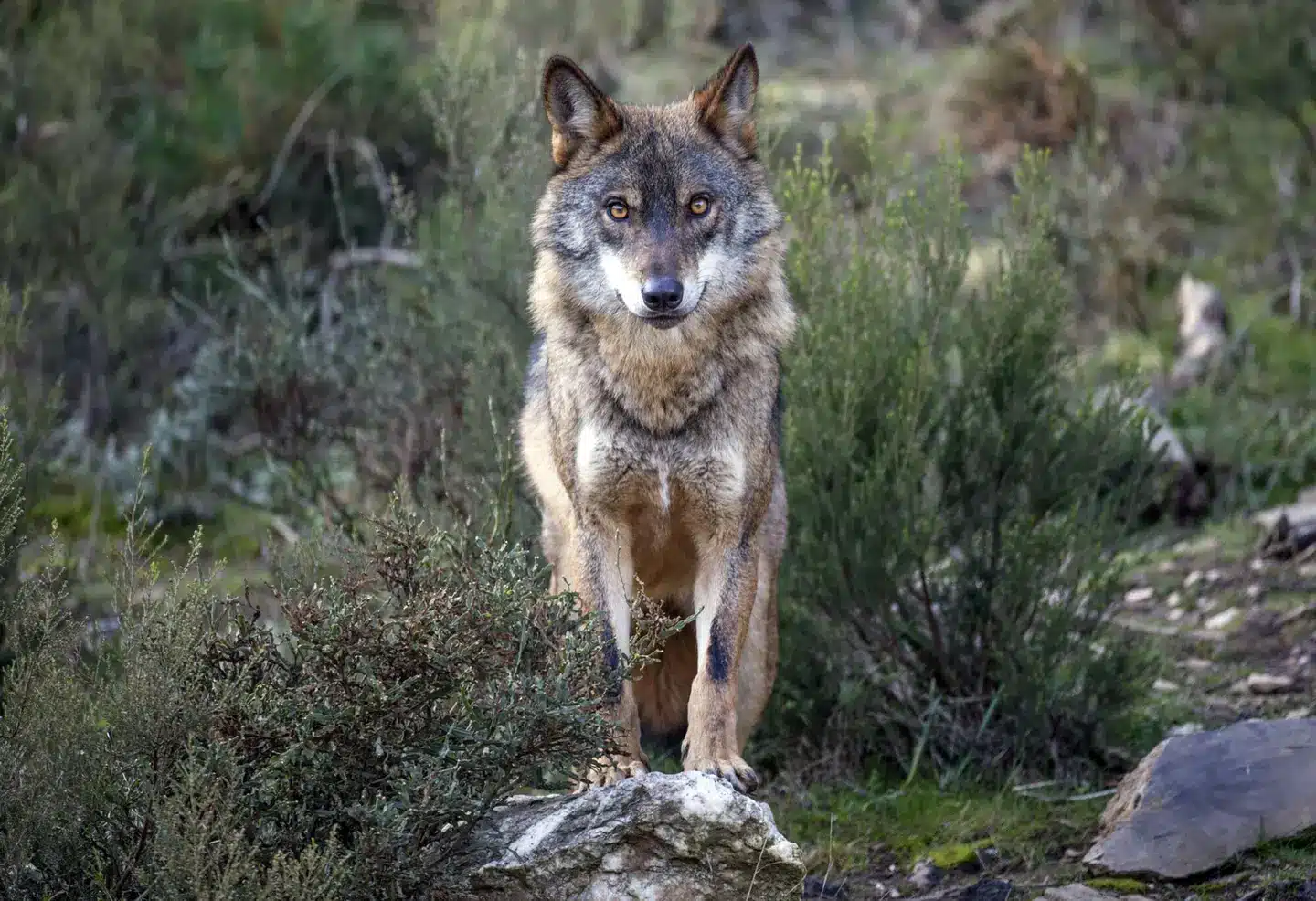
Photo: Iberian Wolf in Greater Côa Valley, 2021
ABOUT PRF
PRF is a private, commercial foundation, established in 2022. Our purpose is to help restore and protect the planet’s nature and biodiversity and promote sustainable development. We do this through a holistic mindset, mission-driven investments and projects. A key element of our strategy is about doing business differently and in better balance with nature. Therefore, we invest in and support sustainable solutions and knowledge sharing on how to build and live more sustainably.
Did you find this article interesting?
Follow us on LinkedIn and be updated on new articles.
For more information, please visit www.prf.dk