
For centuries, the mantra “if it’s green, it’s good” has guided many developers and urban planners, serving as a social marker for positive urban development through access to green spaces like parks and gardens. While this notion remains true, it increasingly conceals a more significant issue: biodiversity, or the lack thereof.
This is the view of Gunhild Askehave, architect and PhD candidate at the Danish Royal Academy with a special interest in the practice of urban development, architectural images and storytelling.
“Anything is, of course, preferable to asphalt, but biodiversity extends beyond merely planting a tree in front of a new building, and rooftop tomatoes will not save biodiversity in the built environment. We end up muddying the waters if we equate greenery with biodiversity,” says Gunhild Askehave.

She emphasizes that she is not an expert in biodiversity but an expert in understanding how the language we use when shaping cities influences our urban spaces.
“Many sustainability terms, including ‘biodiversity’ or ‘green,’ have become so diluted in their meaning today. We need to remember why biodiversity is important – it is about the planet’s resilience to climate change, rather than merely creating lovely green spaces in the city. Good recreational areas are essential for the city and I am not against rooftop tomatoes, community gardens, or insect hotels, but labelling these initiatives as efforts against global biodiversity loss stretches the meaning of the word too far,” Askehave argues.
GREEN, GREEN GRASS OF FOOTBALL FIELDS
As an example of ‘greener development’, Gunhild Askehave points to Copenhagen Municipality’s current municipal plan from 2019. It states that green areas are both recreational and biodiverse:
“The green and blue areas and connections contribute to promoting a healthy and active everyday life and to strengthen biodiversity both locally and globally” (source).
In a forthcoming urban development project at a former railway facility area in Copenhagen, Jernbanebyen, the municipal plan mandates 9-12 hectares of ‘green’ areas without specifying its contribution to biodiversity. Adding to the complexity, ‘green’ also means ‘recreational’, and then the neighborhood’s three football fields also count towards the goal of 9-12 hectares of ‘green’. Jernbanebyen serves as a case study in Gunhild Askehave’s PhD project, demonstrating how sustainability’ discourses can affect urban spaces in current urban development practice.
“Football fields make a fantastic contribution to any neighborhood – also in Jernbanebyen. But whether football fields will contribute to “biodiversity locally and globally”, I doubt,” Askehave says, adding that the ‘green’ football fields may end up only sharing the color with nature.
“It has not been decided yet whether there will actually be natural grass on the fields or if they will be covered with artificial turf, like many other municipal football fields. But even if natural grass is chosen, the grass monoculture will hardly contribute to the diversity of plants and wildlife in the area. I think this example demonstrates the need for developers, architects, and authorities to be more precise when defining a space as ‘green’.”

ABSOLUTE BIODIVERSITY LOSS
Stressing she is not a biologist, ecologist, or biodiversity expert, Gunhild Askehave underscores her expertise in discussing green construction. She highlights the need for precision in language to avoid overlooking contributions to biodiversity destruction while prioritizing the belief in green initiatives.
Gunhild Askehave emphasizes that she is not a biologist, ecologist, or an expert in biodiversity. She is, however, an expert in how we talk about green construction. She points out that we may still lack adequate knowledge of urban biodiversity or need to be more precise in our terminology to safeguard crucial distinctions. In our fervor for green spaces, there is a risk of overlooking activities genuinely contributing to biodiversity destruction.
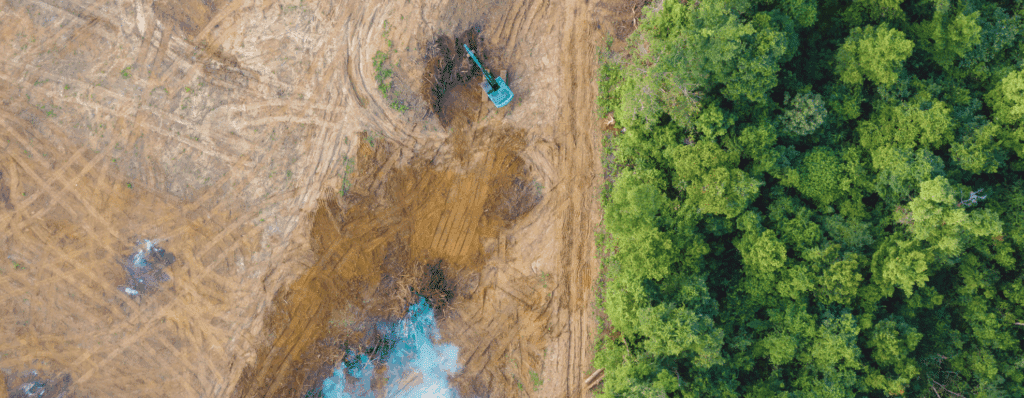
“Before the construction materials arrive at the construction site, forest needs to be cut down, and raw materials need to be extracted from mines. My suggestion is to hold the parties within construction accountable for the biodiversity loss caused by raw material extraction. In that way the scope is broader than the biodiversity lost on a centrally located building site.
Gunhild Askehave notes that some research has explored integrating biodiversity into life cycle assessments (LCA), considering all aspects of the value chain. However, this research is in its early stages, with the difficulty of quantifying biodiversity being a major challenge. Despite these challenges, developers should place greater emphasis on the biodiversity loss caused by extracting raw materials for construction.
“I believe that protecting large, sparsely populated, rural areas where wildlife and plants can thrive might safeguard species diversity better.
Cities shouldn’t be held responsible for biodiversity. A park is a park, and it has a recreational function – that is what a park does. If we believe biodiversity is threatened – and it is, we must maintain our focus and take action where biodiversity is actually most endangered, namely outside the cities”.
Learn more in the related article from Information here
Planetary Responsibility Insights are based on interviews with experts, scientists, business leaders and others with the purpose of sharing knowledge and opinions on sustainability and nature-based solutions in the built environment.
ABOUT PRF
PRF is a private, commercial foundation, established in 2022. Our purpose is to help restore and protect the planet’s nature and biodiversity and promote sustainable development. We do this through a holistic mindset, mission-driven investments and projects. A key element of our strategy is about doing business differently and in better balance with nature. Therefore, we invest in and support sustainable solutions and knowledge sharing on how to build and live more sustainably.
Did you find this article interesting?
Follow us on LinkedIn and be updated on new articles.
For more information, please visit www.prf.dk