The report states that: “England is now one of the most nature-depleted countries on Earth” (source).
- Average 32% decline in species’ abundance since 1970.
- Average 18% decrease in the distributions of invertebrate species since 1970.
- Since 1970, the distributions of 64% of flowering plant species and 68% of bryophytes (mosses and liverworts) have decreased across England.
- Of 8,840 species in England that have been assessed using IUCN Regional Red List criteria, 13% have been classified as threatened with extinction. But now, England has a very ambitious plan to restore nature. Building to net-zero is no longer enough. Now, developers must bring it to a plus with a new legislation – ‘Biodiversity Net-Gain’ (BNG).
But now, England has a very ambitious plan to restore nature. Building to net-zero is no longer enough. Now, developers must bring it to a plus with a new legislation – ‘Biodiversity Net-Gain’ (BNG).
WHAT IS BIODIVERSITY NET-GAIN?
Biodiversity Net-Gain (BNG) involves the enhancement and establishment of natural habitats. BNG ensures that any development contributes a verifiable positive impact (a ‘net gain’) to biodiversity, surpassing the pre-development conditions.
In England, BNG is becoming mandatory under Schedule 7A of the Town and Country Planning Act 1990 (as inserted by Schedule 14 of the Environment Act 2021).
Developers are required to deliver a BNG of 10%, indicating that a development should yield a greater or improved natural habitat compared to its pre-development state.
Biodiversity must be restored and raised in both the built environment and in open land. If construction in the larger cities makes it difficult for developers to meet demands on site, the new legislation states that biodiversity net-gain must be met by investing in other areas in need.
BUILDING BETTER QUALITY NATURAL HABITATS
It might initially sound contradictory that developers can create more nature. However, it is nonetheless the goal for one of the world’s most ambitious biodiversity policies in England and is mandatory from January 2024.
“Biodiversity Net-Gain is an essential pillar of the country’s plans for attracting private finance into nature conservation to achieve its overarching environmental objectives,” says Dr. Sophus zu Ermgassen, a Postdoctoral Researcher at the Nature-positive Hub at the University of Oxford and Adviser to the UK Government on the BNG legislation.
Under the Biodiversity Net-Gain policy, developers have three ways to offset their ‘biodiversity liability’ – the damage their project does to nature – and deliver a biodiversity net-gain of 10% to ensure development has a measurably positive impact (‘netgain’) on biodiversity, compared to what was there prior to the development (source).
Biodiversity Net-Gain applies to most developments, such as housing and smaller infrastructure projects. The policy will apply to major infrastructure projects from 2025 onwards.
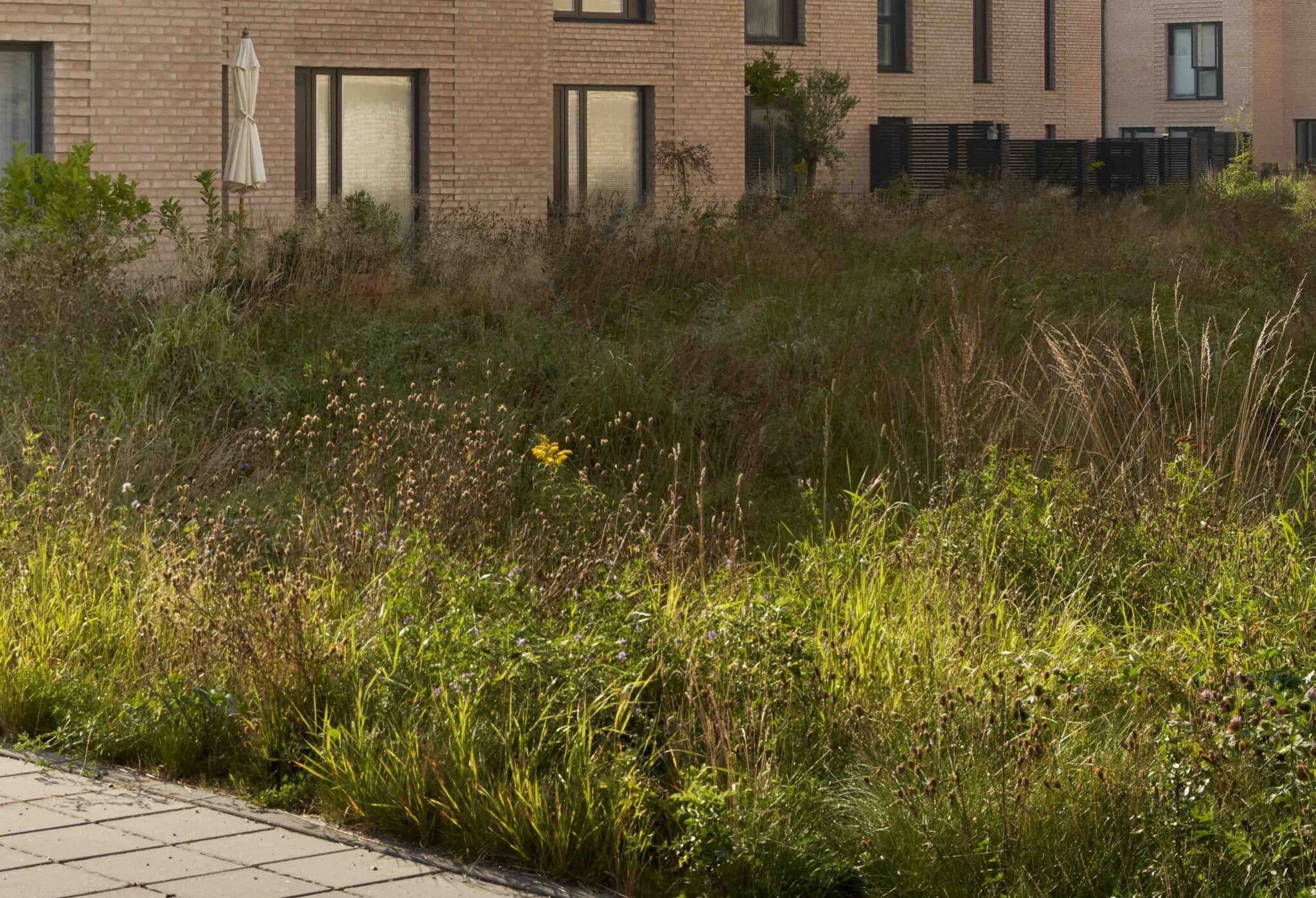
- Developers can enhance biodiversity within the development – so-called ‘on-site’ gains. For instance, that could be sowing wildflowers along road verges or managing some of the grassland within a housing development to promote wildlife.
- If developers can’t make ends meet on-site, their second option is to use biodiversity ‘units’ from ecological improvements somewhere else. These units are supposed to mirror the habitat that is impacted by the development. This means that when developers damage habitats, they must replace them with habitats that are even more valuable, from a conservation perspective, as those lost. Some of these units might come from the new ‘net-gain market’. Land managers create these units by implementing conservation actions on their land, and then they sell these units to developers. Alternatively, developers can develop their habitat banks, creating biodiversity units in one place to offset the impacts of their developments elsewhere.
- If no units are available through the first two options, developers can buy ’statutory’ biodiversity credits’ directly from the national government. These credits loosely resemble the units sold in the market. The government holds a stock of these units as a last resort for developers who cannot offset their damage in other ways. Prices, ranging from £42,000–650,000 depending on size and habitats, for these statutory units have been set deliberately high to disincentivise developers from relying on these credits
THE GOVERNANCE GAP
For the last three years, Sophus zu Ermgassen and his team have collected all BNG assessments for new developments in six ‘early-adopter’ councils. He is overall more than positive about the thoughts behind BNG. But there are gaps that need to be filled (source).
“Biodiversity Net-Gain has the potential to be a historic piece of legislation. But if monitoring and enforcement are not dramatically improved and resourced, it will fall short.
For instance, there is a clear ‘governance gap’ where the system for monitoring biodiversity gains delivered on the site of new developments is weaker than for gains purchased elsewhere.
The problem is that the standards and regulations of the three offset pathways vary considerably. There is reasonably stringent governance to ensure that biodiversity units purchased on the offsetting market are delivered. Sellers will have to submit their offsets to a national database, monitor biodiversity changes, and report on the ecological development of the site at regular intervals. Contrary to these, the system for monitoring, reporting, and enforcing units delivered on-site is much weaker. The process is overseen by local planning departments, which are typically lacking in capacity and ecological expertise, as explained by Dr. Sophus zu Ermgassen.
The research conducted by zu Ermgassen and the Oxford team has not gone unnoticed. Since publishing their evidence on BNG (source), the UK government has decided to increase funding by £8 million to local authorities, helping to ensure the necessary measures are in place to meet environmental and legislative demands.
“Ensuring that these policies lead to direct, robust gains in the quality of nature is therefore absolutely essential to ensure that the market-focused approach to drawing private finance into nature recovery in England leaves the environment better, rather than worse, off. It might not be perfect, but it is still better for biodiversity than the existing planning system. And on top of that, BNG legislation is improving awareness on biodiversity in construction,” says Dr. Sophus zu Ermgassen.
For more information, please visit The Oxford Nature Positve Hub.
Planetary Responsibility Insights are based on interviews with experts, scientists, business leaders and others with the purpose of sharing knowledge and opinions on sustainability and nature-based solutions in the built environment.
ABOUT PRF
PRF is a private, commercial foundation, established in 2022. Our purpose is to help restore and protect the planet’s nature and biodiversity and promote sustainable development. We do this through a holistic mindset, mission-driven investments and projects. A key element of our strategy is about doing business differently and in better balance with nature. Therefore, we invest in and support sustainable solutions and knowledge sharing on how to build and live more sustainably.
Did you find this article interesting?
Follow us on LinkedIn and be updated on new articles.
For more information, please visit www.prf.dk