1. KADDU KIWE SEBUNYA, CEO, AFRICAN WILDLIFE FOUNDATION
A collaboration that showcases the power of partnership in conservation is the joint effort led by the African Wildlife Foundation (AWF) to restore the Manyara Ranch Wildlife Corridor. This initiative represents a unique conservation model that harmonizes livestock farming with habitat restoration and biodiversity conservation. AWF’s leadership in this project has been instrumental in bringing together local communities, government agencies, and conservation stakeholders to restore and safeguard critical wildlife habitats in Tanzania.
By restoring the Manyara Ranch Wildlife Corridor, AWF has revitalized ecosystems and created sustainable livelihood opportunities for local communities through eco-friendly livestock management practices.
This collaborative endeavor underscores the importance of integrating conservation with community development, resulting in mutual benefits for people and wildlife. The restoration of the Manyara Ranch Wildlife Corridor stands as a testament to the positive outcomes that can be achieved through strategic partnerships and shared commitment to environmental stewardship

Photo: AWF PIX
2. FRANS SCHEPERS, CO-FOUNDER AND EXECUTIVE DIRECTOR, REWILDING EUROPE
Nature’s ways are cost-effective; if we allow nature to restore itself, it will. This means letting natural processes shape our landscapes and ecosystems, instead of people actively managing that often requires high, recurrent costs. Self-regulating landscapes are more sustainable in the long run. And when nature is healthy; we are healthier too.
Our goal is, by 2030, to demonstrate rewilding in 15 large and iconic landscapes across Europe that serve as inspirational examples of what is possible at a much larger scale. In these landscapes we commit for 20 years or longer to work with landowners, land managers, local communities and businesses to build and realize such a new narrative. We give it a helping hand by creating the right conditions – by removing dykes and dams to free up rivers, by reducing active management of wildlife populations, by allowing natural forest regeneration, and by reintroducing keystone species that have disappeared as a result of man’s actions. Then we should step back and let nature manage itsel, to the extent possible.
3. BO ØKSNEBJERG, FORMER CEO, WWF DENMARK
One advice for authorities that would impact our work would be to invest a larger interest in nature-based solutions, which is a new type of intervention in nature, where you use nature restoration and protection to both benefit nature and solve local problems with eg. water management or climate mitigation. This type of interventions will be the future of nature protection because they include an incentive to invest in biodiversity.
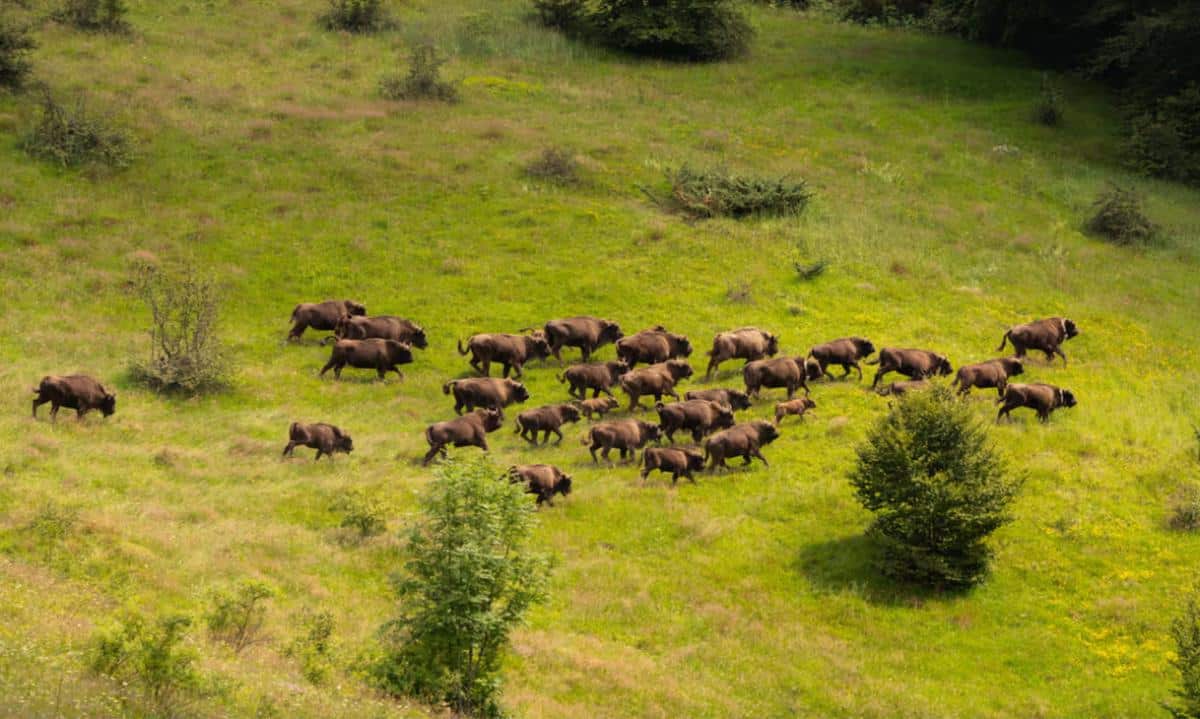
Photo: Herd of free-roaming European bison in Romania Daniel Mirlea/Rewilding Europe
4. LISELOTTE HOHWY STOKHOLM, CEO, OCEAN INSTITUTE, CPH
Not so many years ago, there were very few of us talking about the environmental challenges in the ocean. Fortunately, most people today acknowledge that something needs to be done here and now. So, we need to have closer cooperation with the authorities so we can give something back to the ocean.
Danish and international environmental authorities need to start thinking and acting like businesses. In any company, one bends to reality and constantly changes strategy and action to meet new challenges. Authorities and politicians, on the other hand, think too much in terms of large, year-long plans, but nature do not always comply to those plans.
None of us will experience the major changes for the benefit of the marine environment, not even the politicians who would like to be remembered for making the decisive decisions. But then they must boast of the small victories they have achieved along the way. We owe it to future generations and the environment, which will hopefully benefit from these ongoing decisions.
5. FRANCISCO DELGADO, EXECUTIVE DIRECTOR, CORCOVADO FOUNDATION
The Osa Peninsula in Costa Rica is one of the most biologically intense places on the planet. It represents the 50% of Costa Rica´s biodiversity and 2.5% of world´s biodiversity.
We used to have a project called “FACOSA” (Osa community support fund). We would love to reactive it. It consists in funding for local initiatives. The FACOSA projects was created to help community development in general. We know that we need people to have satisfy their basic needs before asking them to protect the natural resources.
One of the projects with a football field goes to show how nature restoration comes in many shapes and colors. The project was written by the community (sports committee) and consisted in installing lights to the soccer field. We asked them the question: “how installing lights to the soccer field, would help nature?”. The answer was that community was known by hunting. After work, they didn´t have anything to do, there were no recreational spaces to be used at night, so they went hunting just for fun.
In Costa Rica, people love soccer, so by installing lights to the soccer field, they could go to play soccer instead of hunting. In fact, people stopped hunting and every night went to play soccer. But besides that, women groups started selling food, artisans to sell their products and a local trade developed around it.

Photo: WWF Verdensnaturfonden
6. MARIA REUMERT GJERDING, PRESIDENT, DANISH SOCIETY FOR NATURE CONSERVATION
Our objectives are to create an interest in the broader environmental issues. We have established strategic partnerships with The Danish Agriculture and Food Council, The Danish Fishers, and several of the solar and wind companies.
Specifically, we have made agreements with The Danish Agriculture and Food Council Farmers about turning 100,000 hectares of bogland back to nature and with The Danish Fishers to protect 10 percent of the Danish marine environment. As such these partnerships are quite successful and have helped push Danish nature and environment in the right direction.
It is still rather frustrating however that the green issues at large are still seen as icing on the cake rather than something necessary for them. They are only involved as long as the green initiatives either create a profit or at least do not constitute a cost. As soon as there is the slightest risk that nature protection gets in the way of their profit, they start dithering. We want to transform this way of thinking in order for nature to be taken into account at the same level as safety in the workplace – something that naturally gets considered at all levels of the business community.

Photo: AWF PIX
ABOUT PRF
PRF is a private, commercial foundation, established in 2022. Our purpose is to help restore and protect the planet’s nature and biodiversity and promote sustainable development. We do this through a holistic mindset, mission-driven investments and projects. A key element of our strategy is about doing business differently and in better balance with nature. Therefore, we invest in and support sustainable solutions and knowledge sharing on how to build and live more sustainably.
Did you find this article interesting?
Follow us on LinkedIn and be updated on new articles.
For more information, please visit www.prf.dk