
1. WHAT ARE YOUR ORGANIZATION’S SPECIFIC OBJECTIVES AND GOALS?
We want to help the world live in harmony with nature. We are working through our 122 local Partners around the globe to conserve and restore species and the habitats they need to thrive to reverse the devastating effects on nature of the twin emergencies of biodiversity loss and climate change. How? Well, with our network of BirdLife Partners across the world, BirdLife is uniquely placed to take action to reverse these declines. We are different from other international NGOs. Our Partners are local, independent and are trusted by the local communities with whom they have been working sometimes for decades and provide legitimate voices to influence their local governments.
At the centre, through our Secretariat (250 people from 58 nationalities working in ten offices around the world), we provide the glue, the roadmap and sometimes the rocket fuel. We provide the science to find solutions to conservation challenges We develop joint strategies and coordinate action with our Partners across continents and regions, often using flyways. We provide a common voice to regional and global decision-makers. And of course, we build the capacity of our national partners so they can be even more effective.
2. WHO DO YOU COLLABORATE WITH IN TERMS OF BUSINESSES, AND HOW DO BOTH PARTIES GAIN FROM IT?
We provide businesses with the accurate and very up-to-date scientific data on threats to birds and their habitats which helps them tailor their activities to minimise disruption and destruction of nature, and we provide them tools to help them evaluate their plans and activities relative to the siting of their work and the likely impacts, along with recommendations on how to mitigate negative outcomes. We also have deep partnerships with some businesses with whom we work to help them become nature positive and net zero.
One example is our partnership with Heidelberg Materials, one of the world’s largest building manufacturers. Their cement, asphalt, and ready-mixed concrete are the pillars of houses, infrastructure, and industrial facilities. But to deliver their product a significant land size is needed to extract gravel and limestone. They own over 600 active quarries across 50 countries, ranging in size from a few hectares up to 1000 hectares. Quarries can be massive but also hold a massive opportunity for wildlife. Over the last decade, BirdLife has supported Heidelberg Materials’ plans to restore nature within its quarries by conducting proximity studies and advising on how to create wildlife-friendly spaces.
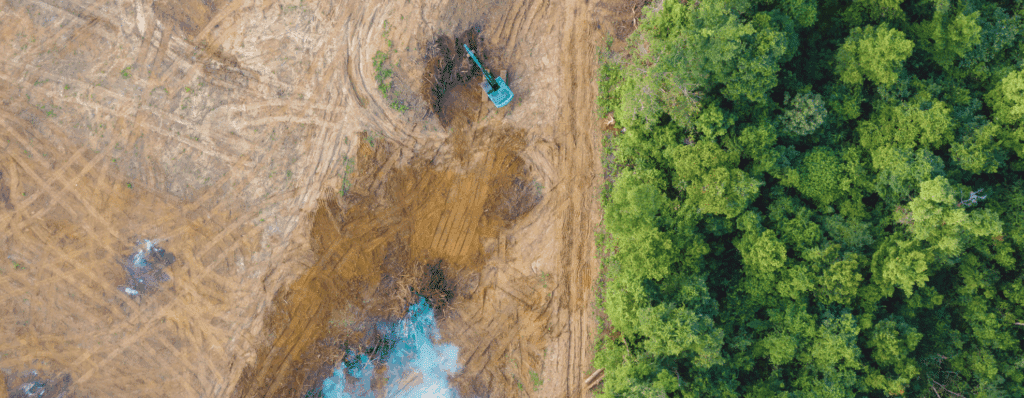
Another partnership is our Atlantic Forest project supported by the Hempel Foundation and Aage V. Jensen Charity Foundation. The Atlantic Forest stretches along the coast of Brazil into Argentina and Paraguay and is one of the most biodiverse biomes on the planet, with many endemic and globally threatened species. This vast area encompasses major cities like Rio de Janeiro and São Paulo, home to around 150 million people. Due to various anthropogenic pressures, the Atlantic Forest is under severe threat, with over 85% of the region already deforested. This vital ecosystem provides local communities and indigenous peoples with essential goods and services they depend on for their livelihoods and well-being. Protecting this treasure, therefore, is synonymous with building a fairer and more sustainable future.
Our belief is that a good business is one that understands their impact on the environment, sets targets to reduce harm/do good, monitor, and report then advocate externally for high environmental standards. Businesses gain from being better citizens and playing their role in saving the planet and we gain from integrating our conservation work into the far-ranging world of international, regional, and local business.
3. WHAT WORKS WELL - AND LESS WELL – IN THE COLLABORATION WITH BUSINESSES?
What works well is when business reflects the costs to nature, its conservation, restoration, and enhancement into their profit calculations so that a long-term perspective that sustains the planet, is at the core of their decisions. When they fail to do that, the outcomes are inevitably negative for people and nature. Equally, when businesses join forces with us to call for high environmental standards then we become a more powerful voice in the eyes of governments.
4. WHAT WOULD BE ONE ADVICE FOR THE COMPANIES THAT IMPACT YOUR WORK?
To listen to the science and incorporate it into their business planning

5. IF YOU COULD WISH FOR ONE SPECIFIC PRIVATE PARTNERSHIP – A COLLABORATION, PROJECT, OR SOMETHING ELSE, WHAT WOULD IT BE?
Anything that addresses the tragedy of the horizons to end the shortterm focus on quarterly or end of year profit rather focus on impact on the long term.

6. WHICH AND WHAT KIND OF RELATIONSHIPS DO YOU HAVE WITH NATIONAL AND INTERNATIONAL AUTHORITIES?
Through our Partners we work very effectively with national and local authorities as we are in local communities, and at a global and regional scale, we organise our Partners into effective lobbying forces providing a united voice to regional bodies (like the European Union) and in multilateral environmental agreements such as the UN Conventions on Climate, Biodiversity and Migratory Species.
7. WHAT WORKS WELL - AND LESS WELL – IN THE COLLABORATION WITH AUTHORITIES?
Politics is wildly diverse in different jurisdictions around the globe and so our Partners operate in a wide variety of environments in which nature and the planet often take a distant back seat to their imperatives of conservation we consider so essential to our longterm survival. Again, the tragedy of horizons is that politicians can obsess on short term electoral success at the expense of longterm sustainability.
8. WHAT WOULD BE ONE ADVICE FOR AUTHORITIES THAT IMPACT YOUR WORK?
It would be very similar to what we say to business – prioritise the science, listen to it, think in terms of the long term, and incorporate it into your planning and decisions if you want to truly serve your peoples and the planet.
9. IF YOU COULD WISH FOR ONE SPECIFIC NATIONAL OR INTERNATIONAL LEGISLATIVE CHANGE, WHAT WOULD IT BE?
Establish a universal right for nature akin to that which has been established in Ecuador backed up by a monitoring and enforcement regime to “recognize the inalienable rights of ecosystems to exist and flourish”. With the adoption of a new constitution in 2008 Ecuador became the first country in the world to enshrine a set of codified Rights of and to inform a more clarified content to those rights.
ABOUT PRF
PRF is a private, commercial foundation, established in 2022. Our purpose is to help restore and protect the planet’s nature and biodiversity and promote sustainable development. We do this through a holistic mindset, mission-driven investments and projects. A key element of our strategy is about doing business differently and in better balance with nature. Therefore, we invest in and support sustainable solutions and knowledge sharing on how to build and live more sustainably.
Did you find this article interesting?
Follow us on LinkedIn and be updated on new articles.
For more information, please visit www.prf.dk