
1. WHAT ARE YOUR ORGANIZATION’S SPECIFIC OBJECTIVES AND GOALS?
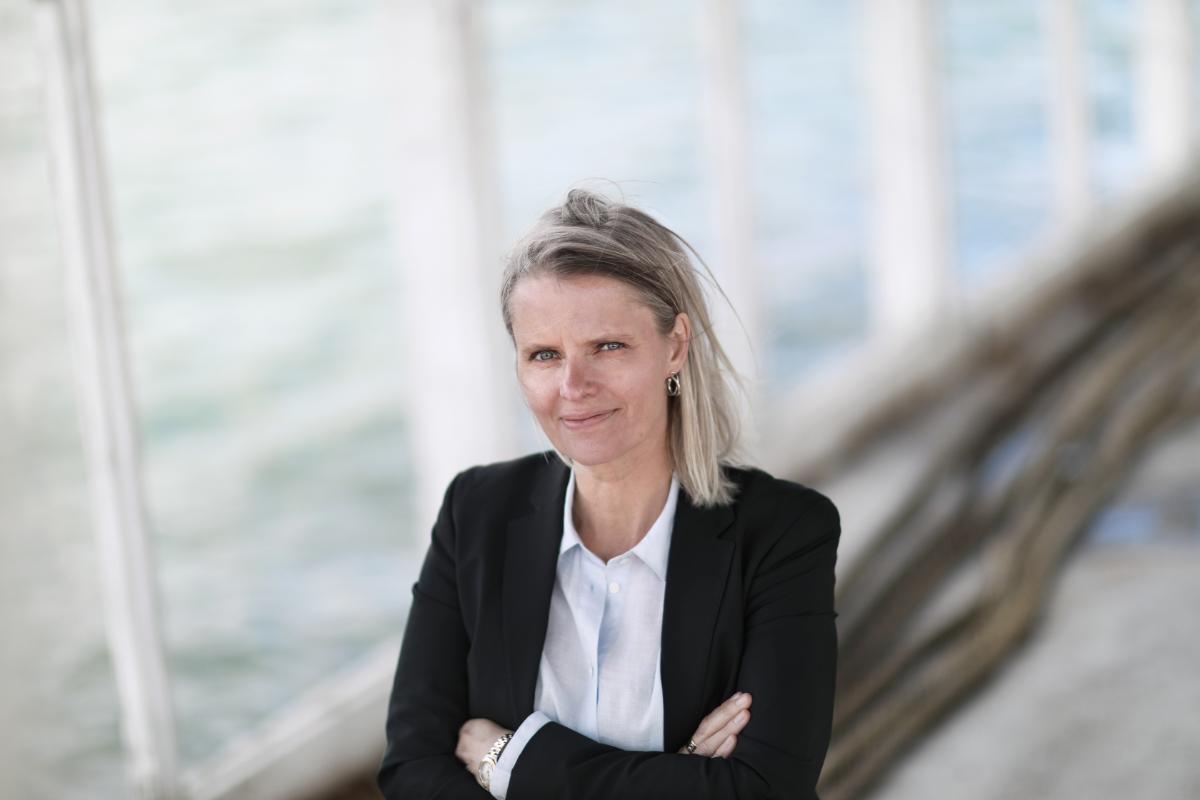
The Ocean Institute is an independent and knowledge-based think tank founded in 2021 at the initiative of the philanthropic foundation, The Velux Foundations. Our member companies, organizations, and research institutions all share the same vision of a more sustainable use of the ocean and protecting the marine environment around Denmark. Our task is to elevate the condition of the ocean significantly on the public agenda.
The Ocean Institute operates based on 5 principles:
1. Whenever we highlight a problem, we strive to also suggest at least one solution.
2. We always base our statements on knowledge and place information in a factual perspective.
3. We involve our members and listen to their perspectives.
4. We inform our members about our results before they are made public.
5. We are only part of the answer. The answer always lies in collaboration with others.
2. WHO DO YOU COLLABORATE WITH IN TERMS OF BUSINESSES, AND HOW DO BOTH PARTIES GAIN FROM IT?
Although we are an association that naturally seeks members, we equally strive to engage in dialogue and cooperation with Danish and international businesses, with several of them already being members today. Together with these companies, we can create competitive advantages on an international scale, which can have positive effects not only on the financial balance sheet but also significantly on the future of the ocean. Collaboration often begins with our board identifying a challenge within our three strategic focus areas: Sustainable Use, Pollution, and Restoration.
An example where all partners have generated more knowledge and insight is the think tank’s work on minimum criteria for biodiversity in the large tenders for offshore wind farms planned by both the state and private actors in the North Sea and Baltic Sea. Establishing wind farms inevitably brings changes to the ocean, and with increased knowledge, we can expand existing knowledge and create lasting, positive environmental restoration, and preferably more than just restoration, to strengthen the marine environment.
3. WHAT WORKS WELL - AND LESS WELL – IN THE COLLABORATION WITH BUSINESSES?
Most stakeholders generally agree on what needs to be done to restore and strengthen our climate. Biodiversity is a completely different challenge and is extremely difficult for businesses. While we see a great willingness today to consider the environment in business decision-making, which did not exist just a few years ago, there are still conflicting interests on biodiversity that require hard work to address. Although as of January 1, 2024, there are EU requirements for sustainability reporting for listed and larger companies, there are still many small and medium-sized enterprises not subject to the same requirements, perhaps waiting for a political decision before they can take real action.
However, innovative business solutions that can help save our oceans are not necessarily solely a governmental task. Companies themselves must also be involved in creating these ideas because if they are part of the problem, they must also be part of the solution. Companies need help to better understand that biodiversity in the oceans is not just about restoring past sins; it is also about strengthening the area for the benefit of us all and future generations. Both for nature’s and the companies’ bottom lines.
4. WHAT WOULD BE ONE ADVICE FOR THE COMPANIES THAT IMPACT YOUR WORK?
Implement nature in everything your business, your customers, and subcontractors do at sea. It may require taking a risk, but if that is the case, then we must ensure that banks and other financial partners are also willing to provide risk capital. It may cost, but it costs even more to refrain from doing so.
5. IF YOU COULD WISH FOR ONE SPECIFIC PRIVATE PARTNERSHIP – A COLLABORATION, PROJECT, OR SOMETHING ELSE, WHAT WOULD IT BE?
I would wish for a partnership between all actors at sea and their subcontractors. A partnership that can ensure new business models where large companies help small and medium-sized enterprises meet the requirements for enhanced biodiversity, which will eventually affect everyone. Such cooperation will also create new innovative solutions and incentives and drive sustainable development. I acknowledge that this may sound abstract, and it is. But it’s a chance we must take. It will also challenge us on the type of leaders needed. Who can navigate an organization and a collaboration where the course changes constantly along the way, but where we all know the goal? Regardless, a partnership will also be stronger in the years to come, where negotiations, agreements, and collaborations with other actors such as agriculture and industry, which affect the oceans with nitrogen emissions and environmentally harmful pollutants, are necessary. If we can involve private investors in such a partnership for the ocean, we can also begin to operate with multiple different accounts that consider both natures, the bottom line, and reward risk taking.
6. WHICH AND WHAT KIND OF RELATIONSHIPS DO YOU HAVE WITH NATIONAL AND INTERNATIONAL AUTHORITIES?
The Ocean Institute has a good relationship with Danish authorities, where we are more than willing to provide knowledge and innovation. The Ministry of the Environment listens when we speak, even when we ask them to prioritize their efforts. The work on minimum criteria for biodiversity in the large tenders for offshore wind farms in the North Sea and Baltic Sea is a good example of collaboration where the Ocean Institute’s knowledge-based input helps the authorities make more informed decisions.
7. WHAT WORKS WELL - AND LESS WELL – IN THE COLLABORATION WITH AUTHORITIES?
Denmark is a proud maritime nation that has thrived on the ocean for centuries. Today, we even have a Minister of the Environment, Magnus Heunicke, who likes to call himself “the Minister of the Ocean.” But he has so many other industries under his ministry that he also needs to consider, so priorities and the implementation of new laws and regulations do not always consider the ocean as much as it deserves. NGOs and foundations cannot come up with all the solutions alone. Not so many years ago, there were very few of us talking about the environmental challenges in the ocean. Fortunately, most people today acknowledge that something needs to be done here and now. So, we need to have closer cooperation with the authorities so we can give something back to the ocean.
8. WHAT WOULD BE ONE ADVICE FOR AUTHORITIES THAT IMPACT YOUR WORK?
Danish and international environmental authorities need to start thinking and acting like businesses. In any company, one bends to reality and constantly changes strategy and action to meet new challenges. Authorities and politicians, on the other hand, think too much in terms of large, year-long plans, but nature do not always comply to those plans. None of us will experience the major changes for the benefit of the marine environment, not even the politicians who would like to be remembered for making the decisive decisions. But then they must boast of the small victories they have achieved along the way. We owe it to future generations and the environment, which will hopefully benefit from these ongoing decisions.
9. IF YOU COULD WISH FOR ONE SPECIFIC NATIONAL OR INTERNATIONAL LEGISLATIVE CHANGE, WHAT WOULD IT BE?
Denmark is surrounded by sea on all sides, and 70 percent of our globe is covered by oceans. So why aren’t there more Ministers of the Ocean, solely dedicated to this field? I wish that Denmark becomes a pioneer and appoints a dedicated Minister of the Ocean who can help the environment and biodiversity in our waters.
Learn more about Ocean Institute
ABOUT PRF
PRF is a private, commercial foundation, established in 2022. Our purpose is to help restore and protect the planet’s nature and biodiversity and promote sustainable development. We do this through a holistic mindset, mission-driven investments and projects. A key element of our strategy is about doing business differently and in better balance with nature. Therefore, we invest in and support sustainable solutions and knowledge sharing on how to build and live more sustainably.
Did you find this article interesting?
Follow us on LinkedIn and be updated on new articles.
For more information, please visit www.prf.dk