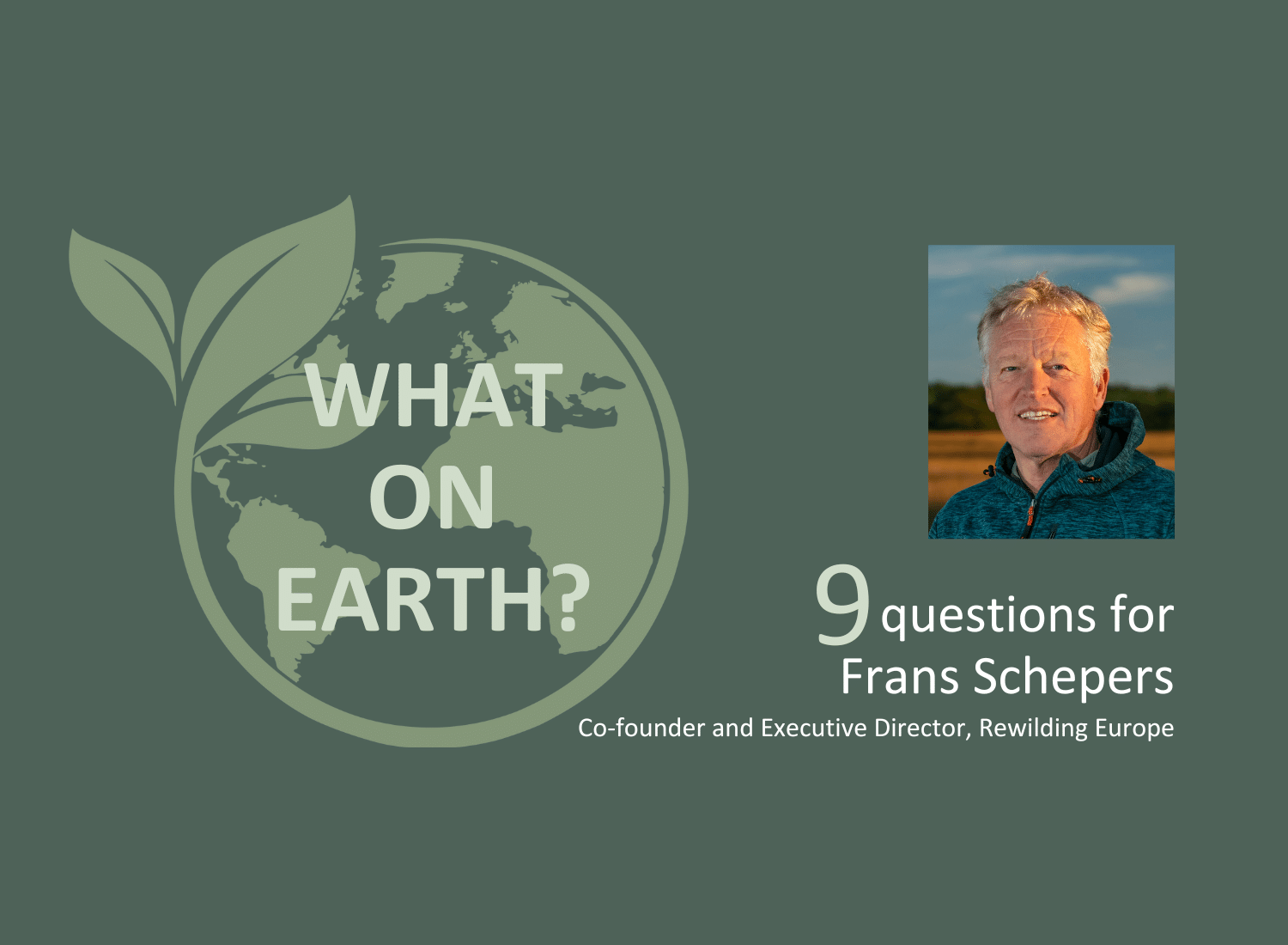
1. WHAT ARE YOUR ORGANIZATION’S SPECIFIC OBJECTIVES AND GOALS?
The vision of Rewilding Europe is that wilder nature – with much more space for wildlife and natural processes – is valued and treated as crucial for a prosperous and healthy society. Our mission is to demonstrate the benefits of wilder nature in practice across diverse European landscapes, and to inspire, motivate and enable others to adopt rewilding by providing tools and know-how from our experience on the ground. It is important to understand that rewilding is a new way of looking at nature: not as something that needs help and care, but something that is extremely powerful and can be our ally in help solving challenges that we have.
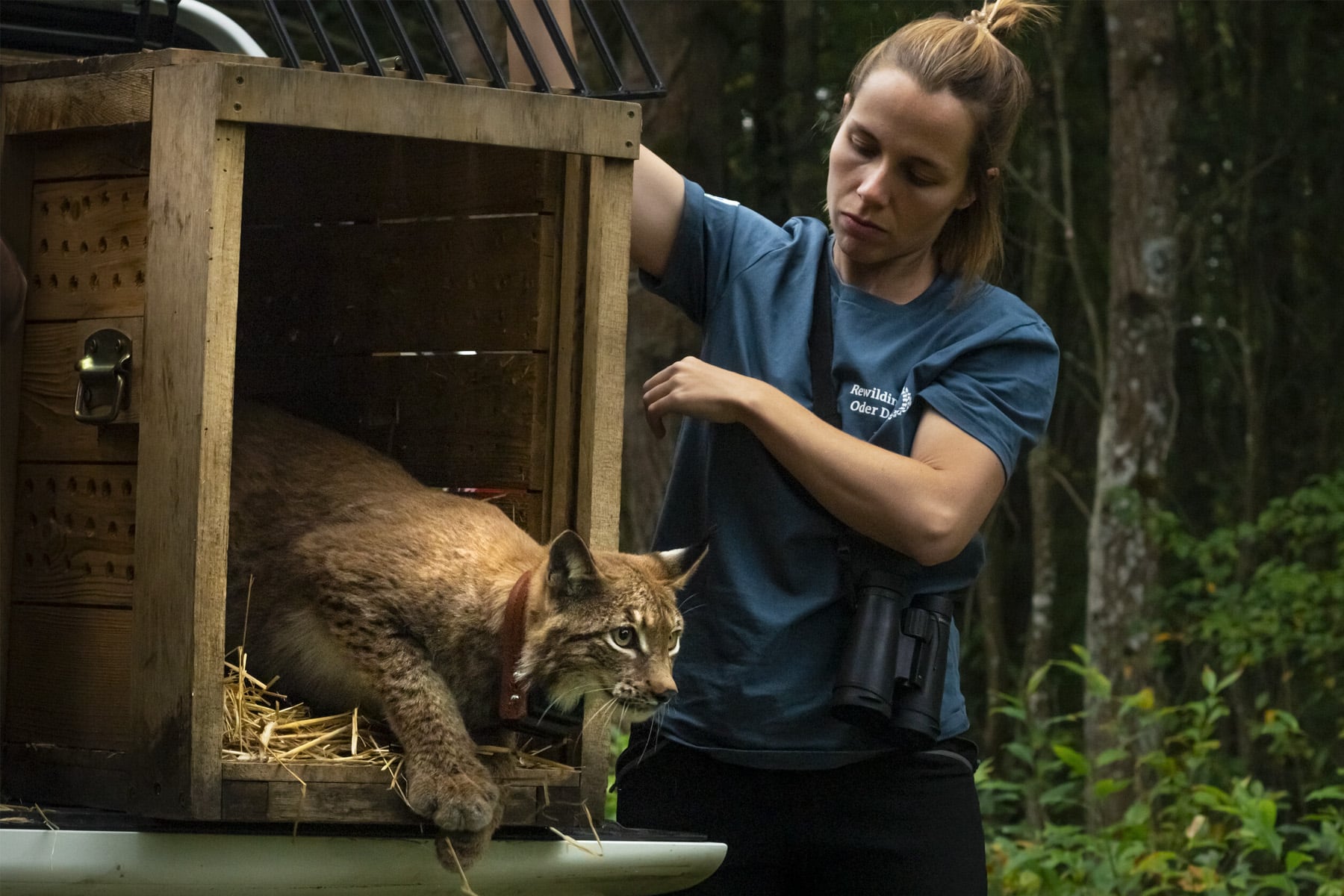
We know that naturally functioning ecosystems are better at providing us with clean air and water, preventing flooding, storing carbon and helping us to adapt to climate change. The beauty of rewilding is that it links ecology with modern economies, where wilder nature acts as an ally in solving modern socio-economic issues. Nature’s ways are cost-effective; if we allow nature to restore itself, it will. This means letting natural processes shape our landscapes and ecosystems, instead of people actively managing that often requires high, recurrent costs. Self-regulating landscapes are more sustainable in the long run. And when nature is healthy; we are healthier too. Our goal is, by 2030, to demonstrate rewilding in 15 large and iconic landscapes across Europe that serve as inspirational examples of what is possible at a much larger scale. In these landscapes we commit for 20 years or longer to work with land owners, land managers, local communities and businesses to build and realize such a new narrative. We give it a helping hand by creating the right conditions – by removing dykes and dams to free up rivers, by reducing active management of wildlife populations, by allowing natural forest regeneration, and by reintroducing keystone species that have disappeared as a result of man’s actions. Then we should step back and let nature manage itsel, to the extent possible. But rewilding is also about reconnecting a modern society – both rural and urban – with wilder nature. We invite people to experience and live in these new, rewilded landscapes, and benefit. This is why we are committed to making rewilding commercially viable and investible.
2. WHO DO YOU COLLABORATE WITH IN TERMS OF BUSINESSES, AND HOW DO BOTH PARTIES GAIN FROM IT?
Bringing in the private sector for investing and scaling up rewilding is essential. For recovering nature at scale in Europe, we cannot just rely on public or philantropic funding only. We know that interested corporates and private investors are out there. We look for companies that embrace nature in their business model and wish to showcase positive and progressive impact for climate, nature, and social commitments. For this reason, we have developed corporate engagement principles that inform companies how they can engage with us and support rewilding. This helps setting the right direction and manage expectations. Currently, we work with several companies, and we are looking for those interested in rewilding to help invest in initiatives. There are several possibilities for this, for instance to provide finance for Rewilding Europe Capital, a loan facility that we set up in 2013 that helps local business and entrepreneurs to set up rewilding enterprises. Another possibility is investing in a company that we set up in 2023, called Rewilding Climate Solutions.
Through this newco, we enable landowners and managers interested in or engaged in landscape-scale rewilding to sell nature-based carbon credits to carbon buyers and impact investors looking to invest in rigorously verified, long-term, high-impact rewilding initiatives. These credits will differ from more traditional carbon credits as they will facilitate the restoration of European landscapes in line with Rewilding Principles – thereby enhancing carbon capture and biodiversity, and delivering a range of other co-benefits, such as clean air, fresh water, and thriving nature-based economies. We also support landowners with credit development, loan facilities, income sourcing and pre-financing, and on-the-ground rewilding leading to scalability and pipeline. A new initiative we hope to launch soon is a Land Fund, where investors and philanthropic foundations can help us to secure land for rewilding.
3. WHAT WORKS WELL - AND LESS WELL – IN THE COLLABORATION WITH BUSINESSES?
We are approached by businesses on a regular basis; companies that wish to address climate change, enhance biodiversity, and enrich communities through their businesses in a sustainable way. Indeed, we are looking for those businesses that really want to make a meaningful difference. To explore this, and to avoid the risk of greenwashing, we have developed a partnership vetting system and a due diligence process. In general, you could say that we look at three different categories of companies. The first category consists of companies that are active in sectors that really do not fit us, like oil & gas, fast fashion, or the weapon industry. These are a ‘no go’ for us. The second category is the one where the company’s moral compass and technical set up is for the better of the future, and where we might see a possible cooperation, depending on certain conditions, and explore a match together. The third and desirable category is a ‘dream category’ of companies where we can very much see a match as these are companies that have it by heart to make a difference for nature or are very much connected to it.
4. WHAT WOULD BE ONE ADVICE FOR THE COMPANIES THAT IMPACT YOUR WORK?
Embrace protecting and restoring nature and put it at the heart of your whole business model, and value chain. From idea to clients!
5. IF YOU COULD WISH FOR ONE SPECIFIC PRIVATE PARTNERSHIP – A COLLABORATION, PROJECT, OR SOMETHING ELSE, WHAT WOULD IT BE?
This would be to increase our access to land to demonstrate rewilding. For 2030, we have set a target of 500,000 hectares of land under rewilding. So far, we have secured 65,000 hectares. This can be through the long-term lease of land, purchase of concessions, partnerships with (large) landowners or the purchase of land ownership. Right now, we are working in 10 landscapes across Europe, and this will grow to 15 landscapes by 2030. We would love to explore partnerships with corporates or philanthropic foundations that want to help us achieve this ambitious goal and contribute to our Land Fund.
6. WHICH AND WHAT KIND OF RELATIONSHIPS DO YOU HAVE WITH NATIONAL AND INTERNATIONAL AUTHORITIES?
Rewilding is a relatively new approach to restore nature and landscapes. Where we work, we see local authorities and governments slowly picking up on the idea, and in a number of landscapes we are working closely with them. However, a lot of work has still to be done for rewilding to be embraced at government levels, and in the EU. We hope that by demonstrating the benefits that rewilding can bring for nature, people and climate, we can persuade them to create enabling policies, legislation and regulations. The fact that we make long-term commitments, and that our teams are locally based and anchored, makes a huge difference. We hope that authorities understand more and more that we need to restore nature at scale and support it.
7. WHAT WORKS WELL - AND LESS WELL – IN THE COLLABORATION WITH AUTHORITIES?
Europe has 51 countries, of which 27 are members of the EU. This means that there are huge differences at national level, while for EU member states of course we see similarities as well. So, although there is not one answer to this question, in general we can say that Europe is very institutionalised, which can make innovation and new approaches quite difficult. Also, bureaucracy and political climate in each country set the framework for the legislation and how easy it is to receive support or permissions if we need them. As we work a lot with local communities, support local businesses and with an increasing awareness of the climate and biodiversity crisis that we face, we see the understanding for a need for change emerging, from governments to local councils. A big challenge we face in Europe is the impact of the industrial agriculture sector, with all its negative impact on nature, soil, and people’s health and well-being. In my view, a dead-end game but where there is huge resistance to change. We really need to change the way we produce food. Also, reducing meat consumption towards more plant-based diets creates huge space for nature recovery, as most of our land is used for growing animal food. At the end of the day it is nature that provides our life insurance. The political system must back farmers and banks defining a more sustainable way of agricultural production that does not ruin Earth. Everything comes from nature. It has now become very urgent to change this
8. WHAT WOULD BE ONE ADVICE FOR AUTHORITIES THAT IMPACT YOUR WORK?
Acknowledge, embrace, and create policies for nature recovery to make it happen at scale. On all levels. Local, national, and European. Within and outside protected areas, even in urban areas. Let’s get in the recovery mode and work towards a nature-positive Europe!
9. IF YOU COULD WISH FOR ONE SPECIFIC NATIONAL OR INTERNATIONAL LEGISLATIVE CHANGE, WHAT WOULD IT BE?
In this very hour as we do this interview, the European Parliament has just passed the Nature Restoration Law. But the final approval by the member states is at risk. But this is the only way that enables us to restore 20% of Europe’s land and seas, based on legally binding targets for member states. Each EU member state has to prepare national nature restoration plans, and we are ready to provide examples and inputs how this can be best done. In our view this is by ‘helping nature to restore itself’, as Sir David Attenborough said so well. Learn more about Rewilding Europe
ABOUT PRF
PRF is a private, commercial foundation, established in 2022. Our purpose is to help restore and protect the planet’s nature and biodiversity and promote sustainable development. We do this through a holistic mindset, mission-driven investments and projects.
A key element of our strategy is about doing business differently and in better balance with nature. Therefore, we invest in and support sustainable solutions and knowledge sharing on how to build and live more sustainably.
Did you find this article interesting?
Follow us on LinkedIn and be updated on new articles. For more information, please visit www.prf.dk