1. WHAT ARE YOUR ORGANIZATION’S SPECIFIC OBJECTIVES AND GOALS?
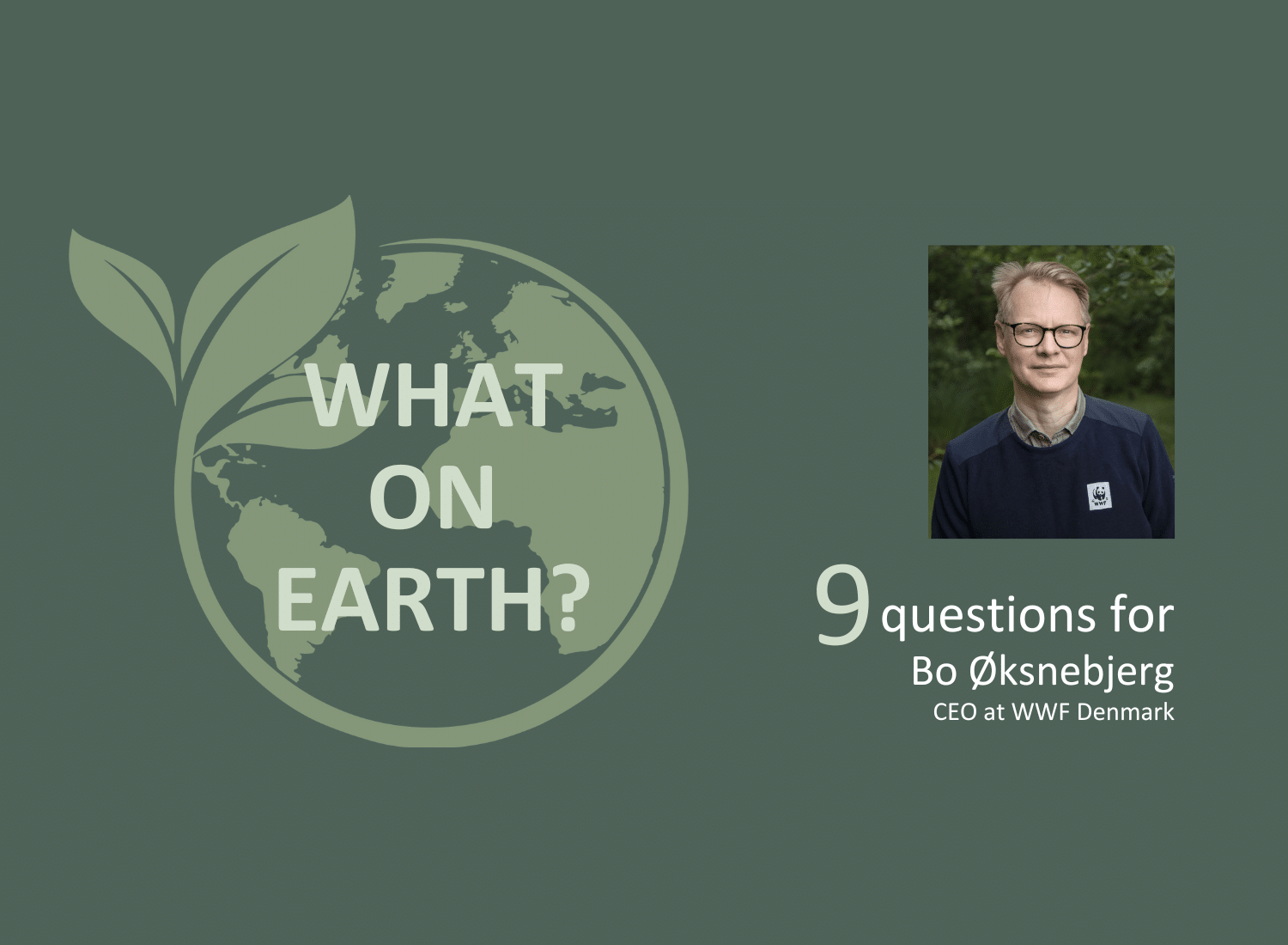
WWF works for a future, where people and nature coexists in harmony. That requires that we reserve 30 percent of all land and water for protected nature. We must also restore enough nature to meet this target. And finally, we must half humanity’s footprint on the planet to make sure we can remain in this state in the future.
2. WHO DO YOU COLLABORATE WITH IN TERMS OF BUSINESSES, AND HOW DO BOTH PARTIES GAIN FROM IT?
WWF has a long track record of working with corporates to reduce humanity’s footprint on nature, invent new, sustainable solutions and fund nature protection and restoration. WWF in Denmark works with a series of companies to do this. For example, we work with Carlsberg on using nature to replenish water resources, Ørsted to restore mussel reefs in the North Sea and VELUX to protect tropical forests. The best partnerships have multiple functions. They improve the company business and sustainability performance, fund important nature conservation and engages or educates stakeholders to reduce their impact on nature and climate. It’ a triple win
3. WHAT WORKS WELL - AND LESS WELL – IN THE COLLABORATION WITH BUSINESSES?
The best partnerships solve concrete challenges by leveraging both parties’ strengths. Companies have technologies, infrastructure and financial strengths that NGO’s can only dream of. Combined with our knowledge, we can implement solutions which neither party could do alone. One the other hand, it is important that NGO and corporates do not engage in partnership for the wrong reasons. If you only join forces for money or publicity, you should not do it at all.
4. WHAT WOULD BE ONE ADVICE FOR THE COMPANIES THAT IMPACT YOUR WORK?
There is a big difference between how an NGO and a corporate company thinks and work. Hence, you should invest the time to find common ground and understand each other’s motivation. That will make it possible for you to find solutions that fit both parties’ purposes and ambitions.

5. IF YOU COULD WISH FOR ONE SPECIFIC PRIVATE PARTNERSHIP – A COLLABORATION, PROJECT, OR SOMETHING ELSE, WHAT WOULD IT BE?
According to scientists, the biggest necessary change that needs to happen is a major transformation in the world’s food systems. I would love a big transformational partnership across the whole length of a major food supply chain – with major, end-to-end impact in the way we produce, transport, manufacture and sell food products.
6. WHICH AND WHAT KIND OF RELATIONSHIPS DO YOU HAVE WITH NATIONAL AND INTERNATIONAL AUTHORITIES?
WWF is the by far the world’s largest conservation NGO. When you have that much power, you also have an obligation to be tactful and inclusive. We take this responsibility very seriously. Therefore, we have intensive contacts with politicians, authorities and other stakeholders in our work and conservation efforts all over the world. We have dedicated staff for this in both Denmark and in all the many countries where we implement conservation projects with our local offices and local stakeholders. We also have a huge office in Brussels to communicate effectively with the EU. And WWF represents all the world’s NGO´s at major political events. For example, WWF negotiated on behalf of all the NGO´s, when the UN Kunming-Montreal agreement on biodiversity was approved a couple of years ago.

7. WHAT WORKS WELL - AND LESS WELL – IN THE COLLABORATION WITH AUTHORITIES?
It can be frustrating when governmental processes sometimes proceed in slow motion. There can be several reasons for this. There is a big difference between working with the authorities in the Global South and the Global North. Here in Denmark, the authorities have extensive resources and well-established processes – which sometimes may be somewhat complicated and over-engineered. In the Global South, authorities often lack the resources to do all they would like to do. But everywhere in the world, we have great collaboration with the local authorities. It’s more complicated with the politicians, who stops the necessary nature-friendly legislation and conservation efforts in many countries right now.

8. WHAT WOULD BE ONE ADVICE FOR AUTHORITIES THAT IMPACT YOUR WORK?
I think it would be to invest a larger interest in nature-based solutions, which is a new type of intervention in nature, where you use nature restoration and protection to both benefit nature and solve local problems with eg. water management or climate mitigation. This type of interventions will be the future of nature protection because they include an incentive to invest in biodiversity.
9. IF YOU COULD WISH FOR ONE SPECIFIC NATIONAL OR INTERNATIONAL LEGISLATIVE CHANGE, WHAT WOULD IT BE?
That would be turning UN’s and EU’s ambitions into actual law. All nations of the world have agreed on the Paris agreement on climate and the Kunming-Montreal agreement on biodiversity. They include all the ingredients needed to restore and protect our nature and climate for future generations. But the agreements are not binding. My biggest wish would be that all the world’s countries put these agreements into concrete law with binding targets. That would be a turning point for our Planet’s future for sure.
ABOUT PRF
PRF is a private, commercial foundation, established in 2022. Our purpose is to help restore and protect the planet’s nature and biodiversity and promote sustainable development. We do this through a holistic mindset, mission-driven investments and projects. A key element of our strategy is about doing business differently and in better balance with nature. Therefore, we invest in and support sustainable solutions and knowledge sharing on how to build and live more sustainably.
Did you find this article interesting?
Follow us on LinkedIn and be updated on new articles.
For more information, please visit www.prf.dk