
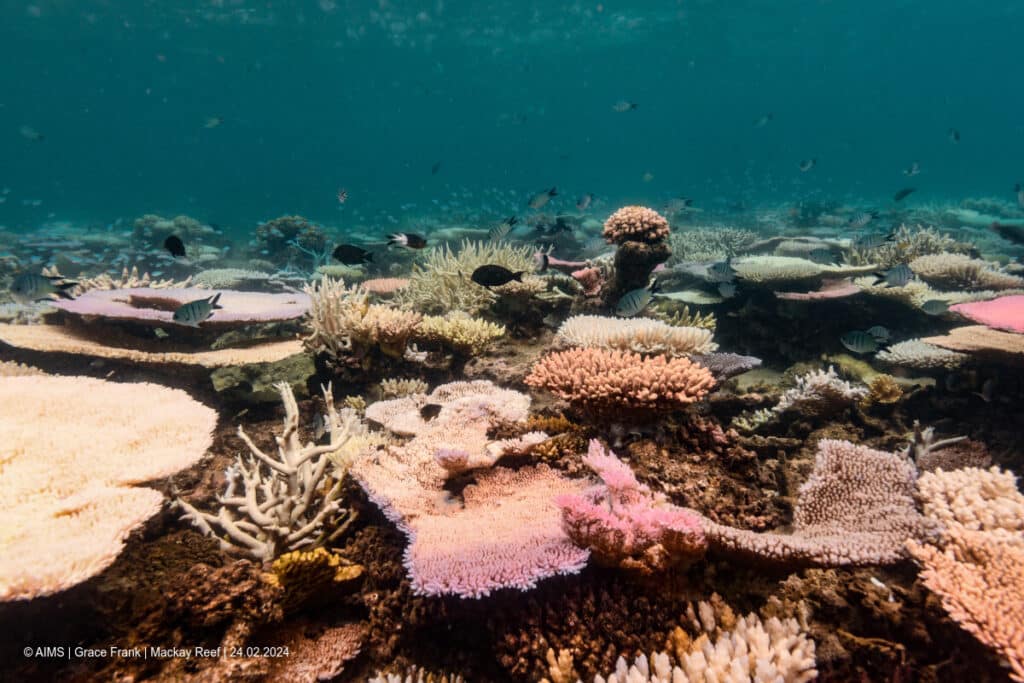
There is a moment in coral science when abstraction disappears. When the reef turns white. Not in isolated patches, but across vast areas stretching beyond the horizon. When colour drains away, and what remains is not yet dead, but severely weakened. For Line Bay, that moment has arrived more than once.
“Mass bleaching,” she says. “Seeing the reef turn white. Seeing large-scale events where hundreds of reefs are affected at the same time. That changes how you think about what is possible and what is no longer enough.”
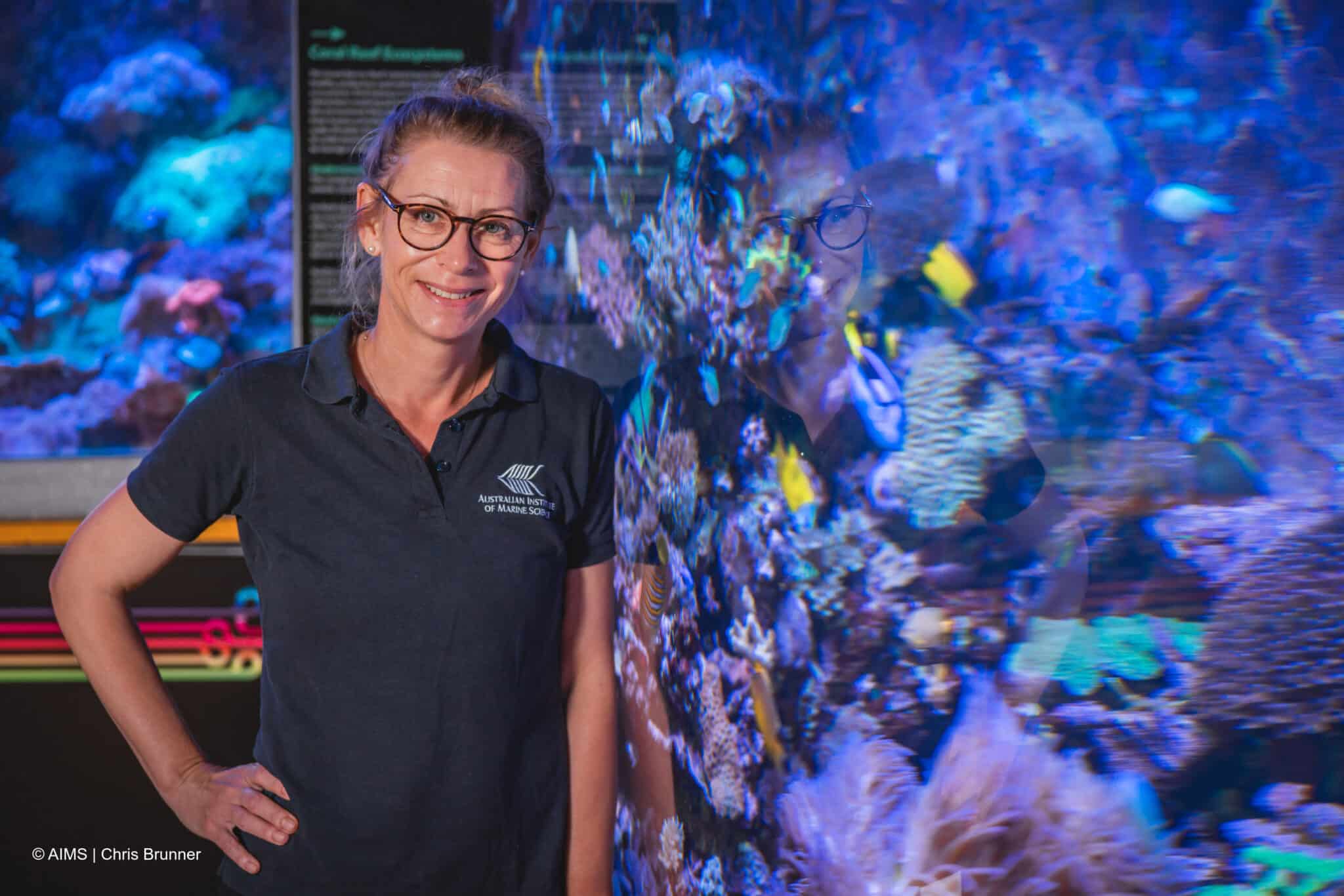
Bay is a geneticist and Program Director for Reef Recovery, Adaptation and Restoration at the Australian Institute of Marine Science. She has spent decades studying how corals in The Great Barrier Reef respond to environmental stress, how they adapt and where adaptation begins to fail.
From management to limits
That boundary between resilience and collapse led to the creation of the Reef Restoration and Adaptation Program (RRAP) where Bay’s teams conduct research on coral aquaculture and adaptation. A national, mission-driven research effort designed not to “save” the Great Barrier Reef, but to answer a far more difficult question. Is it scientifically possible to help a system of this scale persist in a warming world? For decades, reefs were protected through more conventional marine management approaches: regulating fishing, improving water quality, reducing local stressors. These measures remain essential. But they were never designed to cope with repeated, climate-driven heat stress.
“When events happen at that scale,” Bay explains, “you realise that your existing management tools are simply no longer effective, however our new research reveal approaches that have significant potential to impact reefs and people.
Corals get their colour and most of their energy from microscopic algae living inside their tissues. These symbiotic algae carry out photosynthesis, feeding the coral and the symbionts add an army green/ brown base colour. When seawater temperatures rise even slightly beyond what corals have experienced in recent history this partnership breaks down. The algae are lost from the coral animal in a stress response. And then the coral tissue becomes translucent, revealing the white calcium carbonate skeleton beneath.
A system almost too large to restore
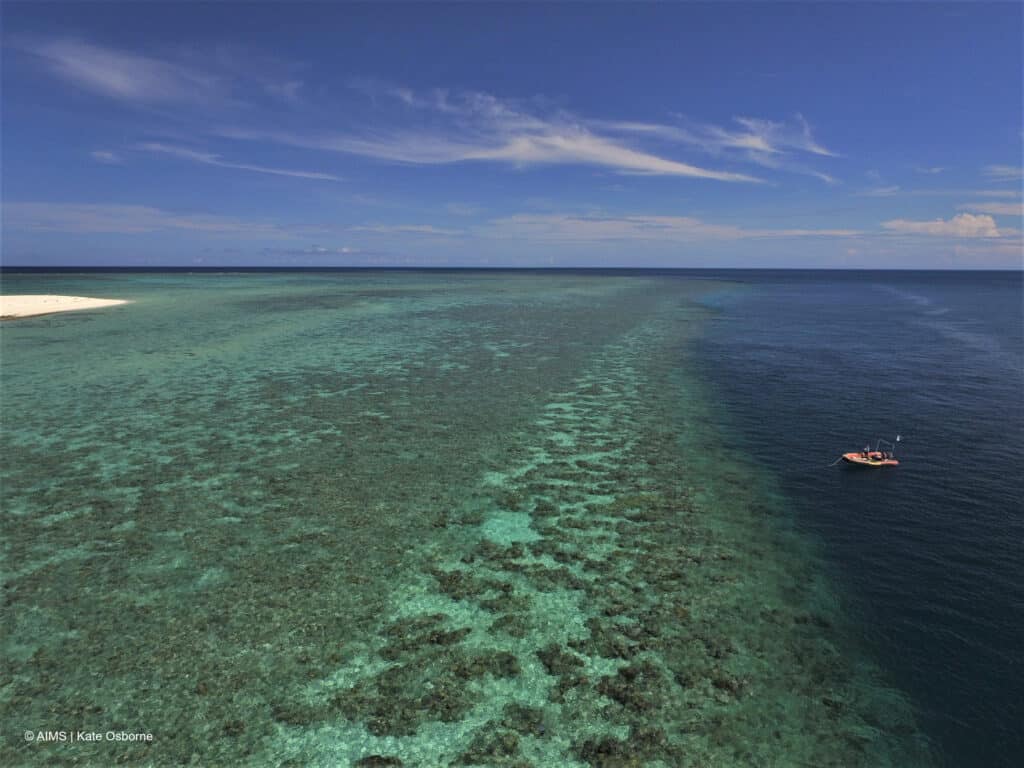
The Great Barrier Reef is the largest living structure on Earth. Stretching more than 2,300 kilometres along Australia’s northeast coast, it is so vast that it is clearly visible from space as an interconnected turquoise system that follows the continental shelf like a living coastline. Home to extraordinary biodiversity and a critical foundation for fisheries, coastal protection, tourism and ocean systems far beyond Australia. Its scale is not just geographic, but ecological. The reef is composed of more than 3,000 individual reefs and hundreds of islands, forming one of the most complex marine ecosystems on the planet. This sheer size is what makes the Great Barrier Reef both uniquely important and uniquely difficult to protect, study and restore.
“It doesn’t take much of a heatwave before corals bleach,” Bay says. “And once bleaching becomes frequent, recovery might become the exception rather than the rule.”
Mass bleaching events on the Great Barrier Reef have been documented with full-scale surveys in 1998, 2002, 2016, 2017, 2020, 2022, 2024 and 2025. In the beginning, such events were measured in decades. That changed dramatically in the last decade. In 2016 and 2017, the reef experienced its first-ever consecutive mass bleaching events. A biological shock that left large northern sections severely damaged.
And when the reef bleached again in 2020, 2022 and 2024 which was part of the now fourth global Coral Bleaching Event it caused a record coral cover decline on the Southern GBR, then again in 2025.
“While each bleaching event is different, when these events start happening back-to-back, the system can lose its resilience”, Bay explains.
Restoration research, not ecological restoration
Although this article is part of a series on how to restore the planet Line Bay would like to take an important step back.
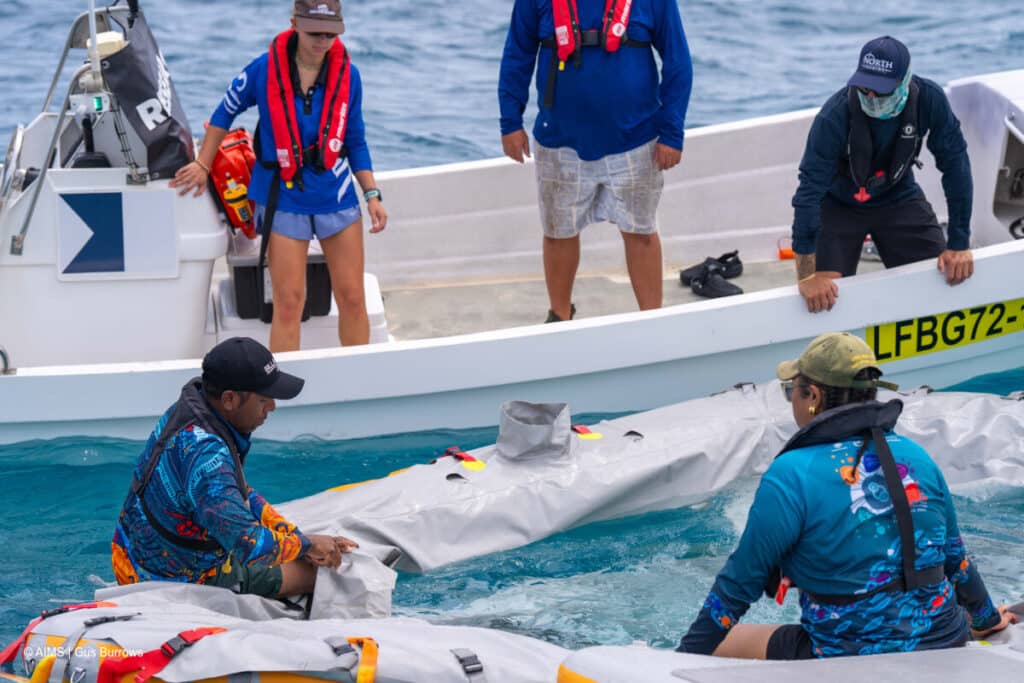
“People think we are out there fixing the reef,” Bay says. But we are doing restoration research. We are trying to understand whether intervention can work at what scale and under what conditions. But we don’t stop there – the intention is to ultimately support ecological restoration or rehabilitation at scale.
Much of the ground-breaking research that underpins reef restoration does not happen on the reef itself, but far from it inside laboratories that resemble a hybrid between marine biology, precision aquaculture and systems engineering. Here, corals are not treated as static organisms, but as living life cycles that must be understood, stabilized and guided through their most fragile stages. Temperature, light, water flow and chemistry are tightly controlled to replicate reef conditions while reducing stress on early coral life. During annual spawning events, eggs and sperm are collected and fertilised, allowing researchers to rear corals through reproduction rather than fragmentation. This matters profoundly for long-term resilience compared to the traditional restoration that relies on fragmentation and cloning corals by breaking them apart.
“Fragmentation doesn’t involve reproduction,” Line Bay explains. “You’re essentially cloning the same genetic individual again and again. This alone is not how you build resilience for the future.”
The once-a-year bottleneck
Most reef-building corals spawn only once a year, during a narrow window of a few nights.
“That single spawning event sets the rhythm for everything,” Bay says. “If you miss it, you wait another year.”
And even if you successfully pick up in that once-a-year open window, producing coral larvae is only the first hurdle.
“By separating settlement from deployment, we significantly improve survival,” Bay explains. “That’s what allows us to even talk about scale.”
Natural early-life survival rates of corals are extremely low. RRAP’s methods, including conservation aquaculture approaches for corals developed in Bay’s research group are improving them. Not to perfection yet, but enough to make scaling conceivable. Larvae are first reared in the National Sea Simulator, controlled systems allowing close monitoring. They are settled onto modular substrates designed to survive transport to the reef where assembly with the deployment device designed for survival on the reef. In the lab sensors continuously track temperature, salinity, pH and water quality. Microscopic food is distributed, while imaging technologies document growth and settlement. These datasets are not just descriptive; they are used to analyse survival patterns and refine methods year by year.
“We can do things now that simply weren’t possible ten – even five years ago,” Bay says. “Automation and environmental control allow us to rear species we couldn’t grow before. And we understand much better how to select and breed corals better suited to warming ocean conditions”
Traditional owners and sea country
The Great Barrier Reef lies within Aboriginal and Torres Strait Islander Sea Countries with more than 70 different traditional owner groups.
“At AIMS, if we don’t have consent from Traditional Owners, we don’t work,” Bay says.
Over time, this principle has transformed relationships with many Traditional Owner groups into long-term partnerships, with opportunities for traditional ecological knowledge and scientific research to inform each other. RRAP is built on substantial public investment through Australian government reef programs, combined with philanthropic and private-sector contributions. The funding model supports long-term research, pilot deployments and the gradual transition from laboratory science to field-tested methods.
A key question now is how restoration research can move from pilot testing toward a supporting industry including coral aquaculture, deployment services and technology platforms. From a scientist’s point of view the goal is clear.
“Our role as restoration scientists in is not to be the people undertaking ecological restoration but to generate methods, tools, evidence base Line Bay states. We also play an important role in teaching and training the next generation of scientists and practitioners.
Realism and limits
Being asked several times through the years if her work is playing God and intervening the laws of nature, Bay is calm. The laws have already been broken and nature needs help.
“I won’t give up,” Bay says. “We must apply ourselves and do all that we can to keep coral reefs as healthy as possible for future generations. I want to snorkel with my grandchildren one day and say: it was rough for a while but look at it now”
But she is clear about limits.
“If emissions keep rising, there is a point where restoration and adaptation cannot compensate.”
It is a challenging task to keep ecosystems functional in a world changing faster than key species can reliably adapt.
“Our job,” Bay says, “is not to promise miracles but to offer realistic hope. It’s to find out what actually works, under what conditions and at what cost and benefit.”
Fact box: RRAP
The Reef Restoration and Adaptation Program (RRAP) was launched in 2018 following the consecutive mass bleaching events on the Great Barrier Reef in 2016 and 2017.
RRAP is led by the Australian Institute of Marine Science (AIMS) in collaboration with leading Australian research institutions, including CSIRO, James Cook University and other university and science partners.
The program is supported by the Australian Government through national reef protection and climate adaptation funding and is designed as a long-term (10–15 year) research effort.
RRAP’s mandate is to conduct restoration and adaptation research — not large-scale restoration — to assess whether scientific interventions could help coral reefs persist under climate change.