Photo credit: © Carbon Neutral
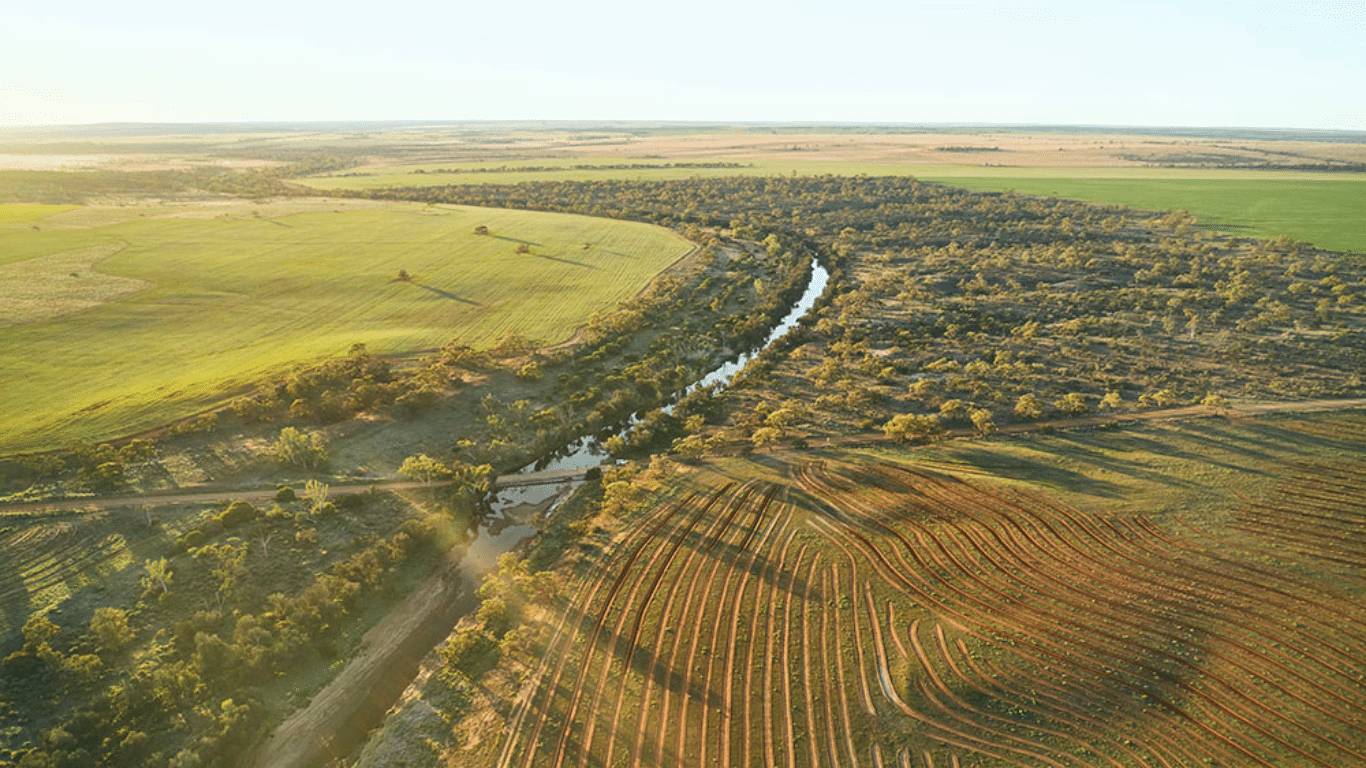
Across the northern wheatbelt of Western Australia, the land stretches flat and open under a wide, exposed sky. For more than a century, this landscape was shaped by agriculture. Native vegetation was cleared to make way for wheat and livestock. Over time, soils degraded, salinity increased and productivity declined across large areas of farmland.
What remained was not a thriving agricultural system, nor an intact ecosystem but something in between. A land that had lost both its ecological function and its economic value.
It is in landscapes like this that a different kind of restoration begins. Not by setting land aside. But by rethinking what the land is for.
The Yarra Yarra Biodiversity Corridor https://carbonmarketinstitute.org/projects/yarra-yarra-biodiversity-corridor/is one of the most ambitious examples of that shift. Stretching across Western Australia’s northern wheatbelt, the project is building a 200-kilometre corridor of native vegetation across degraded farmland, reconnecting fragmented ecosystems across a vast region. At its core, the project is both ecological and economic. It restores biodiversity.
But it is funded through carbon markets.
A corridor across a broken landscape
The idea behind the Yarra Yarra Corridor emerged from a simple observation: ecological fragmentation had become the defining feature of the landscape. Decades of land clearing had left behind isolated patches of native vegetation. Remnants of ecosystems that once stretched continuously across the region. Reconnecting those fragments required working at a scale far beyond individual properties.
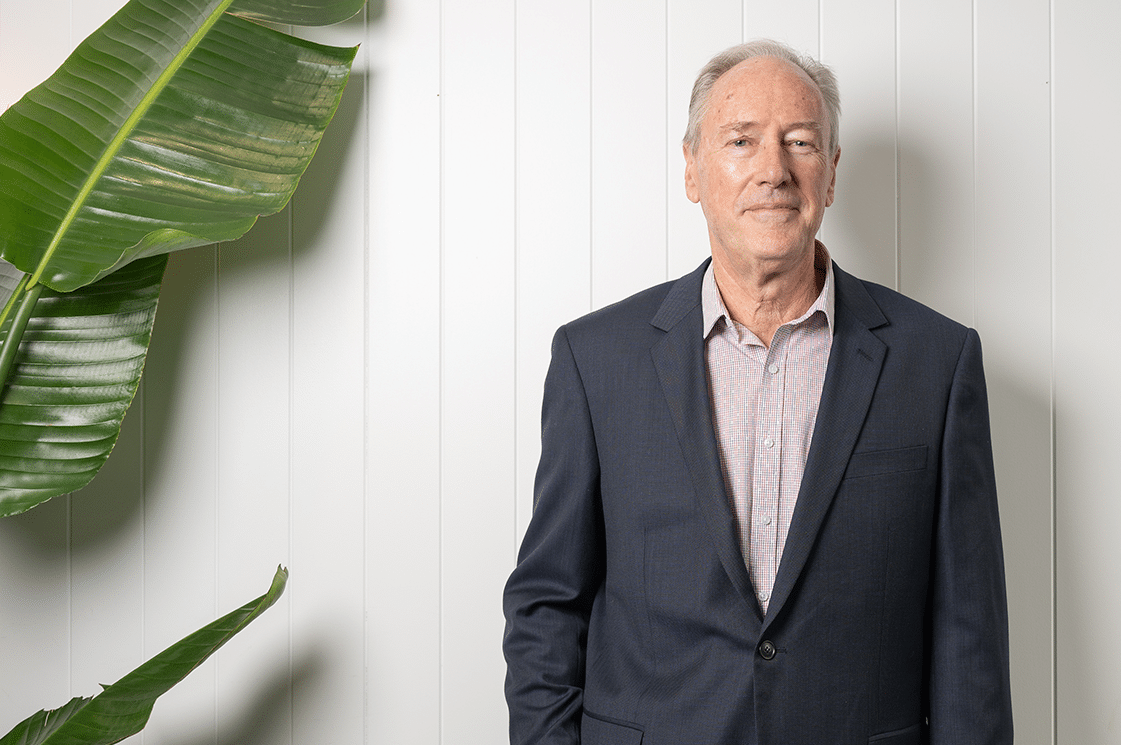
Ray Wilson, founding CEO of Carbon Neutral describes how that thinking shaped the project.
“When we first looked at this landscape, we saw an opportunity to restore something much bigger than a single property. The idea behind the Corridor was to reconnect habitat across a vast stretch of the northern wheatbelt and allow native ecosystems to return.”
The Corridor is designed not as a single continuous forest, but as a network. It links remnant vegetation with 12 existing nature reserves across an area of roughly 50,000 km², creating ecological connectivity across a fragmented landscape. At the same time, the project focuses on areas of land that are no longer economically viable for agriculture. Rather than competing with food production, restoration is targeted at marginal land, areas where productivity has declined due to soil degradation and salinity.
This positioning is critical. It allows restoration to coexist with agriculture, rather than replace it.
The scale of intervention
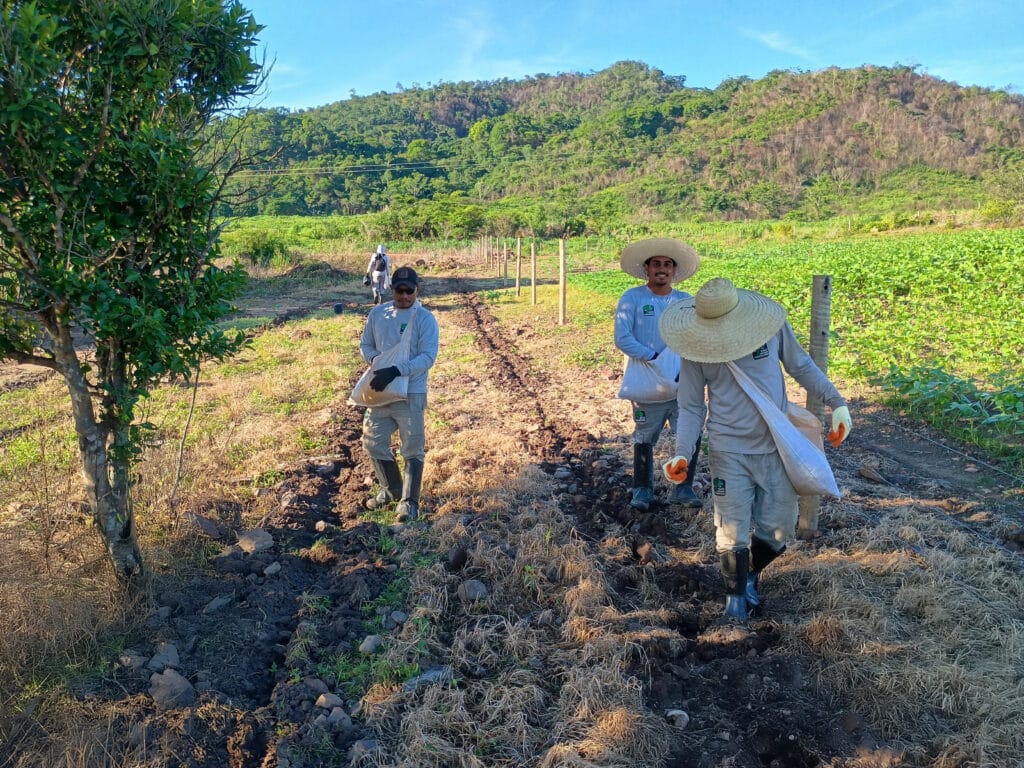
Since its inception in 2008, the Yarra Yarra project has developed into Australia’s largest biodiverse reforestation carbon sink. More than 21,000 hectares have been planted, with close to 40 million native trees and shrubs established across the landscape
Each planting includes a mix of 40 to 60 native species, reflecting the complexity of the original ecosystems. The goal is not to create monoculture plantations, but to rebuild functioning woodland systems dominated by species such as York gum and Acacia woodlands, adapted to local conditions. Restoration methods combine direct seeding and hand planting, supported by seed collection, nursery production and soil preparation techniques tailored to the region’s climate.
Some seeds are treated with smoke to simulate natural fire cycles. Others are selected for drought tolerance, reflecting the harsh conditions of the wheatbelt. The process is both ecological and technical. And it is built to scale.
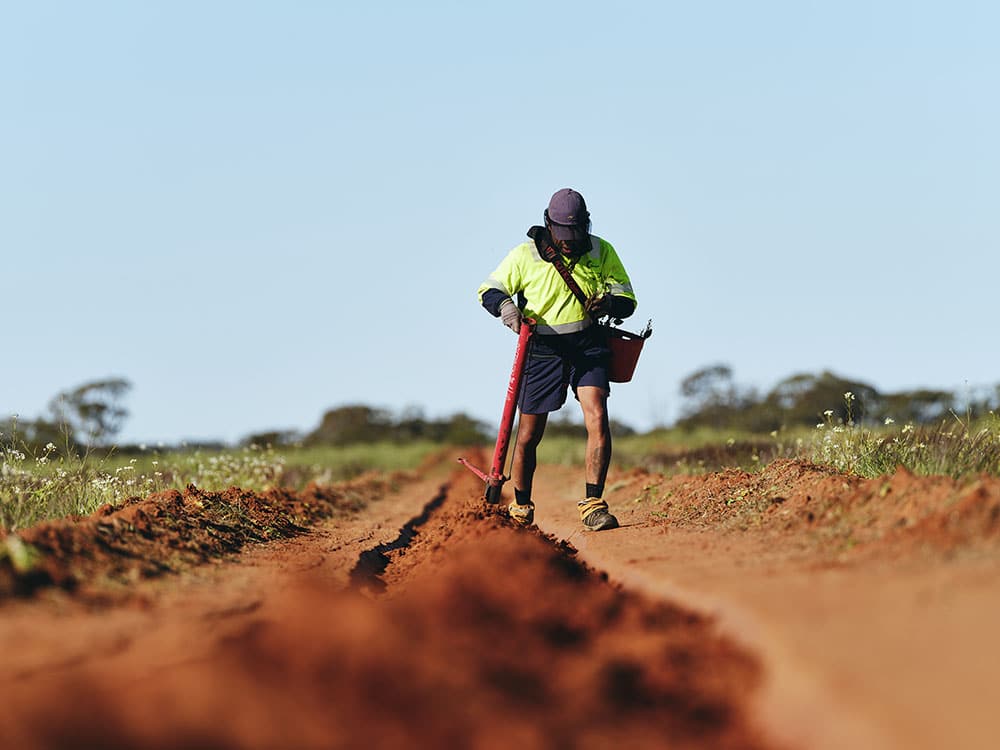
Photo credit: © Carbon Neutral
Carbon as a driver of restoration
What distinguishes the Corridor from other restoration projects is its financing model. Rather than relying primarily on philanthropy or public funding, the project is funded through the generation and sale of carbon credits. But not all carbon credits are created equal.
The Yarra Yarra Biodiversity Corridor is the first Australian native reforestation project to be certified under the Gold Standard https://www.goldstandard.org/, one of the most rigorous international certification frameworks for climate and development projects. Unlike many carbon offset schemes that focus narrowly on emissions, Gold Standard projects are required to demonstrate measurable impacts on biodiversity, water systems, soil health and local economic development aligning with the United Nations Sustainable Development Goals (SDGs) https://sdgs.un.org/goals. This changes how The Corridor is financed and understood. Carbon credits generated here are not simply units of avoided or stored emissions. That distinction is critical. It allows investors and companies to engage with the project not only as a carbon strategy, but as part of a broader sustainability commitment. And it raises the bar for what restoration finance can deliver. This mechanism allows restoration to operate within a market framework.
Wilson explains the significance of that shift:
“Carbon markets created a mechanism to fund restoration that otherwise would have been very difficult to deliver at this scale. It allows environmental outcomes to be valued in a way they historically haven’t been.”
In practical terms, the project sequesters carbon through reforestation and generates verified carbon credits, which are then sold into voluntary and compliance carbon markets. For decades, biodiversity and ecosystem services existed largely outside economic systems. Carbon markets begin to change that equation.
Companies purchase carbon credits.
That revenue funds restoration.
Restoration generates ecological outcomes.
Those outcomes create new forms of value.
More than carbon
Although carbon finance provides the economic engine, the project’s impact extends far beyond emissions reduction. Restoration efforts are designed to rebuild entire ecological systems. Native vegetation improves soil quality, stabilizing erosion and supporting microbial life. Tree cover helps reduce salinity, a major challenge in the region caused by rising water tables. Water systems benefit as well, with improved filtration and reduced runoff.
At the same time, biodiversity begins to return. Monitoring programs have recorded increasing numbers of bird species, including several of conservation significance such as the Crested Bellbird, Rufous Whistler and Splendid Fairy Wren. Threatened species such as the Malleefowl and the Western Spiny-tailed Skink are also supported through habitat restoration. These changes do not happen immediately. They emerge gradually, as ecological processes begin to re-establish themselves.
Wilson emphasizes that restoration unfolds over time.
“Restoring a landscape like this isn’t something that happens overnight. It’s a long-term commitment, but over time you start to see the systems recover – birds returning, native vegetation establishing, ecological processes beginning to function again.”
The visible signs of recovery — returning species, stabilizing soils, improving vegetation are often the result of processes that began years earlier.
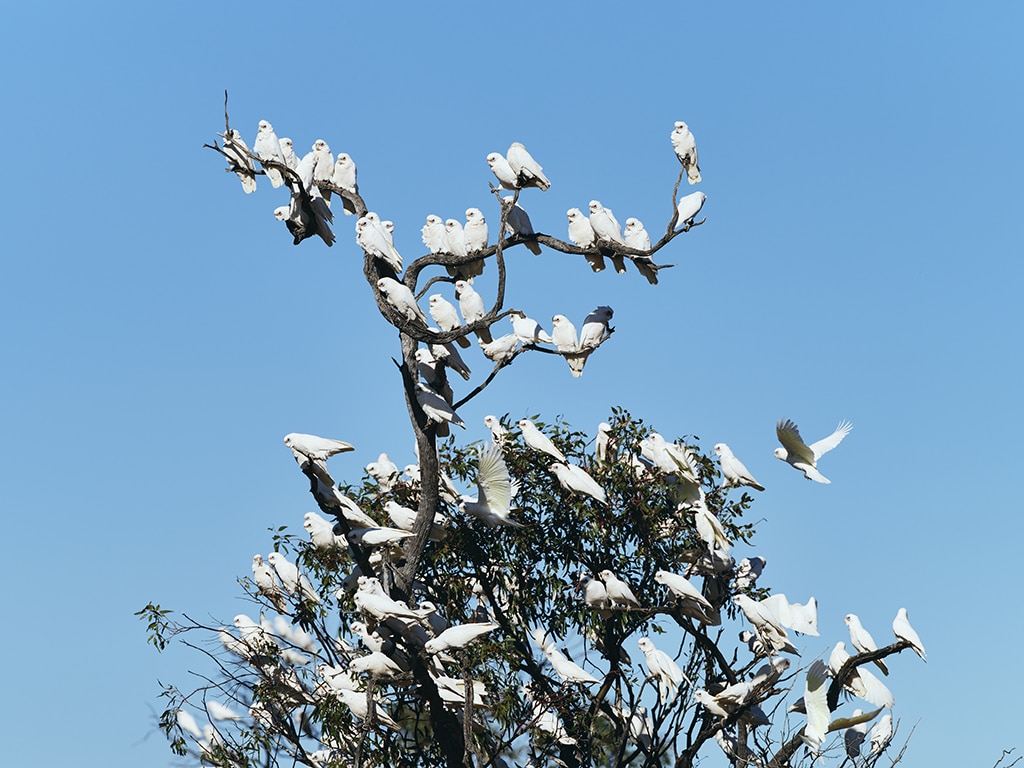
Photo credit: © Carbon Neutral
Protecting the landscape
One of the central challenges in restoration is how to integrate ecological goals with existing land use and protect the indigenous cultural heritage. In the wheatbelt, that means working within an agricultural landscape rather than replacing it.
The Yarra Yarra model reflects a hybrid approach. Landowners can allocate less productive parts of their land to reforestation, while retaining more viable areas for agriculture. This reduces conflict between food production and restoration. It also addresses concerns within rural communities about large-scale land conversion. According to project responses, some stakeholders initially worried about “fence-to-fence revegetation.” Over time, integrated models have proven more acceptable. They allow restoration to become part of a diversified land-use strategy rather than a competing one. This balance is essential for scalability.
Building an ecological network
The Corridor concept is not simply about planting trees. It is about rebuilding connectivity. Fragmented ecosystems often fail not because individual habitats disappear, but because they become isolated. Species lose the ability to move, reproduce and adapt. The Yarra Yarra Biodiversity Corridor addresses this by creating ecological linkages across the landscape.
These connections allow species to move between habitats, increasing resilience and supporting biodiversity recovery. Over time, the Corridor begins to function as a system. Not a collection of planting sites, but a network.
Measuring impact
Restoration at this scale requires long-term monitoring. The Yarra Yarra project includes extensive ecological surveys, biodiversity assessments and citizen science programs. Studies conducted since 2008 track changes in vegetation, soil quality and species diversity. Bird monitoring programs provide ongoing data on biodiversity recovery. Independent research has also attempted to quantify the broader value of the project. One study estimated that the Corridor generates between AUD 28–63 million in biodiversity value and AUD 18–30 million in economic impact
These figures highlight a key shift in how restoration is understood. Nature is no longer only a cost. It is increasingly measured as value.
Climate and biodiversity — one system
For much of the past decade, climate policy and biodiversity conservation have often been treated as separate domains. Carbon markets focus on emissions. Conservation focuses on species and ecosystems.
Projects like the Corridor challenge that separation.
Wilson frames the relationship directly:
“Projects like the Yarra Yarra Biodiversity Corridor show that climate action and biodiversity recovery don’t have to be separate conversations. Done well, they can reinforce each other.”
The implication is significant. If carbon finance can be structured to support biodiversity outcomes, restoration can scale far beyond what public funding or philanthropy alone could achieve.
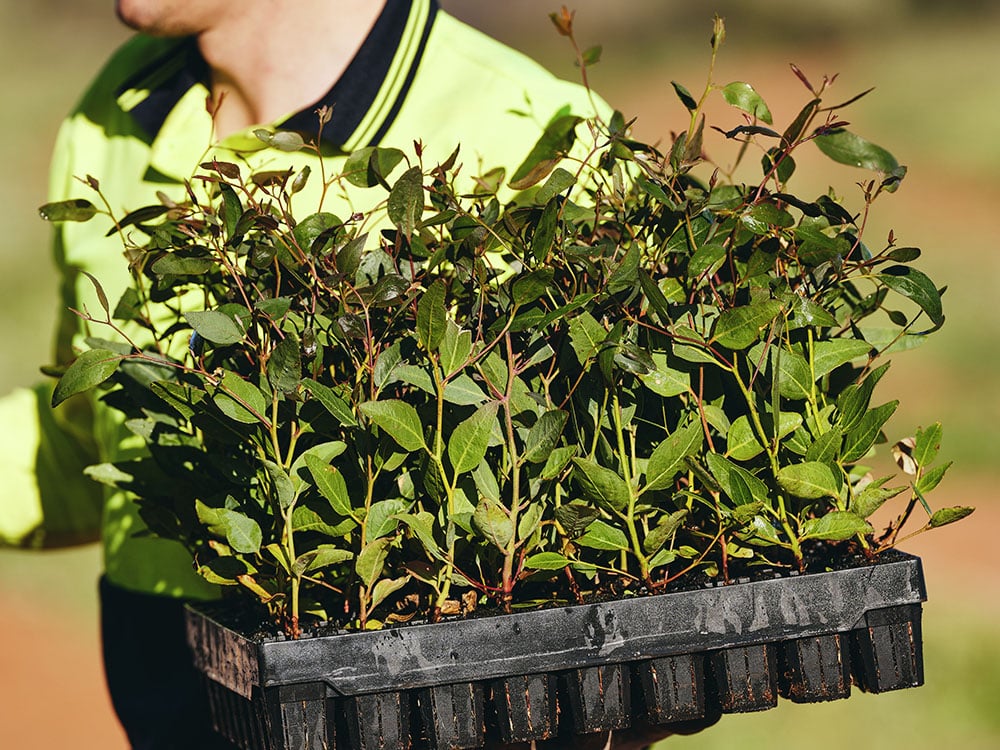
Photo credit: © Carbon Neutral
Challenges and trade-offs
Despite its progress, the Corridor project faces ongoing challenges. One of the most persistent is cost. High-biodiversity restoration is more expensive than monoculture carbon planting. Balancing ecological quality with financial viability remains a central tension.
Carbon markets also introduce uncertainty. Prices fluctuate. Regulatory frameworks evolve. Long-term investment depends on stable market conditions. Climate variability presents another challenge. In drought years, seeds may not germinate immediately. Instead, they remain dormant until conditions improve.
A reminder that restoration is shaped by ecological timeframes rather than financial ones.
Scaling restoration
Looking ahead, the Yarra Yarra Biodiversity Corridor model offers insights into how large-scale restoration can be expanded. Advances in direct seeding techniques have improved efficiency and reduced costs. Partnership models with landowners allow projects to scale across multiple properties. Future opportunities may include new markets for biodiversity credits and ecosystem services. At the same time, continued investment in monitoring will improve understanding of how ecosystems recover over time.
A different model of value
At its core, the Yarra Yarra Biodiversity Corridor represents a shift in how restoration is financed and understood. It demonstrates that degraded landscapes can be restored not only for ecological reasons, but as part of an economic system.
Carbon markets provide one mechanism. Biodiversity value may provide another. Together, they point toward a model where environmental restoration becomes financially viable at scale. Whether that model can be replicated globally will depend on local conditions, policy frameworks and market development.
But the direction is clear. Restoration is no longer only about protecting what remains. It is about rebuilding what has been lost and finding ways to make that work economically.
Fact box: Gregg Carr
Gregory C. Carr is an American entrepreneur, investor and philanthropist.
Carr built his career in the telecommunications and internet industries during the 1980s and 1990s, founding several companies before turning his attention to philanthropy.
Through the Carr Foundation, he launched a long-term partnership with the Government of Mozambique in 2004 to restore Gorongosa after the country’s civil war.
His conservation philosophy centers on integrating biodiversity restoration with economic development, public health and education.
This approach evolved into the concept of community-based capitalism, which seeks to align conservation with local economic opportunity.
Today Carr continues to guide the Gorongosa Restoration Project, widely regarded as one of the most ambitious ecosystem restoration efforts in the world.