
In central Mozambique’s Great Rift Valley lies a landscape that once stood among Africa’s most extraordinary ecosystems.
Floodplains teeming with wildlife. Savannas stretching toward distant mountain forests. Rivers feeding one of the continent’s richest biodiversity hotspots.
Then war came.
For more than fifteen years, Mozambique’s civil war devastated Gorongosa National Park. Wildlife populations collapsed. Infrastructure was destroyed. Entire ecological systems unraveled. When peace returned in the early 1990s, the park that once held one of Africa’s densest concentrations of large animals had been reduced to a shadow of itself.
Three decades later, the story unfolding in Gorongosa is no longer one of loss.
It is a story of restoration. Ecological, economic and social.
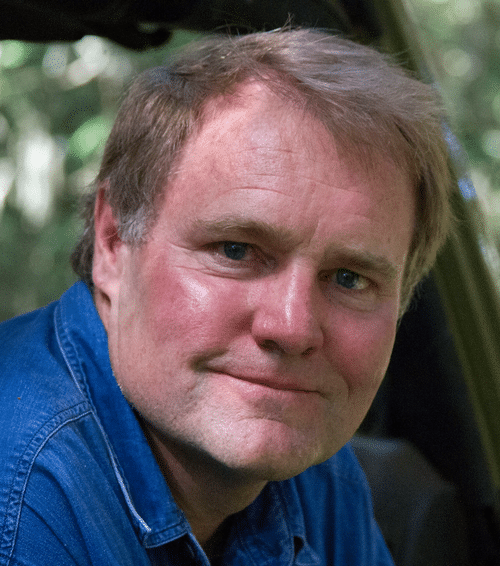
The effort to rebuild the park took shape through a long-term partnership between the Government of Mozambique and American entrepreneur and philanthropist Greg Carr, whose foundation committed to helping restore the landscape.
“Gorongosa was set up as a long-term partnership between the Government of Mozambique and the Carr Foundation to restore one of Africa’s most extraordinary ecosystems after years of civil war.”
From the beginning, Carr and his collaborators approached the project as something larger than a conservation initiative.
“From the beginning, it was never just about wildlife; our goal is to restore and protect two million hectares of biodiversity while creating lasting prosperity for the people who live here.”
That dual ambition of rebuilding ecosystems while strengthening local livelihoods remains the defining principle behind the Gorongosa Restoration Project. https://gorongosa.org/
An enormous landscape
Seen on a map, the scale of the project becomes immediately apparent.
The national park itself forms the ecological core, but the project extends far beyond its official borders into surrounding landscapes.
“The Gorongosa Restoration Project spans across roughly two million hectares in central Mozambique’s Great Rift Valley.”
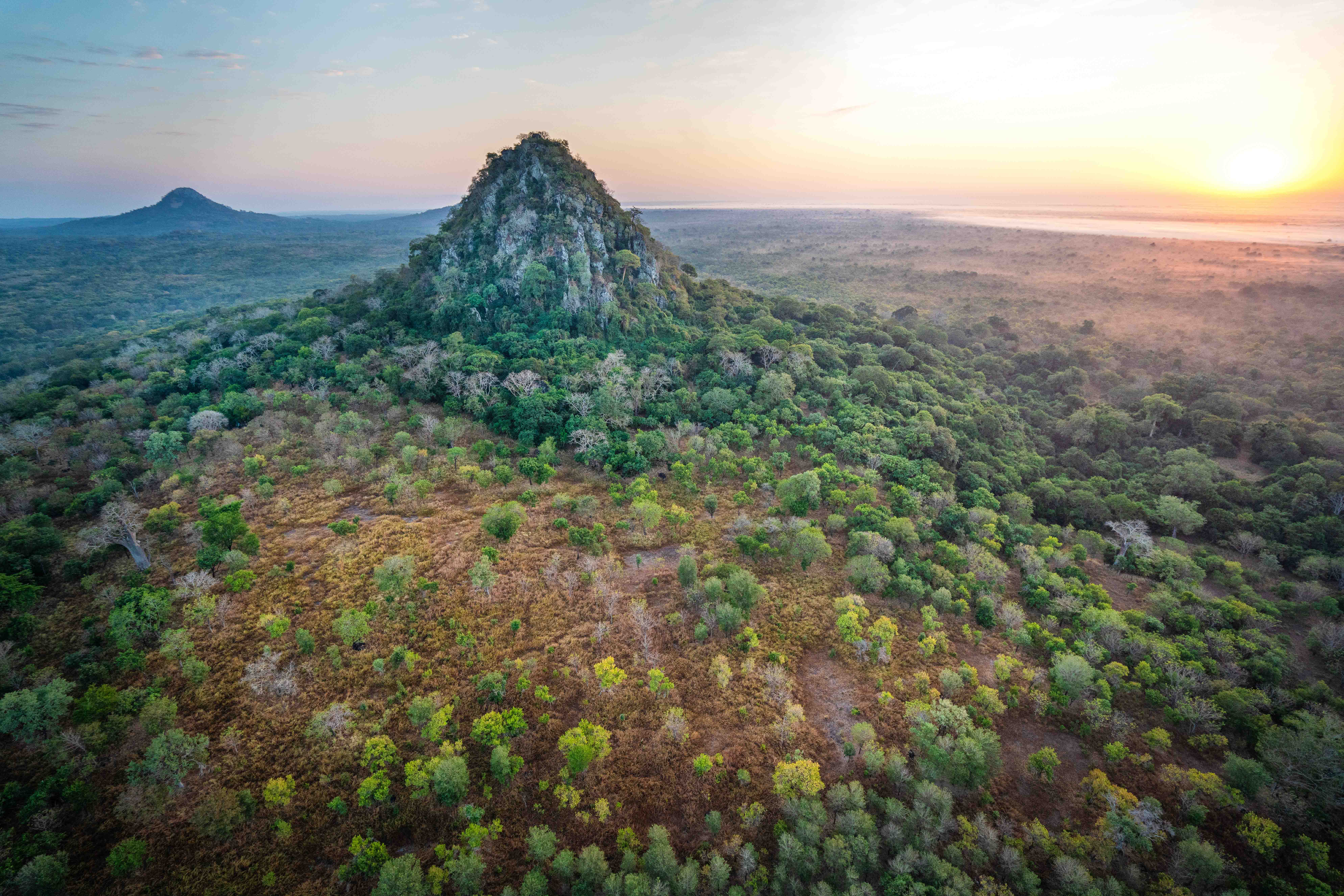
Within this territory lies a striking diversity of habitats shaped by geology, rainfall patterns and river systems.
“It includes Gorongosa National Park itself, surrounding community conservation areas, Mount Gorongosa and its rainforest, floodplains, savannas, river systems and forestry concessions.” https://en.wikipedia.org/wiki/Great_Rift_Valley
Each of these ecosystems plays a role in maintaining the region’s biological richness. Seasonal floodplains provide grazing grounds and water sources for wildlife. Savannas support large herbivore populations and predators. The rainforest on Mount Gorongosa protects critical watersheds feeding rivers across the valley.
“It is an extraordinary ecological mosaic, which makes it one of the most biodiverse regions in Africa. Restoring such a landscape requires more than rebuilding animal populations. It requires restoring the ecological processes that allow the system to function,” Carr explains
Rebuilding wildlife
The most visible sign of Gorongosa’s recovery has been the return of wildlife.
When restoration began in the early 2000s, populations of large mammals had fallen dramatically. Many species had been hunted extensively during the civil war, while others disappeared as habitats degraded.
Recovery began with the re-establishment of ranger patrols, wildlife monitoring and anti-poaching systems. Gradually, species reintroductions helped restore ecological balance inside the park.
“Inside the Park, we’ve carried out species reintroductions including painted wolves, hyenas, leopards and zebra.”
These reintroductions form part of a broader ecological strategy.
Predators regulate herbivore populations. Grazers shape vegetation patterns. Scavengers recycle nutrients through the ecosystem. When enough species return, the landscape begins to regulate itself again.
Monitoring systems now track that recovery through wildlife censuses and camera trap networks. The 2024 wildlife census recorded more than 110,000 large animals, the highest number ever documented in the park.
For Carr, those numbers signal something larger than population recovery.
“They demonstrate how quickly ecosystems can respond once pressures such as poaching and habitat degradation are reduced.”
Rethinking conservation
Wildlife recovery alone, however, was never the project’s central objective.
Gorongosa sits within a densely populated rural region where many communities depend directly on natural resources for survival. Any conservation model that ignored those realities would quickly collapse.
Carr’s philosophy reflects that understanding.
“We operate under the core belief that conservation only succeeds if communities thrive.”
This perspective reshaped how restoration programs were designed.”
Instead of separating environmental protection from development initiatives, the Gorongosa project integrates them. Programs addressing agriculture, education, health services and enterprise development now operate alongside ecological restoration efforts.
“Today, our work integrates biodiversity restoration, healthcare, education, regenerative agriculture, tourism and local enterprise,” Carr explains
The framework connecting these programs is often described as One Health, a systems approach recognizing that ecosystem health, human health and economic stability are deeply interconnected. https://gorongosa.org/conservation-meets-care-gorongosas-health-vision-featured-in-devex/
“Through a One Health lens, we see these as interconnected, codependent systems. Restored forests protect water. Water supports farming. Farming supports families. Healthy families support conservation.”
Seen from this perspective, conservation is no longer about protecting isolated landscapes. It becomes part of a broader effort to stabilize environmental and social systems simultaneously.
Restoration beyond the park
One of the defining features of the Gorongosa Restoration Project is how extensively it operates outside the park itself.
Many conservation initiatives concentrate resources within protected areas. Gorongosa instead treats surrounding communities as integral to the ecosystem.
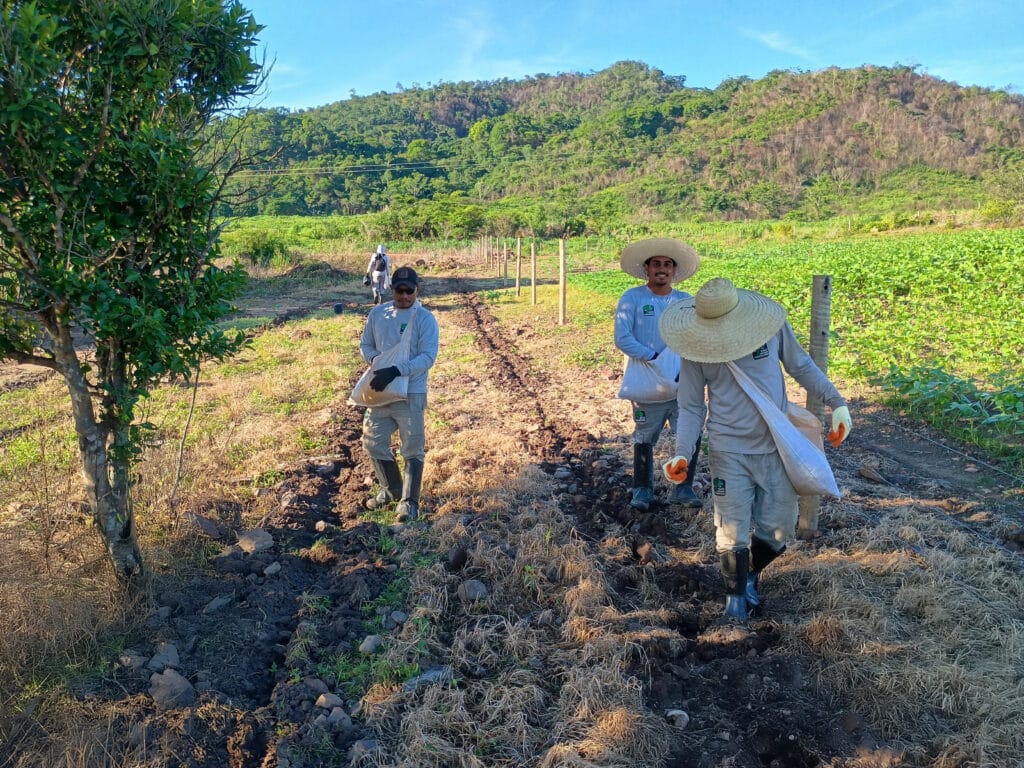
“Agriculture programs support farmers in adopting regenerative practices that improve soil fertility while reducing pressure on forests,” Carr explains following up with further initiatives.
“Reforestation initiatives help restore tree cover on Mount Gorongosa, protecting watersheds that feed rivers across the valley. Human–wildlife coexistence programs attempt to reduce conflicts between animals and farms. In some areas, beehive fences deter elephants from entering crops. Electric fencing protects key agricultural zones.”
At the same time, investments in healthcare and education aim to strengthen the social foundations of conservation.
“Mobile health brigades reached over 160,000 people in remote communities in 2025.”
Nutrition programs have also produced measurable improvements.
In several districts surrounding the park, chronic malnutrition rates have declined significantly as food security initiatives expanded.
Schools built by the project double as climate-resilient shelters during extreme weather events. A reflection of how restoration increasingly intersects with climate adaptation.
For Carr and his collaborators, these initiatives are not peripheral activities.
They are part of the ecological strategy.
“For us, restoration means restoring multiple systems, wildlife, forests, local economies and public health so they reinforce one another over the long term.”
Financing restoration
Restoring ecosystems on this scale requires sustained funding.
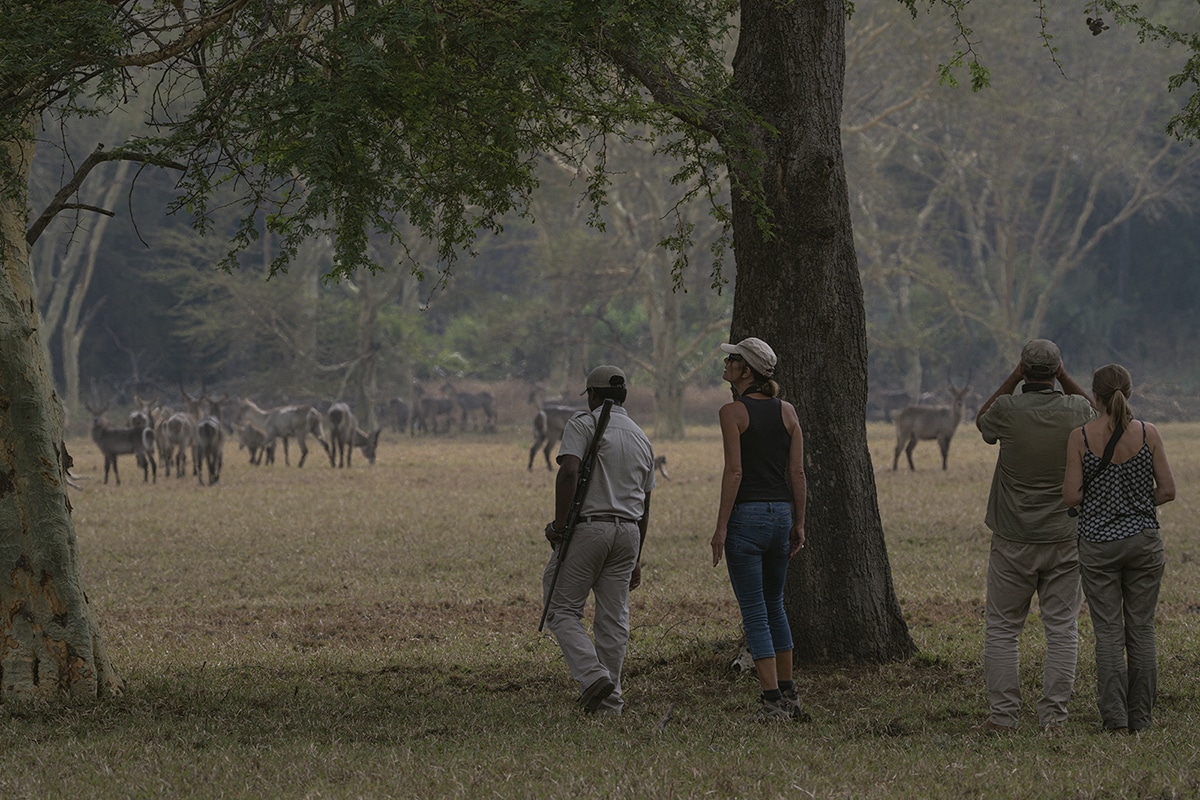
Historically, the Gorongosa Restoration Project has relied on a combination of philanthropic support, cooperation partners and tourism revenue.
“Our financing is diversified. Tourism provides an important revenue stream while supporting local employment. But long-term financial resilience requires additional economic activity within the surrounding communities,” Carr explains
Coffee cultivation on Mount Gorongosa has become one such initiative. The crop thrives under the shade of restored forest cover, allowing farmers to generate income while protecting the ecosystem. Honey production offers another example.
Beekeeping creates incentives to preserve forest habitats while providing income for rural households.
“The long-term goal is financial resilience through local economic growth. Over time, these activities help build an economic foundation for conservation that extends beyond external funding.”
Community-based capitalism
At the center of the Gorongosa model lies a concept Carr describes as community-based capitalism.
“Community-based capitalism means designing enterprises so that local communities are not passive beneficiaries of conservation, but active participants in value creation and decision-making. This approach reshapes how conservation economics operate.”
Tourism revenues support park management while creating jobs in hospitality and guiding. Agricultural initiatives generate income while restoring landscapes. Local enterprises strengthen economic stability within surrounding villages.
“When these systems align, conservation becomes economically rational for the communities living alongside it. That alignment is critical to long-term sustainability,” Carr explains
Challenges and trade-offs
Despite its successes, restoration at Gorongosa faces ongoing challenges.
“The biggest trade-off is time. Ecological recovery unfolds slowly, often over decades. Social and economic needs, by contrast, demand immediate solutions.”
Illegal resource extraction also remains a persistent pressure. Mining operations, deforestation and unsustainable land use can undermine restoration efforts if left unchecked.
Balancing those tensions requires constant negotiation between ecological priorities and community needs.
“Our solution is to align incentives so that conservation delivers visible economic value to the local communities. When conservation generates tangible benefits, local support tends to follow,” Carr explains
Looking toward 2030
The next phase of the Gorongosa Restoration Project focuses less on expansion and more on resilience.
Ecologically, the priority is to strengthen wildlife monitoring systems, protect forests on Mount Gorongosa and support continued species recovery.
Economically, the project aims to expand regenerative agriculture and value chains such as coffee and honey while increasing sustainable tourism.
Healthcare and education investments will also continue to grow.
Plans are underway for expanded healthcare infrastructure, including a Level 4 regional hospital serving communities across the region.
The project also invests heavily in training Mozambican scientists and researchers to lead future conservation efforts.
Carr hopes that by the end of the decade, Gorongosa will stand as more than a restored park.
“By 2030, we hope Gorongosa stands not just as a restored national park, but as a working demonstration of how conservation, health, and community-based capitalism can move forward together. In that vision, ecosystems are protected not because they are isolated from people. But because the people who live there have a stake in keeping them alive.”
Fact box: Gregg Carr
Gregory C. Carr is an American entrepreneur, investor and philanthropist.
Carr built his career in the telecommunications and internet industries during the 1980s and 1990s, founding several companies before turning his attention to philanthropy.
Through the Carr Foundation, he launched a long-term partnership with the Government of Mozambique in 2004 to restore Gorongosa after the country’s civil war.
His conservation philosophy centers on integrating biodiversity restoration with economic development, public health and education.
This approach evolved into the concept of community-based capitalism, which seeks to align conservation with local economic opportunity.
Today Carr continues to guide the Gorongosa Restoration Project, widely regarded as one of the most ambitious ecosystem restoration efforts in the world.