

Pangolin trafficking has grown from localised hunting into a transnational criminal enterprise. For Nakedi Maputla of African Wildlife Foundation, reversing the decline means looking beyond the animal itself to the economic incentives, supply chains, enforcement gaps and consumer demand that keep the trade alive.
© istock.com/2630ben
From local use to global trade
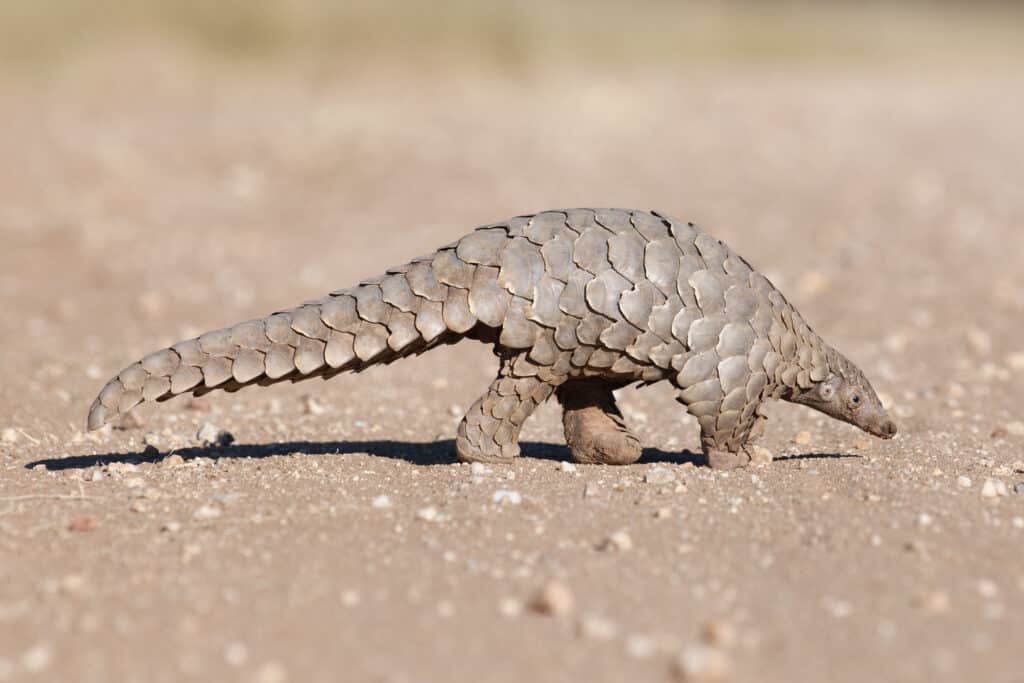
The pangolin is hardly a household name.
It is a solitary, elusive mammal found across parts of Africa and Asia, and outside the regions where it lives, many people have probably never seen one – even in a zoo or on television.
Yet behind that relative anonymity lies an extraordinary global trade.
Pangolins are widely described as the world’s most trafficked wild mammals. The reason has little to do with how well known they are and everything to do with what different markets believe they are worth.
Their scales are sought for use in Traditional Chinese Medicine. Their meat is consumed in exotic and luxury markets, particularly in China and Vietnam. Across Central and West Africa, pangolins are also harvested for bushmeat, ethnomedicine, talismans, spiritual protection and traditional remedies. As Asian pangolin populations were depleted, pressure increasingly shifted towards African species.
Maputla describes a trade that has changed fundamentally in both scale and organisation.
“Pangolin trafficking has evolved from localised subsistence hunting and traditional medicine use into a highly organised transnational criminal enterprise, making pangolins the world’s most trafficked wild mammals.”
That transition has connected remote source areas to international markets. Organised syndicates consolidate maritime shipments measured in tens of metric tons, and some of the same networks and logistics corridors are used for other high-value contraband.
The volumes can be difficult to translate into individual animals. But they offer some indication of the scale of the trade.
AWF estimates that the scales in a one-tonne seizure could represent roughly 300 pangolins, using a method that converts the weight of seized scales into an estimated number of scales and assumes an average of around 649 scales per animal.
The number is only an illustration. Species, samples and the method used can produce very different results, and estimates from the same seizure can range from hundreds to thousands of pangolins.
Seizure data therefore cannot tell us precisely how many pangolins are being taken from the wild. But when shipments are measured in tens of tonnes, they provide an indication of the scale of exploitation behind the trade.
Nor can those numbers reliably be compared with the number of pangolins remaining in the wild. Robust population estimates do not exist for most pangolin species, making it impossible to translate seizures into a meaningful percentage of the remaining population.
“More than a quarter of major pangolin scale seizures are linked to illegal elephant ivory,” Maputla says.
The pressure is not identical everywhere. In Central and West Africa, the scale trade dominates, accounting for more than 87 per cent of volumes. In Southern Africa, the illegal trade in Temminck’s pangolin primarily targets live animals, with more than 81 per cent of confiscations involving live specimens. For Maputla, those differences point to distinct trafficking networks and market demands.

© Jo Sharp Photography
A trade that keeps adapting
The trafficking system has also proved capable of changing when enforcement changes.
Record seizures in 2019 were followed by intensified enforcement and legal reforms. But rather than ending the trade, the pressure altered some of its methods.
“Traffickers have adapted by shifting from overt cargo shipments to covert domestic consolidation, passenger vehicles, postal services, and rerouted transhipment hubs,” Maputla explains.
This adaptability is central to the conservation challenge. The pangolin can be taken in one landscape, consolidated somewhere else and moved through a chain that crosses jurisdictions before reaching the final consumer.
The trade therefore cannot be addressed only at the point where an animal is poached. Each part of the chain creates a different problem: economic incentives at source, transport and concealment along the route, enforcement at borders and continued demand at the destination.
When development opens the forest
Illegal trafficking is the most immediate pressure identified by Maputla, but it does not operate separately from changes to the landscape.
Commercial logging, industrial development, agricultural expansion and land conversion can both degrade pangolin habitat and change who can reach it.
“Selective logging concessions and the expansion of road networks into previously intact forests increase access for commercial hunters and create transport corridors linking remote habitats to regional trading hubs,” Maputla says.
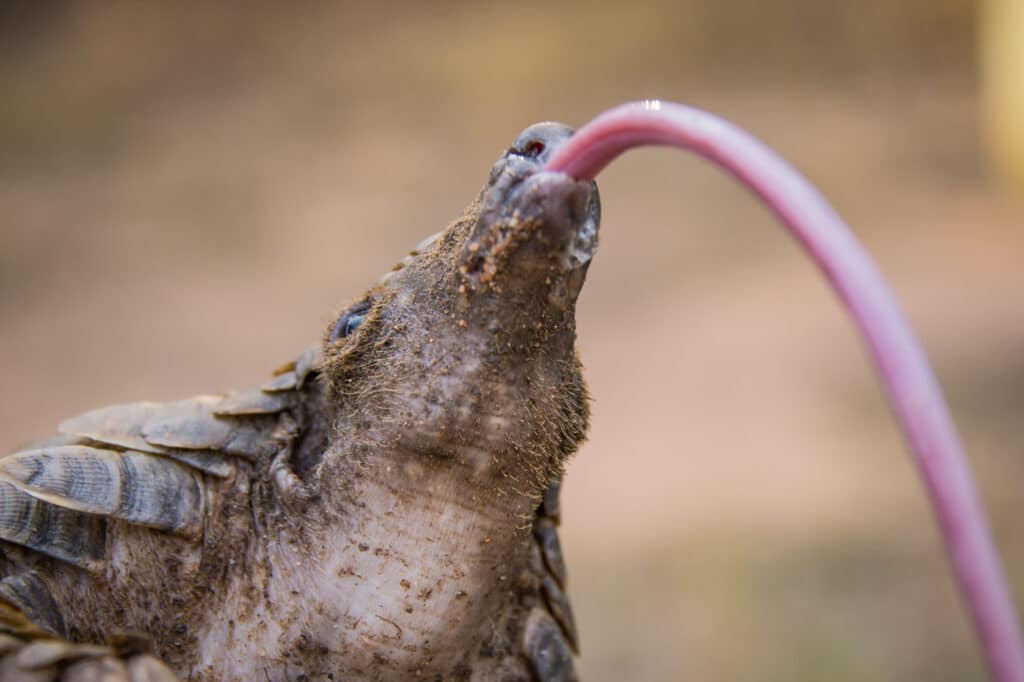
The same landscape changes can affect the food pangolins depend on. Deforestation and land conversion remove native vegetation such as Acacia and Ziziphus species that support termite and ant colonies, degrading foraging habitat and increasing the risk of poaching at pangolin burrows.
At the other end of the chain, demand remains strong.
“Strong demand from traditional medicine industries, including Traditional Chinese Medicine and regional ethnomedicine markets, continues to drive large-scale pangolin extraction from the wild for their scales,” Maputla says.
Commercial bushmeat networks add another market. Pangolin meat is marketed as a luxury delicacy to affluent urban consumers and restaurants.
The result is a pressure created by several systems at once: changing land use can make pangolins more accessible and their habitat less viable, while commercial demand continues to pull animals out of the wild.
© Andy Lowe / andylowephotography.com
The risk is not where the profit is
For Maputla, one of the most important disconnects appears when the money is followed through the trafficking chain.
“Pangolin trafficking is characterised by a stark imbalance between risk and reward, with impoverished local hunters and frontline poachers bearing the greatest legal and physical risks while receiving only a small fraction of the product’s final market value.”
The larger financial rewards lie further along the chain.
“By contrast, transnational brokers and organised criminal syndicates capture substantial profits from the trade, with scales selling for hundreds of dollars per kilogram and live animals commanding even higher prices, often amid historically low prosecution rates.”
The imbalance is reinforced by the way offences are sometimes handled. Pangolin-related trade is prohibited under CITES Appendix I and national legislation, yet Maputla says offences account for only a small proportion of wildlife crime prosecutions and can be treated as minor administrative violations.
“Negligible penalties […] fail to deter offenders,” he says.
There is another disconnect at the consumer end. Buyers may be far removed from the landscapes and populations from which the animals have been taken.
“Demand remains largely disconnected from the ecological consequences of extraction, with buyers in urban and international markets often unaware of the severe impacts on biodiversity and pangolin populations.”
Maputla adds that continued consumption is frequently driven by entrenched cultural beliefs despite limited scientific evidence supporting the medicinal efficacy of pangolin-derived products.

© istock.com/GP232
Why protection is difficult
There is already an international and national response. Commercial trade is prohibited through CITES Appendix I. China has upgraded native pangolins to Class I protection and removed scales from national health insurance and the official pharmacopoeia. Enforcement tools include intelligence-led interdictions, sniffer dogs at ports and targeted forensic investigations. DNA barcoding and spatial genetic assignment can help trace seized shipments towards their regional origins.
But the biology and distribution of pangolins make conventional protection difficult.
“Unlike many large mammals concentrated within well-defined protected areas, pangolins occur across extensive rural, community-managed, and human-modified landscapes,” Maputla says.
That diffuse distribution has to be protected with conservation budgets, staffing and surveillance capacity that are often limited.
Enforcement faces a similar structural problem.
“These challenges are compounded by corruption and weak enforcement at ports, border crossings, and customs checkpoints, where inadequate species-identification expertise and limited detection technologies enable traffickers to exploit regulatory gaps and rapidly shift smuggling routes.”
Forensics can close some of those gaps, but not all. Maputla points to missing comprehensive genomic reference databases for several species, including Smutsia gigantea, Phataginus tetradactyla and Smutsia temminckii.
Without those reference data, even increasingly sophisticated DNA techniques can struggle to trace origins precisely enough to support intelligence work and cross-border prosecution.

© istock.com/GP232
Changing the system around the trade
For Maputla, reversing the decline requires action at several points in the system rather than a single conservation intervention.
At source, he argues for a different relationship with the communities that share pangolin habitat.
“Effective pangolin conservation requires an integrated approach combining community empowerment, stronger legal frameworks, enhanced law-enforcement cooperation, and demand reduction.”
That includes shifting from exclusionary protection towards community-led conservation: securing land rights, supporting sustainable alternative livelihoods and integrating local ecological knowledge into monitoring and anti-poaching work.
But community action alone cannot dismantle a transnational trade. Maputla also calls for harmonised wildlife legislation, specialised prosecutors, stronger cooperation between countries and better use of forensic evidence.
“Strengthening transnational cooperation through centralised, real-time seizure databases and deploying rapid molecular forensic tools at key customs and border points would improve the tracking and prosecution of trafficking networks.”
Demand reduction forms the other end of the same strategy.
“Equally important is sustained engagement with traditional healthcare systems and Traditional Chinese Medicine practitioners to eliminate the use of pangolin derivatives and promote effective, sustainable alternatives, thereby reducing consumer demand that drives illegal trade.”
Some elements are already being tested. In South Africa, Species Victim Impact Statements have strengthened judicial responses, with penalties moving from minor fines towards maximum statutory prison sentences of up to ten years in live pangolin trafficking cases. Advances in wildlife forensics have made it possible to analyse thousands of seized scales and trace shipments towards source populations across West and Central Africa. China’s legal and pharmacopoeia reforms have created a stronger regulatory framework around institutional demand.
If Maputla could change one policy or practice tomorrow, however, he would focus on what happens after traffickers are caught.
“A key recommendation to strengthen pangolin conservation is to establish specialised, fast-tracked wildlife environmental courts across all pangolin range states, supported by mandatory Species Victim Impact Statements and standardised sentencing guidelines.”
The purpose would be to address a weakness he sees in current enforcement: minimal fines, bail and the ability of traffickers to evade justice through cross-border movement.
“By ensuring that courts consistently recognise the ecological and conservation impacts of wildlife crimes and impose severe, non-negotiable custodial sentences, these specialised judicial mechanisms would significantly enhance deterrence, increase accountability, and reduce the profitability and economic viability of organised pangolin trafficking networks.”
The pangolin may remain unfamiliar to much of the world. The system exploiting it is anything but small. It connects rural livelihoods, land-use change, organised crime, international transport, traditional medicine, consumer demand, customs agencies, forensic laboratories and courts.
Protecting the animal therefore means intervening not only where it lives, but along the entire chain that has made it valuable enough to traffic.
Fact box
Species focus: Pangolins; the interview addresses African pangolin trafficking broadly and specifically references Temminck’s pangolin as well as several African species in the context of wildlife forensics.
Geographic scope: African source and range states, with particular references to Central, West and Southern Africa, and international consumer and transit markets including China and Vietnam.
Main threat category: Unsustainable overexploitation through poaching and illegal trafficking, compounded by habitat loss, agricultural expansion, logging, infrastructure development and land conversion.
Trade pattern: Central and West African trafficking is dominated by scales; Southern African illegal trade in Temminck’s pangolin primarily involves live animals.
System response: Community-led conservation, stronger and more consistent wildlife-crime enforcement, transnational data-sharing, wildlife forensics and demand reduction through engagement with traditional healthcare systems.
Expert: Nakedi Maputla, Director, Species Conservation & Planning, African Wildlife Foundation.