© Snow Leopard Trust & Snow Leopard Foundation Kyrgyzstan
The snow leopard lives where humans were never meant to dominate. Yet even here, the edge of expansion has arrived.
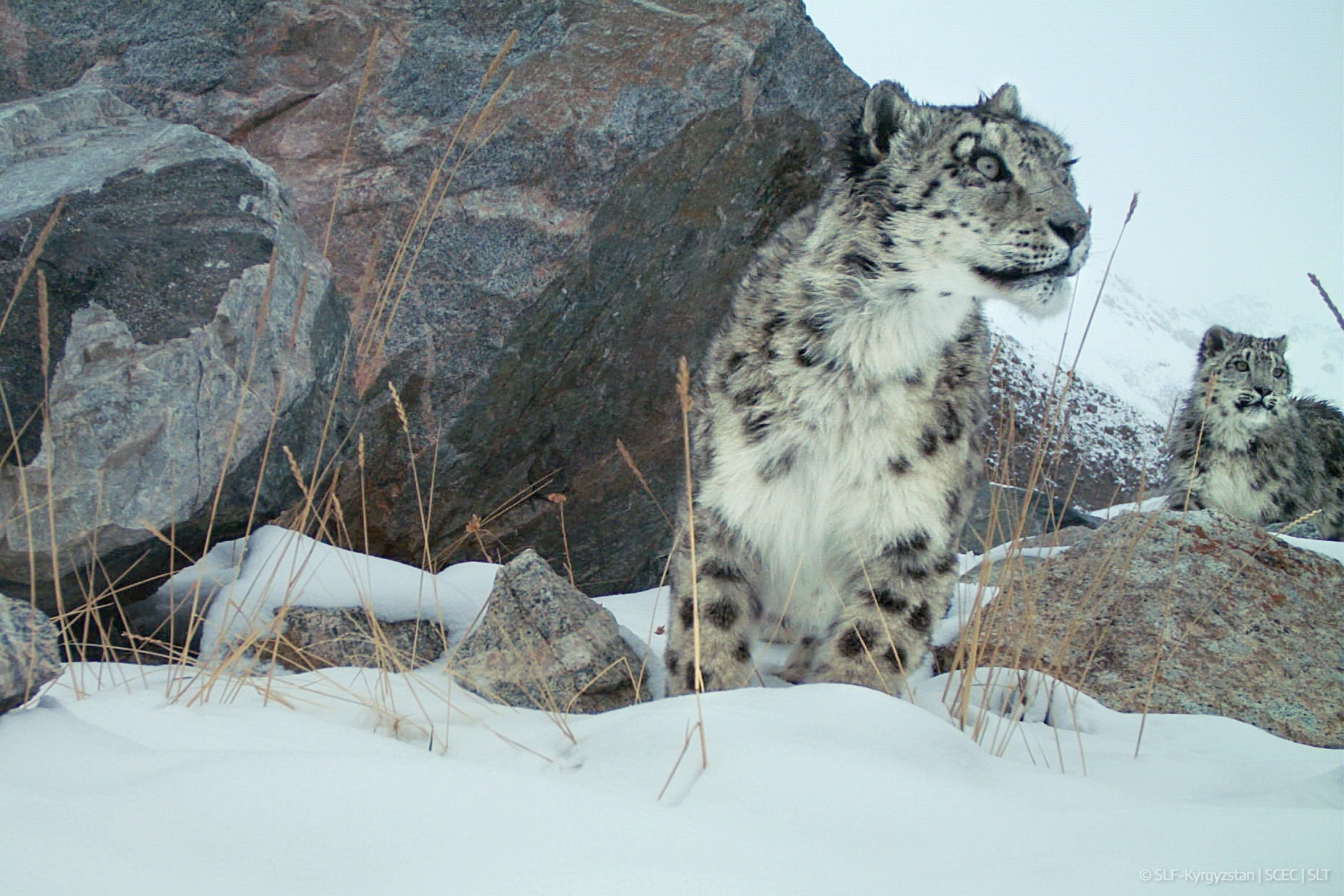
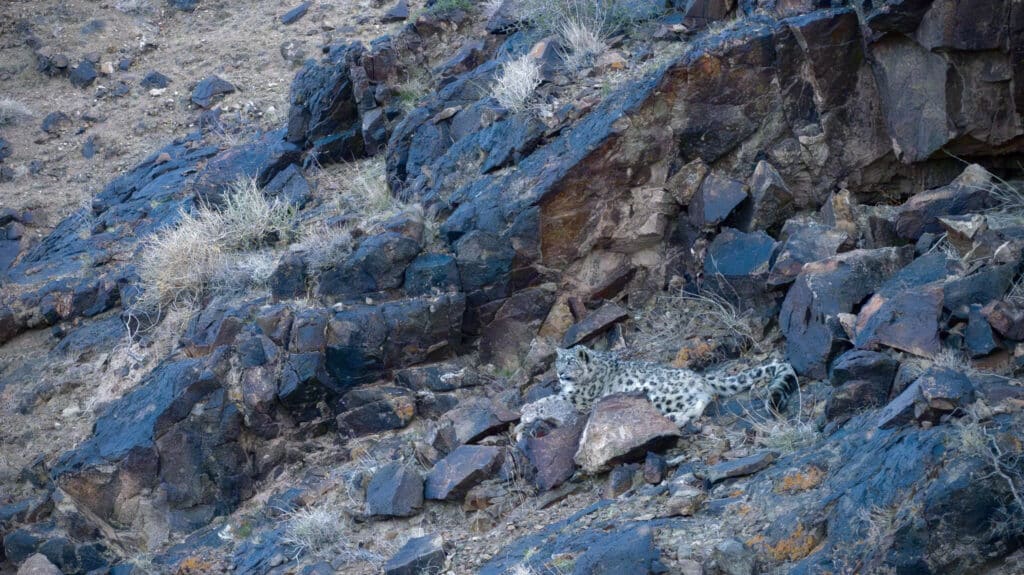
Across the high mountains of Central Asia, snow lingers long after spring has come elsewhere. Along ridgelines stretching across Mongolia and Kyrgyzstan, one of the world’s most elusive predators known as the “ghost of the mountain” moves almost unseen, blending so perfectly into the grey rock that even experienced researchers can struggle to detect it.
For centuries, the remoteness of these mountains offered the snow leopard a degree of protection. Their steep slopes, harsh winters and vast distances limited human access, allowing the species to occupy one of the few landscapes where people and predators rarely crossed paths.
Today, that distance is shrinking.
Livestock grazing reaches further into mountain valleys. Roads and railways extend into previously isolated areas. Mining projects open landscapes that until recently remained largely undisturbed. At the same time, climate change is altering fragile mountain ecosystems, placing new pressures on both wildlife and the pastoralist communities that depend upon them.
The result is not one dramatic event, but a gradual convergence between people and predators.
“The primary pressure on snow leopards is the increasing overlap between snow leopards and pastoralist communities. Snow leopards frequently prey on livestock, which are an economic asset, a food source and a primary source of cultural heritage. These incidents often result in retaliatory killing.” as Georgina Lamb, Chief Executive Officer from David Sheperd Wildlife Foundation explains it. The foundation was established in 1984 by David Sheperd CBE and has since supported conservation projects in Africa and Asia with more than £14 million.
The conflict is often described as a story about predators attacking livestock. It reflects something much larger. It is the consequence of changing land use, expanding infrastructure and growing pressure on landscapes that have supported both wildlife and people for generations.
The snow leopard’s future is therefore shaped not only by what happens in the mountains, but also by the decisions that increasingly transform them.
© Snow Leopard Conservation Foundation (SLCF) & Snow Leopard Trust (SLT)
When livelihoods and predators collide
Snow leopards have evolved to survive in one of the planet’s most demanding environments. They roam vast territories across steep mountain ranges, hunting wild prey such as ibex and argali in landscapes where survival has always depended on scarcity.
That balance is becoming increasingly fragile.
Across Mongolia and Kyrgyzstan, livestock numbers have increased significantly over recent decades. As grazing expands into higher elevations, domestic animals increasingly occupy habitats traditionally used by snow leopards and their natural prey. At the same time, overgrazing and hunting place additional pressure on wild ungulate populations, reducing the availability of the prey on which snow leopards depend.
When wild prey becomes less abundant, livestock becomes a more frequent target.
“Reduced prey availability can lead to increased livestock predation, which in turn drives retaliatory killing.” Georgina Lamb explains
For pastoral families, the loss of sheep, goats or yaks is not simply a financial setback. Livestock provides income, food security and represents a way of life deeply rooted in local culture. Retaliatory killing may be the immediate threat to snow leopards, but the underlying causes lie in the changing relationship between people, livestock, wildlife and the mountain landscapes they increasingly share.
The mountains are opening up
For much of its history, the snow leopard benefited from one simple reality: few people could reach the places where it lived. That is no longer the case.
Mining, roads and other infrastructure are steadily extending further into remote mountain regions. Their impact reaches well beyond the footprint of individual projects. Roads improve access to previously isolated valleys, while transport corridors, heavy machinery and associated infrastructure fragment habitats and disturb wildlife across much larger areas.
“Mining operations and associated infrastructure degrade habitat, reduce prey availability, and compete with local communities for resources such as water,” says Georgina Lamb.
The pressure is particularly visible in Mongolia’s South Gobi, where the ground is rich in coal, copper and other valuable minerals. Mining is a major source of national revenue, but extraction has also brought industrial activity into landscapes used by snow leopards, their wild prey and pastoral communities.
There is a further complexity to this relationship. While coal remains an important part of mining in the region, copper is also one of the minerals increasingly required by the global transition towards electrification and renewable energy. It is essential for electricity grids and widely used in clean-energy technologies, while global demand is expected to rise significantly as those technologies expand. The result is a difficult paradox: some of the resources needed to reduce global carbon emissions can themselves create new pressures on biodiversity in the places where they are extracted.
The Tost-Tosonbumba landscape shows how those competing interests can play out. When the area was declared a protected nature reserve in 2016, mining companies still held more than a dozen active exploration licences within its boundaries. The remaining licences were subsequently revoked, and by 2018 the reserve itself was free of legal mining licences.
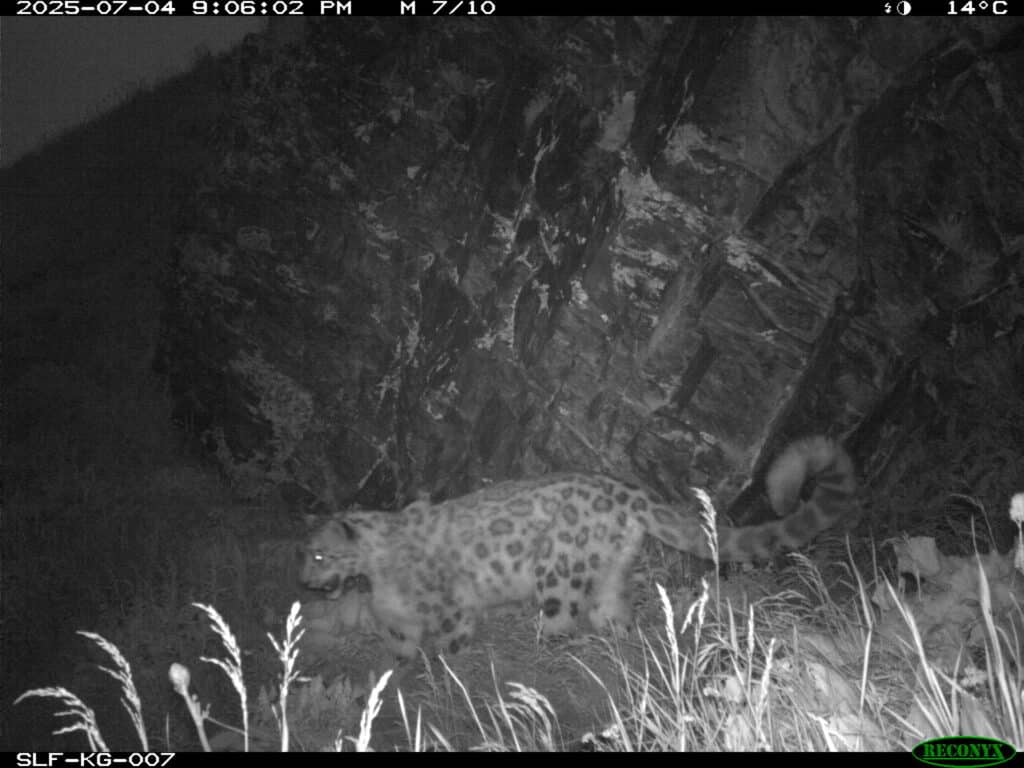
The consequences of mining rarely appear in isolation. New roads and infrastructure can change access to remote areas, while extraction can affect pasture, water sources and wildlife habitat. Individually, each development may appear manageable. Together, they gradually reshape mountain landscapes that have remained largely intact for centuries.
As those landscapes become more accessible, the snow leopard loses one of its greatest natural protections: isolation.
© Snow Leopard Foundation Kyrgyzstan & Snow Leopard Trust
Science that shapes decisions
Protecting snow leopards begins with understanding how they use a landscape that few people ever experience.
Unlike many other large predators, snow leopards live across vast territories in some of the world’s most inaccessible mountains. Their elusive nature has long made them one of the least studied big cats, leaving conservationists with limited knowledge about population trends, breeding success and habitat use.
Long-term research has therefore become one of the foundations of DSWF’s conservation work.
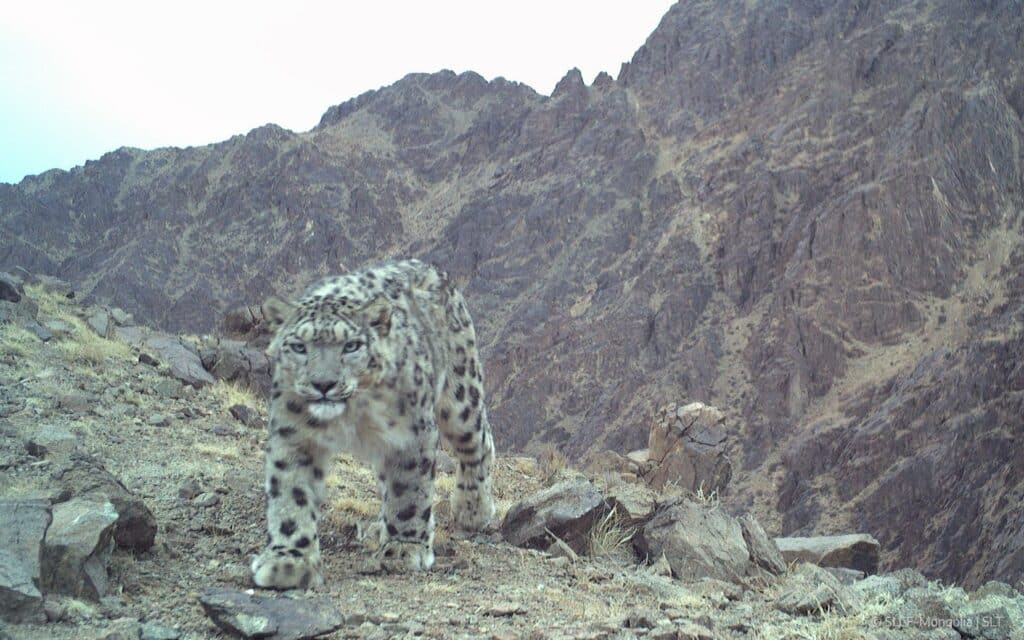
For more than fifteen years, the Foundation has supported the Snow Leopard Trust’s ecological research in Mongolia’s Tost-Tosonbumba State Nature Reserve. Camera traps and GPS collars have allowed scientists to follow snow leopards across the landscape, providing detailed information about their movements, hunting behaviour and reproduction. To date, 45 snow leopards have been fitted with GPS collars that record their location every five hours, creating one of the world’s most comprehensive long-term datasets for the species.
“Scientific research informs long-term habitat protection by providing the empirical evidence necessary to justify the creation of protected areas, ensure community conservation efforts are effective, monitor ecosystem health, and influence global conservation policy,” says Georgina Lamb.
The value of that evidence has already been demonstrated. Scientific monitoring helped establish the ecological importance of the Tost-Tosonbumba landscape, contributing to the creation of the world’s first protected area dedicated specifically to snow leopards in 2016
© Snow Leopard Trust & Snow Leopard Conservation Foundation
Climate as an invisible pressure
Not all threats to the snow leopard are visible in the landscape.
Roads, mines and expanding grazing leave physical footprints across the mountains. Climate change works differently. Its effects emerge gradually, altering the ecosystems on which both wildlife and people depend.
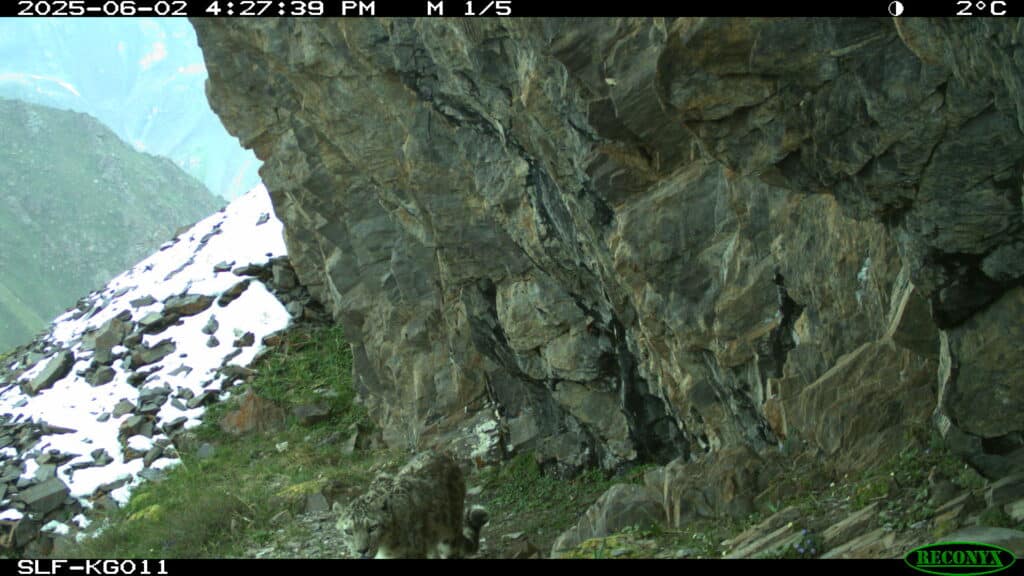
Across Central Asia, mountain regions are warming faster than the average for the Northern Hemisphere. Extreme winters, known locally as dzuds, have become increasingly destructive. In Kyrgyzstan’s Sarychat-Ertash Nature Reserve, a single dzud in 2022 killed an estimated 900 argali and 500 ibexes. Mongolia experienced similarly devastating winters in 2023 and 2024, affecting millions of livestock across the country.
The consequences extend beyond the immediate losses.
As wild prey becomes less abundant, snow leopards are more likely to hunt livestock. When livestock losses increase, already vulnerable communities face greater economic pressure. The result is that climate change can intensify a conflict that already exists between predators and pastoral livelihoods.
“The biggest disconnect lies with climate change, where causes are global, but consequences are local and indirect,” says Georgina Lamb.
The greenhouse gas emissions driving climate change are generated largely far from the mountains where snow leopards live. Yet the consequences are experienced in remote communities whose livelihoods remain closely connected to healthy mountain ecosystems.
Climate change is therefore not a separate conservation challenge. It amplifies the pressures already facing snow leopards and the people who share their habitat.
© Snow Leopard Foundation Kyrgyzstan & Snow Leopard Trust
Making coexistence possible
For DSWF, protecting snow leopards is not simply about protecting wildlife.
It is about creating conditions in which people and predators can continue to share the same landscape.
Experience has shown that conservation is most successful when local communities are not treated as observers, but as partners. Families living alongside snow leopards understand these mountain environments better than anyone, and long-term conservation depends on recognising both their knowledge and their economic realities.
“Community-based conservation is crucial, as snow leopard conservation has proved most successful when local communities have been front and centre of activities. Utilising local knowledge is key to protecting snow leopards, and communities also need to benefit from their protection. This includes reducing livestock losses through predator-proof corrals, improving veterinary care, creating alternative livelihoods through initiatives such as Snow Leopard Enterprises, and engaging local people in scientific monitoring and education,” says Georgina Lamb.
That philosophy underpins DSWF’s work across the region.
One example is Snow Leopard Enterprises, developed by the Snow Leopard Trust with support from DSWF. Women living in snow leopard habitat produce handmade textiles using locally available materials, which are sold through international markets. Participating households can increase their income by as much as 40 per cent. In return, communities commit to protecting snow leopards, helping reduce the incentive for retaliatory killing.
Education forms another part of the same approach. Through eco-camps and locally adapted environmental education programmes, DSWF supports initiatives designed to strengthen children’s understanding of the ecosystems around them and encourage greater tolerance of the wildlife that shares them.
Beyond the snow leopard
The conservation challenges facing snow leopards cannot be solved by protecting the species alone.
The pressures shaping its future originate far beyond the mountain ridges where it lives. Decisions about mining concessions, transport infrastructure, grazing systems and protected areas all influence whether snow leopards and pastoral communities can continue to share the same landscape.
“Effective conservation requires integrated land-use planning, stronger protection of key habitats, sustainable grazing practices, long-term support for community conservation, and stronger environmental governance” says Georgina Lamb.
There are encouraging examples of what that approach can achieve.
Scientific evidence collected through years of monitoring helped demonstrate the ecological importance of Mongolia’s Tost-Tosonbumba landscape, contributing to the establishment of the world’s first protected area dedicated specifically to snow leopards. Elsewhere, long-term monitoring and cooperation between governments, researchers and local communities continue to show that conservation can succeed when decisions are supported by evidence and sustained commitment.
The snow leopard has survived for thousands of years in one of the harshest environments on Earth. Today, the challenge is no longer the mountains themselves. It is the pace at which those mountains are changing. Roads extend further into remote valleys. Mining fragments landscapes that once remained largely undisturbed. Livestock grazing reaches habitats traditionally occupied by wild prey. Climate change adds further pressure to ecosystems already under strain.
Individually, each development may appear manageable. Together, they redefine the conditions on which the snow leopard depends. Its future will not be determined by whether it can survive the mountains. It has done that for millennia.
The more pressing question is whether human expansion can continue while leaving space for one of the world’s most elusive predators to survive alongside the communities that have shared these landscapes for generations.
The story of the snow leopard is therefore about more than a single species. It is about how the choices we make about land, resources and development shape even the world’s most remote ecosystems.
Fact box
Snow Leopard (Panthera uncia)
IUCN Red List: Vulnerable
Estimated wild population: Approximately 4,000–6,500 individuals.
Distribution: High mountain ranges across 12 countries in Central Asia.
Primary threats:
- Human–wildlife conflict and retaliatory killing
- Habitat fragmentation
- Mining and infrastructure development
- Declining wild prey populations
- Climate change
DSWF snow leopard conservation priorities:
- Long-term scientific research
- Community-based conservation
- Environmental education
- Protection of key habitats in Mongolia and Kyrgyzstan