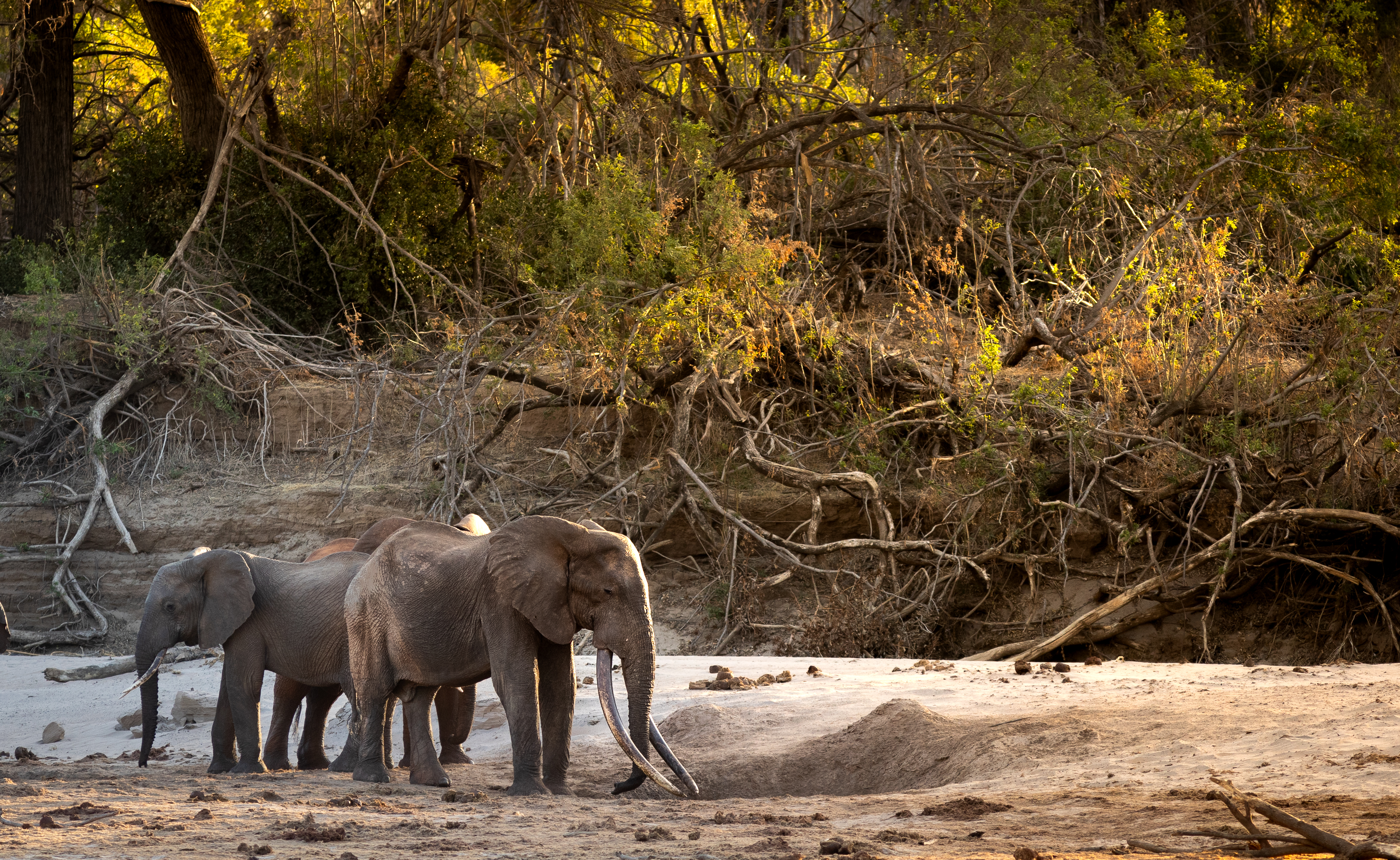
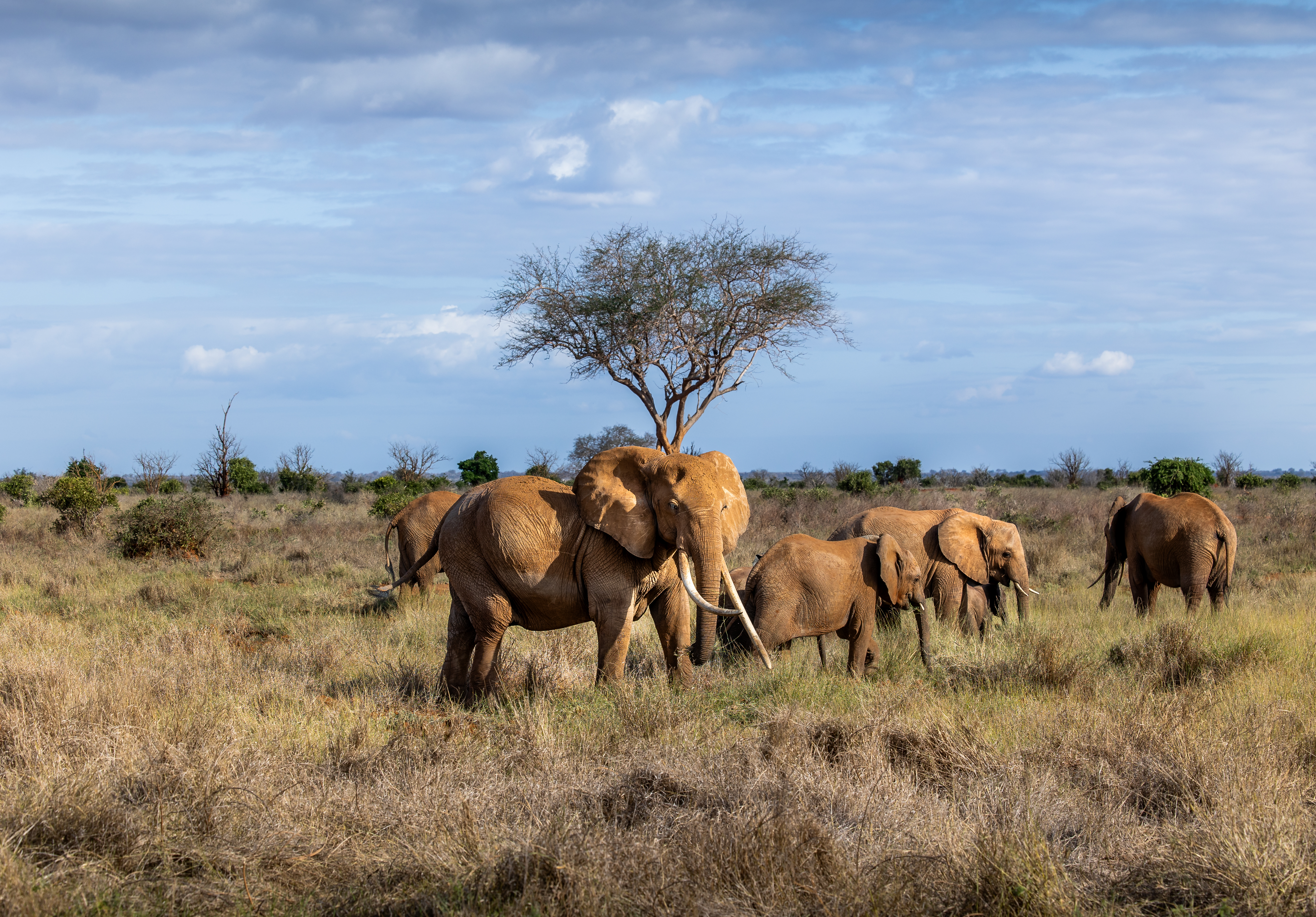
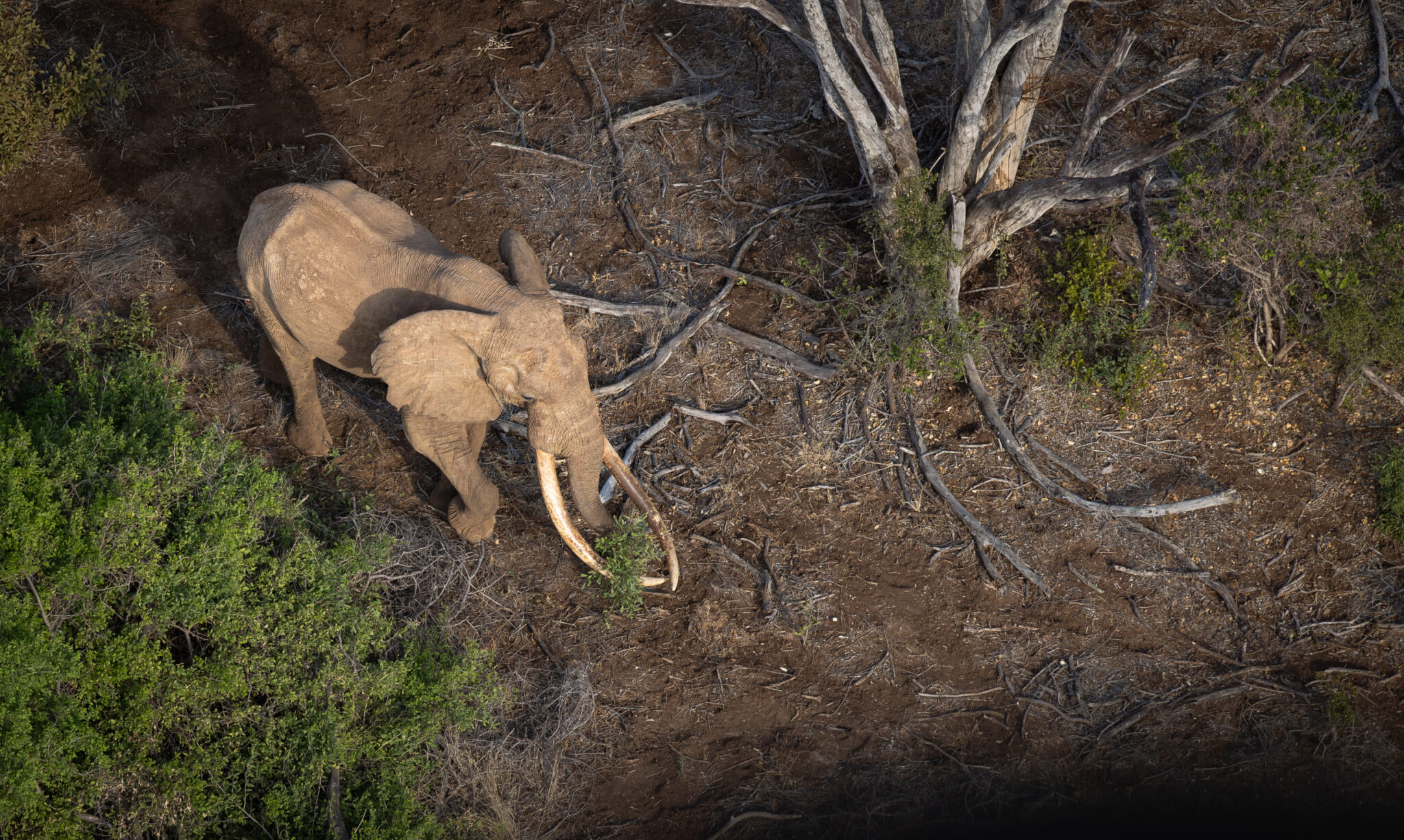
Some of the last remaining Super Tuskers still roam these landscapes, their enormous ivory almost touching the ground. Others carry the deep orange dust that has made the elephants of Tsavo known around the world as Kenya’s red elephants.
But the greatest threat facing them today is not poaching.
It is space.
Or, more precisely, the gradual disappearance of the connections that once allowed elephants to move freely across one of Africa’s largest ecosystems.
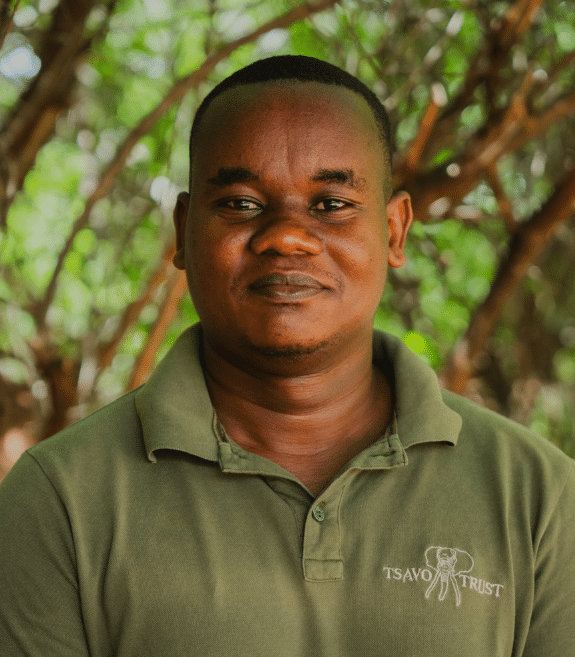
“The primary pressure on African elephants in the Tsavo Conservation Area is loss and fragmentation of habitat and disruption of movement routes,” says Joseph Kyalo, Chief Conservation Officer at Tsavo Trust.
“This is driven by increasing human population, expansion of agriculture and settlements, land-use change, fencing, roads, railways and other infrastructure developments that reduce available habitat and restrict traditional elephant movements.”
For an animal that can travel tens of kilometres in search of food and water, movement is not a luxury. It is survival.
A landscape built for movement
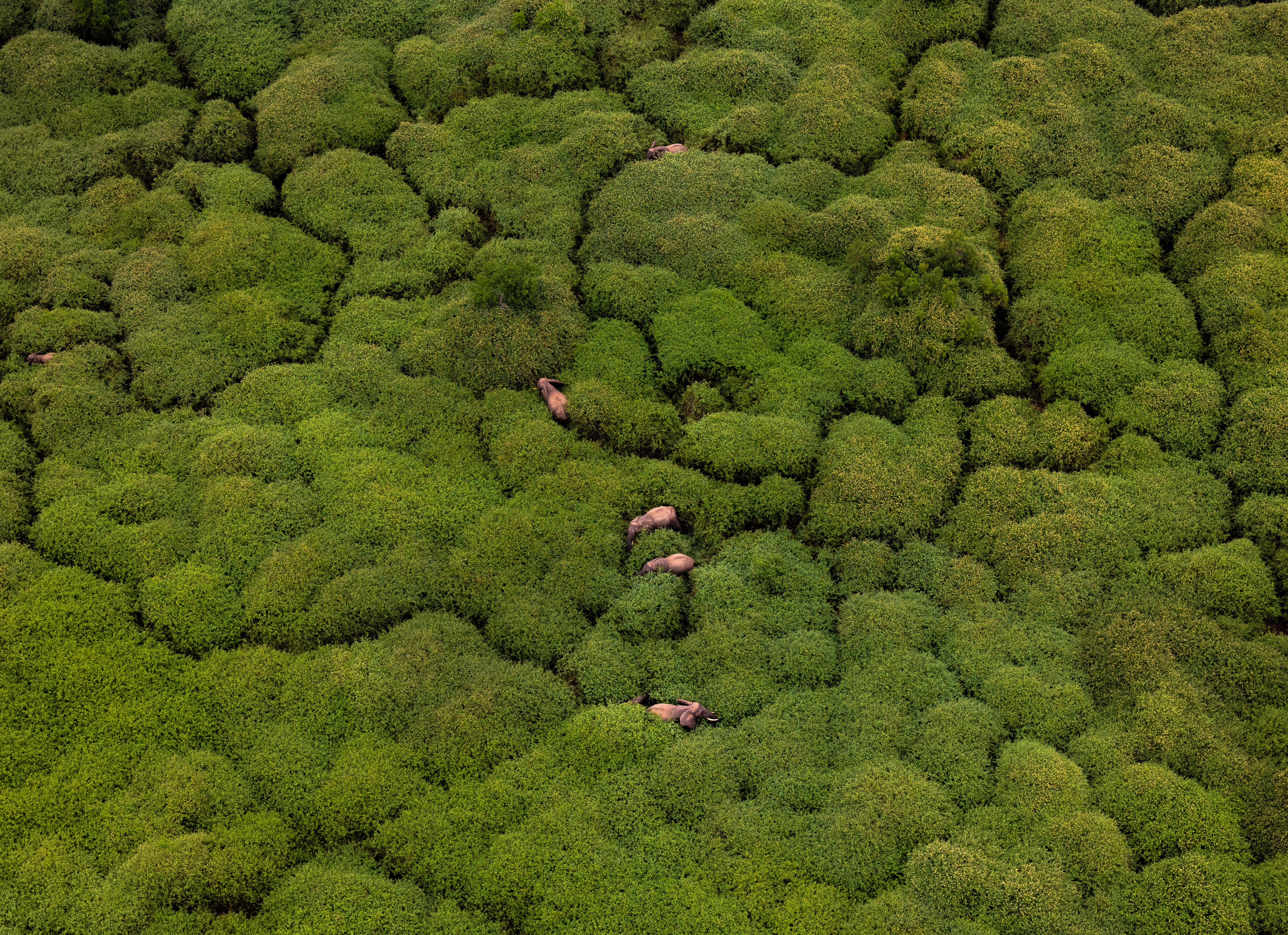
The Tsavo Conservation Area covers more than 42,000 square kilometres in southern Kenya and includes the Tsavo East National Park, Tsavo West National Park, and Chyulu Hills National Park alongside community lands, ranches and wildlife conservancies.
For generations, elephants moved freely across this landscape.
Their journeys followed seasonal patterns, linking rivers, wetlands and grazing grounds. The movements also shaped the ecosystem itself. Elephants disperse seeds, open dense vegetation and create pathways used by many other species.
“The pressure has increased over time as the landscape surrounding protected areas has become more intensively used,” Kyalo says.
“Historically, elephants moved through a broader, more connected Tsavo landscape, including areas that are now settled or cultivated.”
The changes have been gradual.
A new farm.
A new road.
A fenced property.
A growing settlement.
Each decision may appear small and rational on its own. Yet together they alter an entire landscape.
“The expansion of agriculture, settlements, roads and infrastructure has progressively narrowed movement corridors,” Kyalo says.
“More recently, large infrastructure projects and increased human activity have accelerated fragmentation, making it harder for elephants to access seasonal resources and increasing encounters with people.”
The result is not necessarily the immediate loss of elephants.
The result is the slow erosion of the conditions they need to survive.
Death by a thousand decisions
Species rarely disappear because of one dramatic event. More often, they decline because of thousands of decisions made over many years. In Tsavo, the drivers are clear.
“The main activities linked to this pressure include small-scale agriculture, settlement expansion, roads, railways and power infrastructure,” Kyalo explains.
“Land subdivision and changing land tenure can convert open wildlife areas into fenced private land.”
None of these activities are inherently negative.
Communities need livelihoods. Countries need infrastructure. Populations grow and economies develop.
The challenge lies in understanding what happens when these changes accumulate across a landscape.
“The biggest disconnect is that many land-use decisions are made based on local short-term benefits, while the ecological consequences occur at a much larger landscape scale and over longer time periods,” Kyalo says.
“For example, converting a wildlife movement area into farms may appear beneficial for food production locally, but it can remove a critical corridor that elephants and other species depend on.”
The consequences are rarely immediate.
They emerge over time.
Blocked migration.
Increased human-elephant conflict.
Reduced genetic connectivity.
Ecosystem degradation.
By the time they become visible, reversing them is often difficult and expensive.
When parks are no longer enough
Conservation has traditionally focused on protected areas.
Create a park.
Protect a species.
Reduce threats within its boundaries.
But elephants do not recognise administrative borders. Their survival depends as much on the landscape beyond the parks as on the parks themselves.
“Conservation areas cannot protect elephants alone if the surrounding landscape becomes disconnected,” Kyalo says.
“Corridor protection, land-use planning and community incentives need to operate at ecosystem scale.”
This may be one of the central lessons emerging from Tsavo.
Protected areas remain essential. But increasingly, they are not sufficient.
The future of wide-ranging species depends on what happens in the spaces between them.
The hidden cost of fragmentation
Fragmentation is often difficult to see.
A road may look like progress.
A railway may improve trade and connectivity.
A new settlement may provide opportunities for families.
Yet for wildlife, these developments can fundamentally change how a landscape functions. Elephants require access to water, forage and breeding areas across large territories. Interrupting those movements creates new pressures. Some elephant populations become isolated. Others are pushed into closer contact with people and conflict becomes more likely. Communities suffer crop losses and the elephants suffer injuries and mortality.
Neither side benefits.
Current conservation efforts attempt to address these challenges.
According to Kyalo, these include community conservation initiatives, elephant monitoring, wildlife corridor protection and measures to reduce human-elephant conflict, including fencing and early warning systems.
However, he believes these efforts are often insufficient because they address symptoms rather than underlying causes.
“These measures are often not enough because they mainly address symptoms rather than the broader drivers.”
The broader driver is the changing landscape itself.

From protected areas to connected landscapes
For Kyalo, the solution requires a fundamental shift in perspective.
“A system-level shift is needed from Protected Area conservation to landscape-level conservation.”
That shift includes several elements.
Recognising and legally securing wildlife corridors.
Integrating wildlife connectivity into national and county land-use planning.
Creating meaningful incentives for communities to maintain wildlife-compatible land uses.
Designing infrastructure with wildlife movement in mind.
Strengthening collaboration between conservation agencies, communities, governments and developers.
And placing greater value on the ecosystem services provided by wildlife landscapes.
“The key change is moving from seeing elephants as existing only inside parks to recognising that their survival depends on connected landscapes.”
The idea sounds simple.
In practice, it is profoundly challenging because it requires sectors like agriculture, infrastructure, land planning, conservation, and community development that often operate independently now must work together.
All must become part of the same conversation.
Learning from elsewhere
Tsavo is not alone. Around the world, efforts are underway to protect ecological connectivity.
Kyalo points to the Kavango–Zambezi Transfrontier Conservation Area, where several African countries are working together to maintain large-scale wildlife movements.
He also highlights the Amboseli ecosystem, where community conservancies and negotiated land-use agreements have helped preserve important habitats outside protected areas.
Globally, new roads and railways are increasingly incorporating wildlife crossing structures to maintain animal movements.
“These examples show that long-term success requires combining science, policy, infrastructure planning and community participation.”
There is no single solution. But there is growing evidence that connectivity can be maintained if it is considered early enough in planning and development processes.
Building with nature in mind
If Kyalo could change one thing tomorrow, his answer is immediate.
“I would make wildlife connectivity a mandatory consideration in all land-use and infrastructure decisions.”
Before major developments take place, there should be an assessment of impacts on wildlife movement routes.
And identified corridors should receive formal protection.
“Securing connectivity now would prevent future conflict and allow elephants and other wildlife to continue functioning as part of a healthy ecosystem. Because once movement routes disappear, restoring them becomes far more difficult.”
The future of the red giants
The elephants of Tsavo still move across one of Africa’s great landscapes.
Some of the world’s last Super Tuskers still walk these lands, carrying ivory that has survived decades of pressure and change.
Many still emerge from dry riverbeds and dust baths coated in the orange soils that have made Tsavo’s elephants iconic. But their future will depend on something less visible than their tusks or colour. It will depend on space.
And on whether the landscapes around them remain connected enough for elephants to keep moving as they always have.
At the edge of expansion, the question is not whether development will continue.
The question is whether there will still be room to move.
Fact Box
African Elephant
IUCN status: Endangered
Geographic scope: Tsavo Conservation Area, Kenya
Estimated population: The most recent areal census (February 2025) estimated the Tsavo elephant population at 17,266, making Tsavo one of the largest remaining elephant strongholds in Africa and home to Kenya’s largest elephant population.
Main threat category:
- Loss of wildlife corridors
- Human-elephant conflict
- Infrastructure development and land-use change
Why Tsavo’s elephants are unique
The Red Elephants of Tsavo
Tsavo’s elephants are famous for their distinctive reddish-orange appearance. The colour comes from the iron-rich soils of the region, which elephants throw over themselves while dust bathing to protect their skin from insects and the sun.
The Super Tuskers
Tsavo is one of the last strongholds of Africa’s iconic “Super Tuskers.” Exceptionally rare elephants whose tusks each weigh more than 45 kilograms (100 pounds) and can sometimes reach or touch the ground.
Key stakeholders involved
- Kenya Wildlife Service
- Wildlife Research and Training Institute
- Tsavo Trust
- Taita Taveta Wildlife Conservancies Association
- African Wildlife Foundation
- Masai Wilderness Conservation Trust
- World Wildlife Fund
- Sheldrick Wildlife Trust
- Save The Elephants
- Wildlife Works
- Local communities and community conservancies
- County governments
- Infrastructure developers and land-use planners
- Researchers and academic institutions